Retail businesses today often manage several operational activities at the same time. Along with customer billing, many stores also handle stock monitoring, inventory updates, GST invoice management, payment tracking, and sales record maintenance throughout the day. As daily operations become busier, handling these activities manually can gradually become more difficult for businesses of different sizes.
Because of this, many businesses are now exploring billing platforms that support multiple operational functions within a connected workflow.
In earlier years, billing systems were mainly used for invoice generation during customer purchases. Over time, however, business requirements started changing. Many businesses now prefer systems that can also assist with inventory visibility, reporting access, and operational monitoring alongside billing activities.
The operational priorities of each business can vary depending on the type of store and the volume of daily transactions. A supermarket may focus heavily on stock movement and barcode billing, while a smaller retail business may mainly look for simpler billing processes and easier reporting access. Businesses handling larger inventories may also require better visibility into product availability and stock movement throughout the day.
Because operational requirements differ from one business to another, software selection is usually based on practical workflow compatibility rather than feature lists alone.
Cloud-based systems are also becoming part of operational discussions among businesses that prefer access to billing and inventory information through connected devices. Instead of depending entirely on a single billing machine, some businesses now consider connected systems that allow operational information to remain more accessible when required.
Ease of use remains another important consideration for many businesses. During busy hours, systems that are difficult to manage can sometimes create additional delays for staff members handling billing and inventory activities. Because of this, businesses often compare practical areas such as inventory handling, billing workflow, GST support, reporting access, and overall usability before selecting software for long-term operational use.
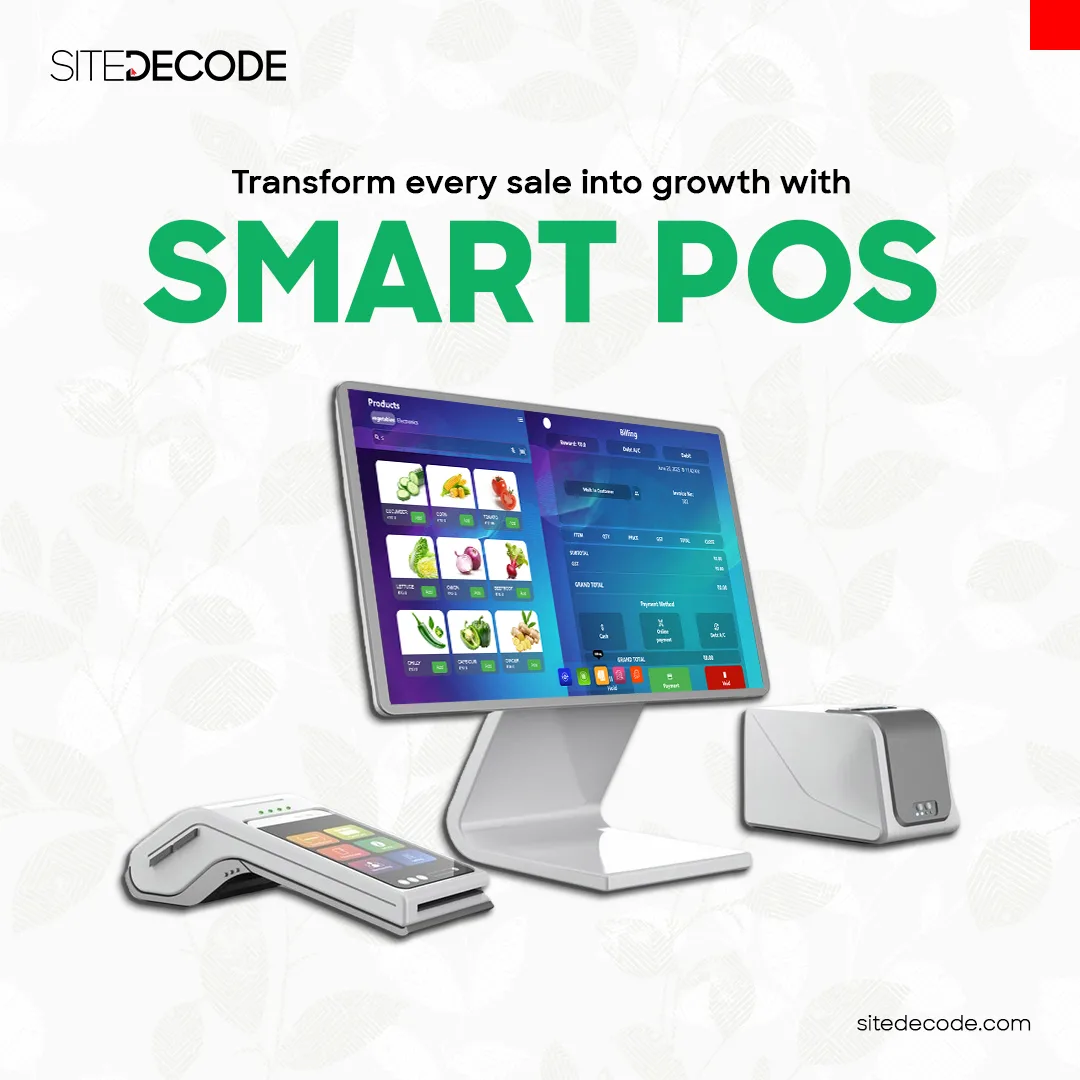
Smart POS by Sitedecode is one example of a billing and inventory management platform designed for retail operations. The platform includes functions connected to GST billing, inventory tracking, reporting workflows, and sales-related activities. It is also part of the wider Sitedecode business software ecosystem, which includes additional business management solutions connected to operational workflows.
More information can be found at:
https://sitedecode.com/pos
As retail businesses continue adapting to digital operational processes, connected billing and inventory systems are gradually becoming part of how many businesses organize routine activities in a more structured and manageable way.