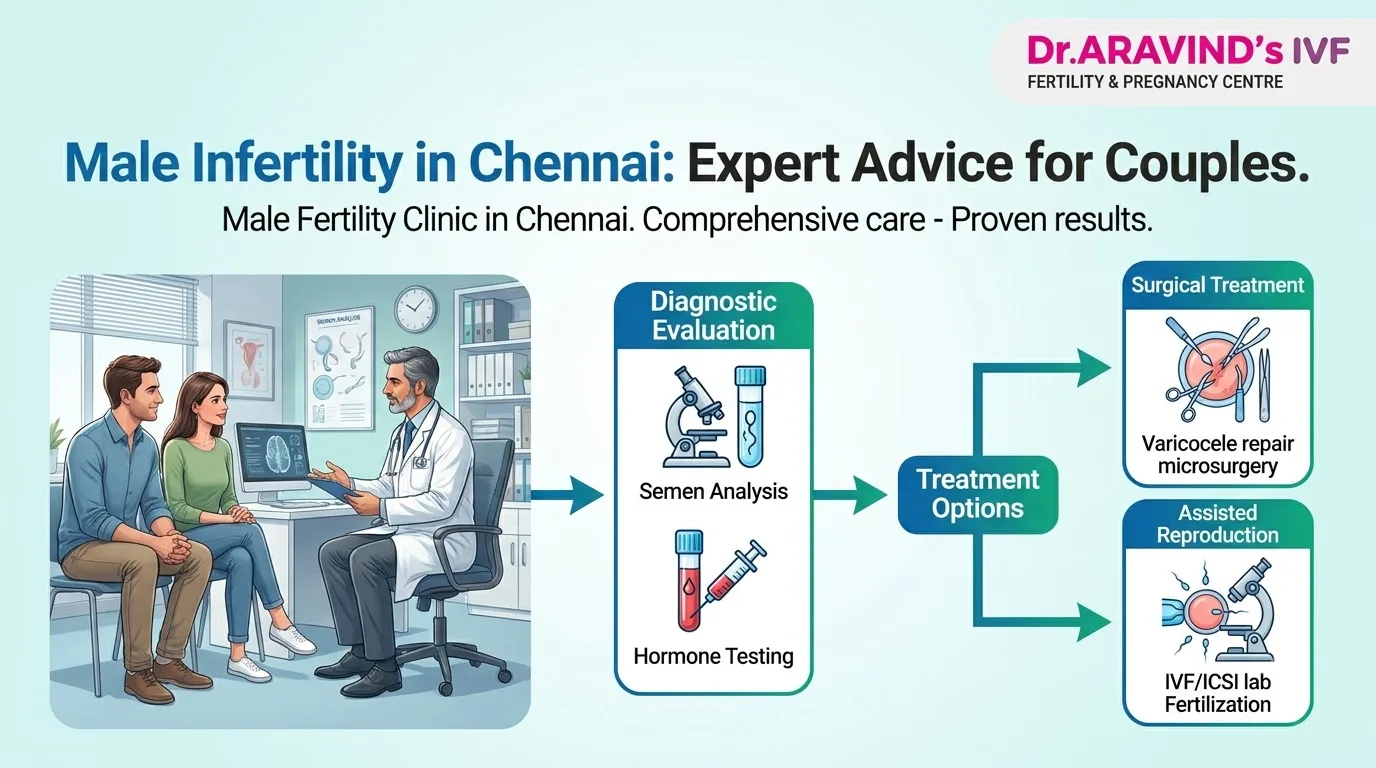
When couples struggle to conceive, male factors contribute to 40-50% of cases—yet male evaluation is often delayed or overlooked. Chennai offers world-class fertility care with experienced specialists and advanced technology. Whether you're starting your journey or seeking a second opinion, a male infertility clinic in Chennai provides comprehensive evaluation and personalized treatment plans.
Why male evaluation matters
Key facts every couple should know:
- Male factors alone cause 20-30% of infertility cases
- Combined male and female factors: another 20-30%
- Up to 50% of all infertility cases involve male factors
- Male evaluation is simple, non-invasive, and cost-effective
- Early diagnosis leads to faster, more effective treatment
Common misconception: "If my partner has regular periods, the problem must be with me."
Reality: Regular ovulation doesn't guarantee fertility. Male factors can exist independently or alongside female factors. Both partners should be evaluated simultaneously.
When to seek expert advice
Consult a specialist if:
- Trying to conceive for 12+ months without success (6 months if female partner is >35)
- Known risk factors (varicocele, prior cancer treatment, testicular injury, undescended testicles)
- Sexual dysfunction (erectile dysfunction, premature ejaculation, low libido, ejaculation problems)
- Abnormal semen analysis from previous testing
- Recurrent pregnancy loss (2+ miscarriages)
- Family history of infertility or genetic conditions
- Female partner has completed evaluation with normal or treatable findings
A best ivf centre in India in Chennai provides coordinated couple evaluation for efficient diagnosis.
What to expect at your first consultation
Comprehensive medical history
Your doctor will ask about:
Reproductive history:
- Duration and frequency of trying to conceive
- Timing relative to ovulation
- Previous pregnancies (with current or prior partners)
- History of sexually transmitted infections
- Sexual function and satisfaction
Medical and surgical history:
- Childhood illnesses (mumps after puberty, undescended testicles)
- Surgeries (hernia repair, testicular surgery, vasectomy, pelvic surgery)
- Injuries to groin or testicles
- Chronic illnesses (diabetes, thyroid disorders, kidney disease)
- Current medications and supplements
- Cancer treatment (chemotherapy, radiation)
Lifestyle factors:
- Smoking, alcohol, recreational drug use
- Occupation (heat exposure, chemical exposure, prolonged sitting, cycling)
- Exercise habits and intensity
- Diet and nutrition
- Stress levels and sleep patterns
- Heat exposure (saunas, hot tubs, laptop on lap)
Family history:
- Infertility in family members
- Genetic conditions or birth defects
- Recurrent miscarriages
- Consanguinity (blood relation between partners)
Physical examination
General assessment:
- Height, weight, BMI calculation
- Blood pressure
- Secondary sexual characteristics (facial/body hair distribution, muscle mass, breast development)
- Signs of hormonal imbalance (gynecomastia, reduced body hair)
Genital examination:
- Testicular size and consistency (normal: 15-25 mL volume, firm)
- Presence of varicocele (enlarged scrotal veins, feels like "bag of worms")
- Vas deferens palpable (absence suggests genetic condition like CBAVD)
- Epididymis (swelling may indicate blockage or infection)
- Penis (structural abnormalities, hypospadias, curvature)
Diagnostic testing
Semen analysis (the cornerstone test):
What it evaluates:
- Sperm concentration (count per mL)
- Total sperm count (per ejaculate)
- Progressive motility (swimming forward)
- Total motility (any movement)
- Morphology (percentage normal forms)
- Semen volume
- pH (acidity/alkalinity)
- Viscosity and liquefaction
- White blood cells (infection marker)
Preparation:
- 2-5 days of abstinence before collection
- Collect entire sample in sterile container (no lubricants)
- Keep sample at body temperature during transport
- Deliver to lab within 1 hour of collection
- Avoid alcohol, smoking, and excessive heat for 3-5 days prior
WHO 2021 reference values:
- Sperm concentration: ≥16 million/mL
- Total sperm count: ≥39 million per ejaculate
- Progressive motility: ≥30%
- Total motility: ≥42%
- Normal morphology: ≥4%
- Semen volume: ≥1.4 mL
- pH: ≥7.2
Important: At least two semen analyses are required, spaced 2-4 weeks apart. Sperm production varies naturally.
Hormone testing (if indicated):
- Total testosterone (morning sample, 8-10 AM)
- FSH (reflects sperm production)
- LH (stimulates testosterone)
- Prolactin
- TSH (thyroid function)
- Estradiol (if obese or gynecomastia present)
Additional tests (if needed):
- Scrotal ultrasound (varicocele, testicular abnormalities)
- Genetic testing (karyotype, Y-chromosome microdeletions, CFTR gene)
- Sperm DNA fragmentation testing
- Post-ejaculatory urinalysis (retrograde ejaculation)
- Antisperm antibody testing
A male fertility clinic in Chennai provides comprehensive diagnostic services under one roof.
Treatment options: What works
Lifestyle modifications (first-line for all men)
Evidence-based recommendations:
Diet:
- Mediterranean-style eating pattern
- Fruits, vegetables, whole grains, fish, nuts, olive oil
- Limit processed foods, red meat, trans fats
- Adequate protein and healthy fats
Exercise:
- 150 minutes moderate activity weekly (brisk walking, cycling, swimming)
- Strength training 2-3 times weekly
- Avoid excessive cycling (>5 hours/week can increase scrotal temperature)
Weight management:
- Target BMI 18.5-24.9
- Obesity reduces testosterone and sperm quality
- Even 5-10% weight loss improves parameters
Avoid:
- Smoking (reduces count, motility, increases DNA damage)
- Excessive alcohol (>14 units/week)
- Recreational drugs (marijuana, cocaine, anabolic steroids)
- Heat exposure (saunas, hot tubs, tight underwear, prolonged sitting)
- Environmental toxins (pesticides, heavy metals, industrial chemicals)
Timeline: 3-6 months to see measurable improvements (full sperm production cycle is 74 days)
Antioxidant supplements
Evidence-backed options:
- CoQ10 (200-300 mg/day): Improves count and motility
- L-carnitine (1-2 g/day): Enhances sperm metabolism
- Vitamin C (500-1000 mg/day): Antioxidant protection
- Vitamin E (200-400 IU/day): Protects sperm membranes
- Zinc (15-30 mg/day): Essential for testosterone and sperm production
- Selenium (100-200 mcg/day): Improves motility
- Folate (400 mcg/day): DNA synthesis
Effectiveness: Modest improvements in count and motility; best combined with lifestyle changes
Medications
For hormonal imbalances:
- Clomiphene citrate: Stimulates natural testosterone production (60-70% improvement in hypogonadism)
- hCG injections: Mimics LH to boost testosterone and sperm production
- Aromatase inhibitors (anastrozole, letrozole): Reduces estrogen conversion
- Antibiotics: For reproductive tract infections
- Dopamine agonists: For elevated prolactin
Timeline: 3-6 months for measurable improvement
Surgical interventions
Varicocele repair (varicocelectomy):
- Minimally invasive microsurgery
- Improves sperm parameters in 60-70% of cases
- Natural pregnancy rates increase 30-50% post-surgery
- Recovery: 2-4 weeks
Vasectomy reversal:
- Success rates: 85-97% for vasovasostomy
- Pregnancy rates: 40-70% depending on time since vasectomy
Sperm retrieval procedures:
- PESA (Percutaneous Epididymal Sperm Aspiration)
- TESA (Testicular Sperm Aspiration)
- Micro-TESE (Microdissection Testicular Sperm Extraction)
- For azoospermia or ejaculatory dysfunction
- Retrieved sperm used with ICSI
Assisted reproductive technologies (ART)
IUI (Intrauterine Insemination):
- Washed sperm placed directly into uterus during ovulation
- Best for: Mild male factor (count 10-15 million/mL), normal motility
- Success rate: 10-20% per cycle (cumulative 40-60% after 3-4 cycles)
- Cost-effective first-line ART option
IVF (In Vitro Fertilization):
- Eggs retrieved from female partner, fertilized with sperm in lab
- Embryos transferred to uterus after 3-5 days
- Best for: Moderate male factor, failed IUI, combined factors
- Success rate: 40-50% per cycle (varies by female age)
ICSI (Intracytoplasmic Sperm Injection):
- Single sperm injected directly into each egg
- Best for: Severe male factor (count <5 million/mL), poor motility, surgically retrieved sperm
- Success rate: Similar to IVF, enables fertilization with minimal sperm
- Often combined with IVF at a best ivf centre in India
A male fertility clinic in Chennai provides personalized treatment planning based on your specific diagnosis.
Choosing the right clinic in Chennai
What to look for:
Expertise:
- Experienced male infertility doctor in Chennai with specialization in andrology
- Multidisciplinary team (urologists, endocrinologists, embryologists)
- High volume of male infertility cases
- Transparent success rates
Technology:
- Advanced semen analysis with WHO 2021 standards
- Hormone testing, genetic testing capabilities
- Microsurgical facilities for varicocele repair and sperm retrieval
- State-of-the-art IVF/ICSI laboratory with experienced embryologists
Comprehensive care:
- Diagnostic evaluation under one roof
- Medical, surgical, and ART options
- Psychological support and counseling
- Follow-up care and monitoring
Accreditation:
- ICMR registration
- ISO certification
- Membership in professional societies (ISSAM, IFS)
Cost transparency:
- Clear pricing for consultations, tests, and treatments
- Package deals and EMI options
- Insurance coverage guidance
Learn more about male infertility treatments in India.
What you should remember
- Male factors contribute to 40-50% of infertility cases—both partners should be evaluated
- Semen analysis (x2) is the cornerstone of male fertility evaluation
- Most causes are treatable with lifestyle changes, medications, surgery, or ART
- Early evaluation at a male fertility clinic in Chennai saves time and improves outcomes
- Chennai offers world-class fertility care with advanced technology and experienced specialists
Next steps: If you've been trying to conceive without success, schedule a consultation for comprehensive evaluation. Don't let assumptions or embarrassment delay diagnosis and treatment.
Frequently asked questions
Q1: What is the first test for male infertility?
Semen analysis is the first and most important test. It evaluates sperm count, motility, morphology, volume, and other parameters. At least two samples, 2-4 weeks apart, are needed for accurate diagnosis. Preparation requires 2-5 days of abstinence. A male fertility clinic in Chennai provides detailed instructions and accurate testing.
Q2: How long does treatment take to show results?
Sperm production takes 74 days, so expect measurable improvements after 3 months of consistent lifestyle changes, medications, or post-surgical recovery. IUI results are known in 2 weeks. IVF/ICSI cycles take 4-6 weeks. Most men begin seeing improvements within 3-6 months of starting treatment.
Q3: Can male infertility be cured?
Many causes are treatable. Varicocele repair improves parameters in 60-70% of cases. Hormonal imbalances respond well to medication. Lifestyle changes can significantly improve sperm quality. For severe cases, ART (IUI, IVF, ICSI) enables conception even with very low sperm counts. A best ivf centre in India determines the best approach.
Q4: Should both partners be evaluated at the same time?
Yes. Infertility is a couple's issue. Male factors contribute to 40-50% of cases. Evaluating both partners simultaneously saves time, reduces stress, and leads to faster diagnosis and treatment. A male infertility doctor in Chennai provides coordinated couple evaluation.
Q5: What if semen analysis is normal but we still can't conceive?
Normal semen parameters don't guarantee fertility. Advanced tests like sperm DNA fragmentation testing can reveal hidden issues. Your partner's fertility should also be evaluated. Unexplained infertility may require empirical treatment (IUI or IVF). A male fertility clinic in Chennai can recommend next steps based on your complete evaluation.
Struggling to conceive?
Expert evaluation makes the difference. Consult a male fertility clinic in Chennai for comprehensive assessment and personalized treatment planning.