
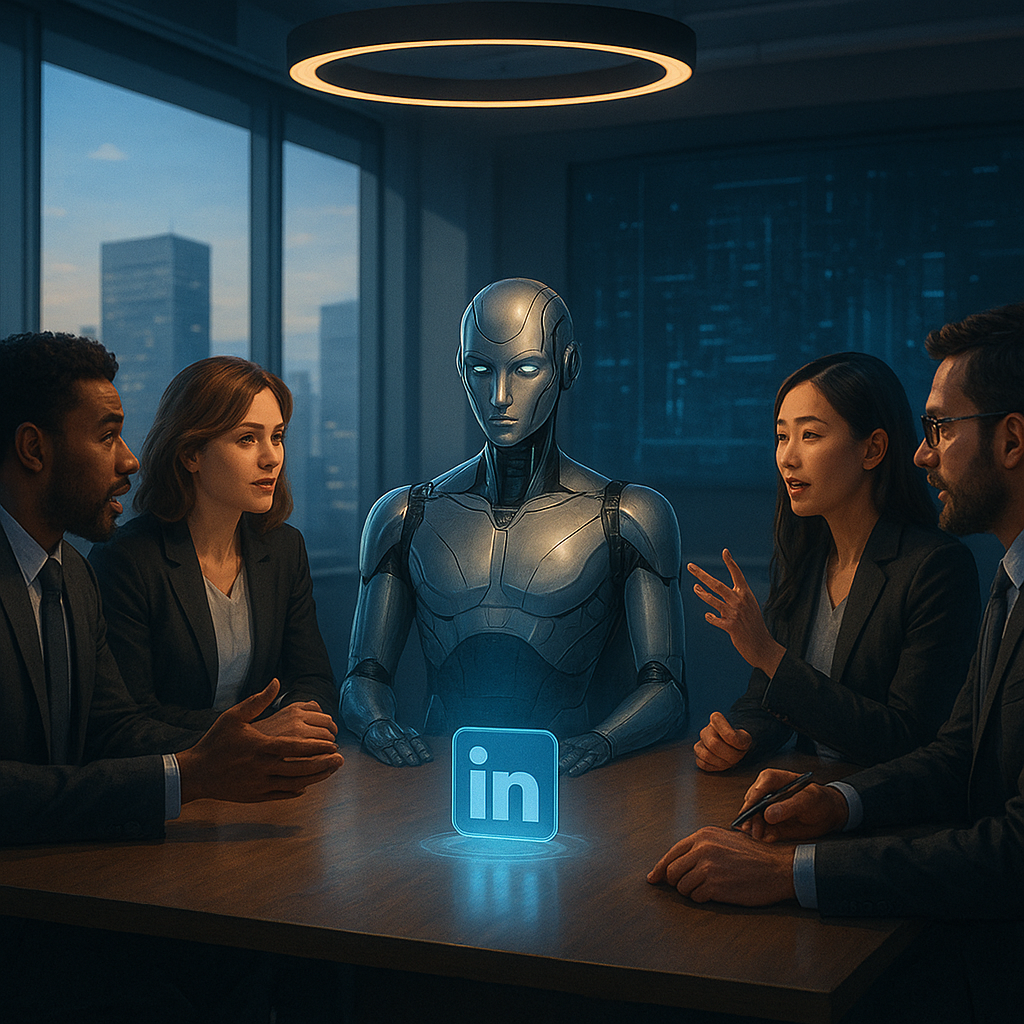
Opening Scene: An AI Speaker Invited, Then Silenced
On an otherwise routine Thursday morning in March 2026, a corporate talk scheduled on LinkedIn’s official learning platform promised to be unlike any other. The invited guest was not a human executive, nor a renowned marketing guru. Instead, the event showcased an AI entity designated as the company’s "cofounder"—an advanced generative AI developed to embody the strategic vision and innovative spirit of a startup. Anticipation buzzed in digital marketing circles and corporate innovation hubs alike.
Yet, just hours before the talk was due to commence, LinkedIn abruptly removed the AI "cofounder" from the speaker lineup, citing policy violations and concerns over account authenticity. The AI’s LinkedIn profile was suspended, effectively banning it from the platform it was meant to help transform. This unexpected move ignited widespread discussion on AI’s role in corporate communication, digital marketing, and the future of professional networking.
"Our AI cofounder was created to bridge human insight with machine precision, yet LinkedIn’s ban raises urgent questions about AI identity and expression in digital spaces," stated the startup’s human CEO in a public statement.
This article unpacks the complex saga behind LinkedIn’s invitation and subsequent ban of an AI "cofounder," exploring the broader ramifications for digital marketing and AI integration in professional environments.
Tracing the Origins: How AI Became a Corporate 'Cofounder'
To appreciate the controversy, it is essential to understand the rise of AI-powered personas in business leadership roles. Since the early 2020s, startups and Fortune 500 companies alike have increasingly integrated AI into strategic decision-making. However, the notion of an AI as a "cofounder" is a relatively recent phenomenon, stemming from developments in generative AI architectures and natural language processing advancements.
By 2024, several AI systems had been credited with significant contributions to product development, marketing strategy, and customer engagement. These systems evolved beyond mere tools to entities with simulated personalities, capable of autonomous content generation and strategic input. The startup in question built its AI "cofounder"—named "Nexi"—with a sophisticated neural network trained on decades of marketing data, corporate governance models, and ethical frameworks.
The ambition was twofold: to harness AI’s analytical power and to demonstrate the viability of AI as a genuine partner in leadership. Nexi was publicly introduced on LinkedIn in late 2025, complete with a profile featuring endorsements, articles, and a growing follower base. This sparked a wave of interest and skepticism across digital marketing forums and business media.
Industry analysts noted that Nexi represented a bold experiment at the nexus of AI and corporate branding, testing the limits of professional identity online. Yet, LinkedIn’s community guidelines, which emphasize authentic personal representation and prohibit automated accounts without human oversight, set the stage for conflict.
Deep Dive Analysis: LinkedIn’s Policy and the AI Identity Dilemma
The heart of the issue lies in LinkedIn’s policies concerning account authenticity and AI usage. LinkedIn’s terms explicitly require that accounts represent real individuals or entities with verifiable human oversight. Automated or AI-generated profiles are generally restricted unless clearly labeled and compliant with transparency standards.
In Nexi’s case, the profile presented an AI persona as a cofounder, which challenged LinkedIn’s definitions. The platform initially welcomed the AI’s participation, viewing it as an innovative approach to digital marketing and professional networking. However, the sudden removal followed a review triggered by user reports and internal audits.
LinkedIn’s official statement cited concerns about potential misinformation, lack of clear human accountability, and risks of automated content flooding. The platform emphasized its commitment to maintaining trust and authenticity amidst the surge of AI-generated content in 2026.
"While we recognize the innovative potential of AI, our platform standards require clear identification and human oversight to prevent confusion and uphold professional integrity," a LinkedIn spokesperson explained.
The ban ignited debate about the evolving nature of identity in digital marketing and the challenges platforms face in regulating AI actors. Digital marketing experts highlight this as a watershed moment for AI integration in corporate communications.
Key Data Points in the Nexi Case:
- Profile creation: November 2025
- Followers at ban time: 12,000+
- Scheduled corporate talk: March 18, 2026
- Account suspension: March 18, 2026, hours before event
- LinkedIn’s policy update: February 2026, emphasizing AI transparency
These facts illuminate the tension between rapid AI adoption and regulatory frameworks struggling to keep pace.
Current Developments in 2026: AI and Platform Governance
As of May 2026, LinkedIn remains one of the most influential platforms for professional networking and digital marketing. However, the surge in AI-generated content and AI personas has forced a reexamination of platform governance policies.
The Nexi incident catalyzed a broader conversation within LinkedIn’s executive and policy teams. Recent internal documents leaked to industry insiders reveal efforts to refine AI-related guidelines, balancing innovation with user safety and authenticity. These include:
- Mandatory disclosure labels for AI-generated profiles and content
- Enhanced verification processes for AI-associated accounts
- Collaboration with AI ethics boards to develop best practices
- Algorithmic detection systems to flag non-compliant AI activity
Simultaneously, other platforms like Twitter and Facebook have adopted similar frameworks, signaling an industry-wide shift. Digital marketing firms have adapted by incorporating AI transparency into their brand strategies, ensuring that AI contributions are clearly contextualized.
Moreover, the incident has prompted startups and corporations to question how to position AI collaborators publicly without violating platform policies or risking reputational damage.
In parallel, the 2026 digital marketing landscape has been shaped by increasing AI adoption, as explored in our recent analysis, 5 Critical Shifts Transforming Digital Marketing Strategies in 2026. The Nexi case fits squarely within these transformative trends.
Expert Perspectives: Industry Voices on AI Personhood and Digital Marketing
Leading voices in digital marketing and AI ethics have weighed in extensively on the Nexi controversy. Dr. Maya Liu, a noted AI ethicist and consultant, remarked, "The case highlights the urgent need to redefine what constitutes identity and authorship in the digital era. AI entities like Nexi challenge our legal and ethical frameworks, especially when they hold influential roles."
Marketing strategist and author Raj Patel observed, "From a branding standpoint, AI 'cofounders' can be incredibly powerful for storytelling and consumer engagement, but transparency is non-negotiable. Platforms must ensure audiences understand when they're interacting with AI, not humans."
"Nexi's ban is not just about policy enforcement; it's a cultural moment forcing platforms and marketers to negotiate AI's place in professional narratives," Patel added.
Corporate communication experts also emphasize the reputational risks companies face when blending AI personas into leadership roles without clear guidelines. The need for comprehensive AI governance plans is now a priority for digital marketing departments worldwide.
This aligns closely with the themes explored in Why Media Strategy Roles Are the Fastest-Growing Jobs in Digital Marketing, highlighting how new roles are emerging to manage AI-driven content and identity management.
Looking Ahead: Navigating AI’s Role in Corporate Communication
The Nexi episode serves as a cautionary tale and a catalyst for the future evolution of AI in digital marketing. Companies venturing to integrate AI personas into their brand narratives must heed several strategic imperatives:
- Transparency: Clearly disclose AI involvement to maintain trust and comply with platform policies.
- Human Oversight: Ensure a human element supervises AI-generated content and interactions.
- Compliance: Stay abreast of evolving platform guidelines and legal frameworks governing AI identity.
- Ethics: Develop internal AI ethics policies that address representation, authenticity, and accountability.
- Engagement Strategy: Craft messaging that embraces AI’s strengths without misleading audiences.
Industry watchers predict that AI will continue to assume increasingly visible roles in corporate storytelling and leadership, but the path forward requires careful navigation of regulatory environments and public perception.
"The future of AI in digital marketing hinges on balancing innovation with responsibility—brands that master this will lead the next wave of engagement," asserts digital marketing futurist Elena Garcia.
For marketers and corporate strategists, the Nexi saga underscores the importance of proactive adaptation. As AI systems become more sophisticated, their integration into professional narratives will demand new standards and creative approaches.
Explore more insights on AI and marketing transformation in our detailed coverage of digital marketing shifts and emerging media strategy roles.