A Business Continuity Plan is a core requirement of the ISO 22301 Business Continuity Management System (BCMS). It defines how an organization prepares for, responds to, and recovers from disruptive incidents such as cyberattacks, system failures, natural disasters, or supply chain interruptions. The goal is simple: ensure critical business functions continue with minimal downtime.
To achieve ISO 22301 certification, organizations must develop a well-structured and practical BCP that aligns with business continuity requirements and operational risks.
What Should Be Included in an ISO 22301 Business Continuity Plan?
An ISO 22301 Business Continuity Plan should clearly define how an organization will respond to disruptions and continue critical operations with minimal impact. It must be structured, practical, and aligned with Business Continuity Management System (BCMS) requirements.
Your BCP should include the following key components:
- Business continuity scope and objectives
- Critical business functions and processes
- Business Impact Analysis (BIA) summary
- Risk assessment and disruption scenarios
- Recovery Time Objectives (RTO) and Recovery Point Objectives (RPO)
- Incident response procedures
- Resource and infrastructure requirements
- Communication plan during disruptions
- Roles and responsibilities of key personnel
- Recovery strategies for operations and IT systems
- Plan testing, maintenance, and review cycle
Each section ensures that the organization can continue operations during unexpected disruptions.
How an ISO 22301 Business Continuity Plan Works
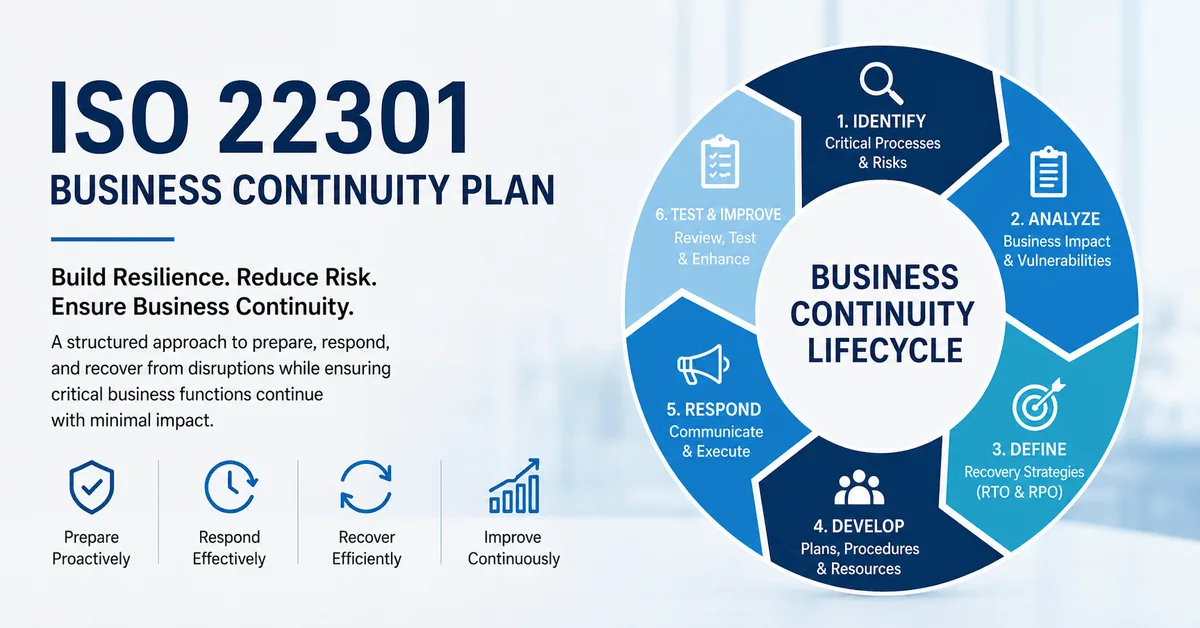
The continuity framework follows a structured lifecycle.
It begins with identifying critical business processes and evaluating their impact through a Business Impact Analysis (BIA). Based on this analysis, risks and disruption scenarios are assessed.
Recovery strategies are then defined using Recovery Time Objectives (RTO) and Recovery Point Objectives (RPO) to ensure priority systems are restored within acceptable limits.
Finally, response procedures, communication protocols, and testing mechanisms are established to ensure readiness during real incidents. This structured approach ensures business stability and faster recovery during disruptions.
Key Requirements of ISO 22301 Compliance
To achieve certification, organizations must meet several requirements:
- Context of the organization
- Leadership commitment
- Planning and risk management
- Support and resources
- Operational control
- Performance evaluation
- Continuous improvement
These requirements ensure that business continuity is embedded into the organization’s core strategy, not just a standalone document.
ISO 22301 Documents and Templates for Implementation
To implement ISO 22301 effectively, organizations require structured ISO 22301 documents, templates, procedures, and manuals. These materials standardize the BCMS and ensure audit readiness.
Proper documentation helps organizations:
- Define processes clearly
- Ensure compliance with ISO clauses
- Reduce implementation time
- Prepare for certification audits efficiently
Importance of ISO 22301 Business Continuity Plan
A well-designed BCP improves organizational resilience and reduces downtime risks. It also demonstrates compliance with international standards, which is essential for businesses aiming for global recognition and trust.
Companies often rely on an experienced ISO 22301 consultant to ensure proper implementation of the business continuity management system. Expert guidance helps in identifying gaps, creating documentation, and preparing for certification audits effectively.
How ISO 22301 Certification Supports Business Continuity
Achieving ISO 22301 certification shows that an organization has a structured and tested continuity system in place. It improves stakeholder confidence, ensures regulatory compliance, and enhances operational stability during crises.
A strong continuity system supported by proper documentation and expert guidance ensures:
- Faster response during emergencies
- Reduced operational and financial losses
- Improved stakeholder confidence
- Stronger compliance with global standards
Final Thoughts
An ISO 22301 Business Continuity Plan is a strategic framework that ensures long-term operational resilience. Organizations that implement structured planning, risk assessment, and recovery strategies are better prepared for disruptions and audit requirements.
With proper documentation, expert guidance, and continuous improvement, businesses can successfully achieve ISO 22301 certification and build a strong, sustainable continuity system.