
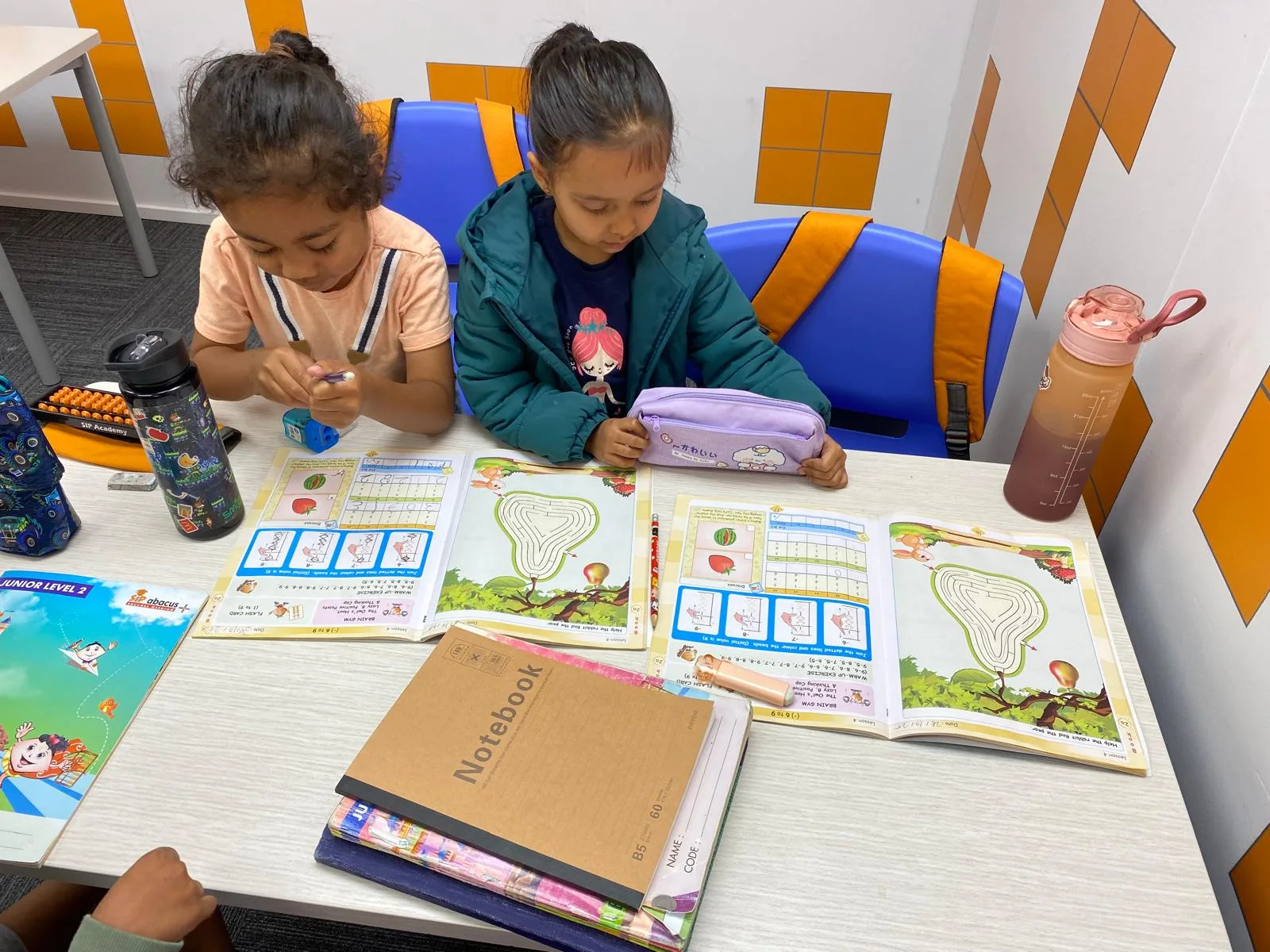
Mental math training can be useful for children, teens, adults, and older learners because it can be adjusted to match the learner’s current ability. The goal is not to turn every person into a human calculator overnight, but to build stronger number sense, quicker recall, and more confident math problem solving through steady practice. With the right pace, mental arithmetic exercises, brain math games, and tools like mental math abacus training can support many different learning styles.
Yes, mental math training is suitable for most ages and skill levels when the exercises are chosen carefully. A beginner may start with simple addition patterns, while an advanced learner may practice multi-step calculations, estimation, percentages, or speed drills. The best approach is flexible: it meets the learner where they are, then gradually increases challenge without creating pressure or frustration.
This matters because people often think mental math is only for naturally fast thinkers. In reality, mental math is a trainable skill built from memory, pattern recognition, focus, and strategy. A young child, a student preparing for exams, a professional handling everyday numbers, and an adult who wants to keep the mind active may all benefit, but they should not all practice in the same way.
The key is consistency. Short, focused sessions are usually more effective than long sessions that feel exhausting. When practice feels achievable, learners are more likely to stay engaged and build lasting confidence.
Mental math builds more than speed
Speed is the most visible result of mental math training, but it is not the only benefit. Good training helps learners understand how numbers relate to each other. For example, solving 48 + 27 becomes easier when a learner sees it as 48 + 20 + 7, or as 50 + 25. That flexibility is what makes mental calculation practical.
Strong number sense also supports better math problem solving. When learners can estimate, break numbers apart, and check whether an answer seems reasonable, they become less dependent on memorized procedures. This is especially helpful in school, where math often becomes harder because problems require several steps instead of one simple operation.
Mental math also encourages attention and working memory. Learners must hold numbers in mind, follow a sequence, and choose an efficient path. Over time, this can make everyday tasks feel easier, from checking change to comparing discounts, splitting bills, or planning time.
How mental math training changes by age
The same core skill can look very different depending on the learner’s age. A five-year-old may need movement, visuals, and playful repetition. A teenager may need targeted practice linked to school topics. An adult may prefer practical examples that connect to money, measurement, work, or daily decision-making.
For young children, the priority is comfort with numbers. Practice should feel like exploration, not testing. Counting objects, grouping items, recognizing number bonds, and using simple brain math games can create a strong foundation before speed becomes important.
For older children and teens, mental math training can strengthen school performance by making basic calculations more automatic. When less mental energy is spent on simple arithmetic, more attention is available for fractions, algebra, geometry, word problems, and reasoning.
For adults, the value is often practical and personal. Some want to feel sharper with everyday calculations. Others want to rebuild confidence after years of believing they are “not math people.” Adults may progress quickly when training is tied to real situations rather than abstract drills alone.
What skill level should a learner start with?
A learner should start at the level where they can succeed with focus, not struggle with every question. If the exercises are too easy, progress feels slow and boring. If they are too hard, the learner may memorize shortcuts without understanding them or lose confidence before the habit develops.
A simple starting point is to observe accuracy before speed. Can the learner solve single-digit addition comfortably? Do they understand place value? Can they double numbers, make tens, or estimate an answer? These small skills reveal where training should begin.
A practical starting checklist includes:
- New learners: counting, number recognition, simple addition, simple subtraction, comparing larger and smaller numbers.
- Early learners: number bonds, making ten, doubles, near doubles, skip counting, and simple word problems.
- Intermediate learners: two-digit addition and subtraction, multiplication facts, division patterns, estimation, and mental regrouping.
- Advanced learners: percentages, fractions, decimals, squares, multi-step calculations, and timed mixed practice.
- Adults returning to math: practical calculations, bill splitting, discounts, time estimates, unit conversions, and confidence-building drills.
This kind of placement prevents mental math training from becoming a one-size-fits-all routine. It also helps learners see progress quickly, which is important for motivation.
Abacus training can make numbers easier to visualize
Mental math abacus training is especially useful for visual learners because it turns numbers into a clear image. At first, learners use a physical abacus to represent values. With practice, they begin to picture the abacus mentally and calculate by moving beads in their imagination.
This method can be helpful because many learners struggle when numbers feel invisible or abstract. The abacus gives structure to place value, regrouping, addition, subtraction, multiplication, and division. Instead of guessing, learners follow a visual system.
Abacus mental math training is popular for children, but it is not limited to them. Adults can also use it to strengthen concentration and number visualization. The pace may differ, but the principle is the same: build a reliable mental model, then practice until the process becomes smoother.
For parents exploring abacus mental math training kids can enjoy, the most important factor is the learning environment. Look for programs that balance structure with encouragement. Children should understand what they are doing, not only race through answers.
Mental math tips that work for beginners and advanced learners
Effective mental math tips are usually simple, repeatable, and easy to apply in different situations. The goal is to give the brain better routes to an answer, not to make learners memorize hundreds of tricks.
Useful strategies include:
- Break numbers apart: Solve 36 + 49 as 36 + 40 + 9 instead of trying to hold the whole problem at once.
- Make friendly numbers: Turn 99 + 38 into 100 + 37 to reduce effort.
- Use doubles and near doubles: If 7 + 7 is known, then 7 + 8 is only one more.
- Estimate first: Before calculating exactly, decide what a reasonable answer should look like.
- Work left to right: For many mental calculations, starting with the largest place value is easier than copying written methods.
- Practice fact fluency: Addition, subtraction, multiplication, and division facts should become familiar through repetition and use.
- Explain the method aloud: Saying the steps helps learners notice whether they truly understand the process.
These strategies support both speed and accuracy. They also help learners become more independent because they can choose a method instead of relying on a single fixed procedure.
Brain math games keep practice engaging
Brain math games are useful because they reduce the feeling of formal practice while still building important skills. Games can improve recall, attention, pattern recognition, and flexible thinking. They are especially helpful for children, but teens and adults often benefit from game-based practice too.
Good games do not need to be complicated. A quick “make ten” challenge, a number card race, a mental multiplication round, or a daily estimation game can be enough. The best games are short, focused, and matched to the learner’s current level.
Examples of simple practice games include:
- Target number: Choose a number, then find as many addition or multiplication combinations as possible to reach it.
- Beat your own score: Solve a small set of problems and try to improve accuracy before improving speed.
- Shopping estimate: Look at a few prices and estimate the total before checking.
- Number of the day: Pick one number and list its factors, doubles, halves, and related facts.
- Mental timer: Solve three to five problems within a comfortable time limit, then discuss the strategies used.
Games should not become stressful competitions unless the learner enjoys that format. For many people, the best motivation comes from seeing their own improvement.
A practical weekly approach to mental arithmetic exercises
Mental arithmetic exercises work best when they follow a clear rhythm. Random practice can help, but a simple weekly plan makes progress easier to track. It also prevents learners from practicing only the skills they already like.
A balanced routine might look like this:
- Day 1: Review easy facts and build confidence with familiar problems.
- Day 2: Practice one strategy, such as making tens or breaking numbers apart.
- Day 3: Use brain math games to apply the skill in a playful way.
- Day 4: Try mixed problems that require choosing the right strategy.
- Day 5: Connect math to real life, such as money, time, distance, or measurement.
- Day 6: Do a short challenge focused on accuracy first, then speed.
- Day 7: Rest, reflect, or casually use numbers in conversation.
This routine can be shortened or expanded depending on age and attention span. For young children, five to ten minutes may be enough. Older learners may handle longer sessions, but quality still matters more than length.
Common mistakes to avoid
One common mistake is pushing speed too early. Fast wrong answers do not build confidence or understanding. Accuracy, strategy, and calm thinking should come first, especially for beginners.
Another mistake is using the same exercises for too long. Repetition is helpful, but learners also need variety so they can apply skills in new situations. A child who can answer flashcards quickly may still need practice with word problems, estimation, or explaining their reasoning.
It is also important not to compare learners too harshly. Some people process numbers visually, others verbally, and others through patterns or movement. Mental math training should reveal strengths, not make learners feel behind.
Finally, avoid treating tools as shortcuts. An abacus, worksheet, app, or game is only effective when it supports understanding. The learner should gradually become more independent, not dependent on the tool forever.
Confidence is the real measure of progress
Mental math training is suitable for all ages and skill levels when it is adjusted with care. Children can build number sense early, students can improve school readiness, and adults can strengthen everyday calculation skills. Whether the method involves mental arithmetic exercises, brain math games, or abacus mental math training, the most important goal is steady, confident improvement.
The best results come from practice that feels clear, achievable, and purposeful. Start at the right level, focus on understanding before speed, and celebrate small gains. Over time, mental math becomes less like a test and more like a useful everyday skill.