Ask a palm oil producer or a logistics operator in Indonesia what software they run on, and you'll usually get some version of the same answer: a mix of spreadsheets, one system for weighbridge data, another for fleet tracking, and a finance tool that nobody trusts because the numbers never quite match. None of it talks to the others. Every month-end close turns into a manual reconciliation exercise that eats up days someone could have spent on actual operations.
This isn't a technology gap. It's a mismatch. Most off-the-shelf software was built for retail or generic manufacturing, not for the specific mess of variables that come with palm oil processing or multi-modal logistics in Indonesia's geography. When a business in either of these industries goes looking for logistics software development services in Indonesia, the first mistake is assuming any general-purpose vendor can just adapt a template. They can't, not without months of costly rework that a specialized build would have avoided from day one.
What Makes Palm Oil Operations Different
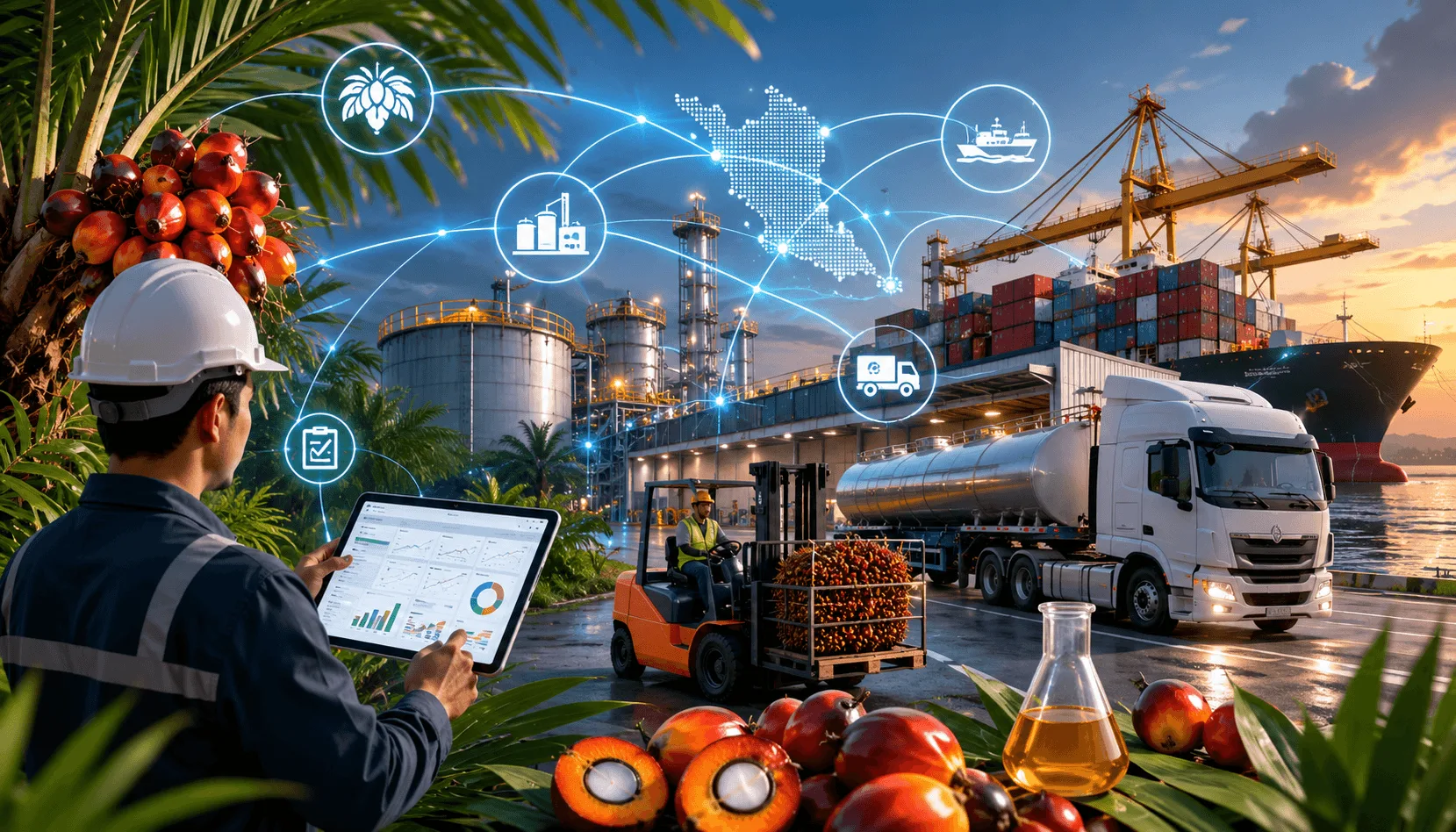
Palm oil isn't a simple supply chain. It runs through estate management, mill processing, oil extraction rates, FFB (fresh fruit bunch) grading, and traceability requirements that increasingly matter for export compliance, especially with the EU's deforestation regulation now shaping what buyers will accept. Hidden Brains as the best software development company in Indonesia that actually understands this industry needs to build for:
- Estate and yield management, tracking harvest cycles, labor allocation, and FFB quality at the plantation level
- Mill processing systems that calculate extraction rates and monitor equipment performance in real time
- Traceability platforms that can prove origin from plantation to port, which is fast becoming a non-negotiable for international buyers
- Integration between field data collection (often from remote estates with limited connectivity) and centralized ERP systems
Generic ERP platforms treat all of this as inventory management with extra steps. It isn't. A mill's extraction efficiency, for instance, depends on variables that shift daily, weather, fruit ripeness, machine calibration, and a system that can't model that relationship in near real time is just a spreadsheet with a better interface.
Where Logistics Software Falls Apart in Indonesia Specifically
Logistics in Indonesia carries a complication most software vendors from other markets never account for: the country is an archipelago. Moving goods isn't a single road network problem, it's a combination of sea freight, port handling, inland trucking, and last-mile delivery across islands with wildly different infrastructure quality. A logistics platform built for a single-landmass market like the US or most of Europe simply doesn't map onto this.
What logistics operators in Indonesia actually need from a custom build includes:
- Multi-modal shipment tracking that follows a single order across sea, rail, and road without losing visibility at each handoff
- Route optimization that accounts for port congestion, seasonal weather disruption, and inter-island transfer times
- Warehouse and fleet management that syncs with customs documentation, which remains a major friction point for inter-island and export shipments
- Real-time dashboards for shippers who need to know exactly where a shipment sits, not a status update that's already twelve hours old
Most logistics software companies sell a platform first and adapt it to the market second. That order needs to be reversed for Indonesia's geography to actually work in the system's favor instead of against it.
Why This Requires a Development Partner, Not a Package
Both industries share the same underlying issue: the software has to reflect how the business actually operates, not how a vendor's template assumes it operates. That means building custom modules for FFB grading or multi-modal tracking, not customizing a generic ERP's settings panel and hoping it's close enough.
This is also where experience across industries starts to matter more than most buyers realize. A team that has already built traceability systems for one commodity supply chain, or routing logic for one multi-modal network, brings pattern recognition that a first-time build simply can't match. Hidden Brains has spent over two decades delivering more than 6,000 software projects across sectors including oil and gas, manufacturing, and logistics, with 700-plus specialists who've already run into the edge cases that a palm oil mill or an inter-island logistics operation will eventually hit.
That kind of track record shows up in the details that are easy to overlook until they cause a problem: how a system handles intermittent connectivity from a remote estate, how it reconciles weighbridge data against mill output, or how it keeps shipment visibility intact when a container moves from a barge to a truck to a warehouse.
Questions Worth Asking Before Committing to a Build
Before selecting a software development company in Indonesia, palm oil producers and logistics operators should get specific answers to a few things. Has the vendor built traceability or multi-modal tracking systems before, or would this be a first attempt learning on your budget? How does the proposed system handle low-connectivity environments common to plantations and remote ports? What happens to ownership of the source code and documentation once the project is delivered, and who supports the system after launch?
A vendor with real experience in these industries will answer with specifics, not reassurances. Vague answers usually mean the vendor hasn't actually solved these problems before, and your project would be the one where they figure it out.
Built for the Industry, Not Retrofitted to It
Palm oil and logistics businesses in Indonesia don't need more software. They need software built around how their operations actually run, from mill floor to port to final delivery. That difference determines whether a system becomes a genuine operational asset or another tool sitting alongside the spreadsheets it was supposed to replace.