The Andaman Islands are usually introduced through photographs of long beaches, blue water and boats moving between forest-covered islands. However, a large part of the region remains invisible to travellers who only observe the sea from the shore. Scuba diving allows visitors to enter that unseen environment and experience the islands from a completely different perspective.
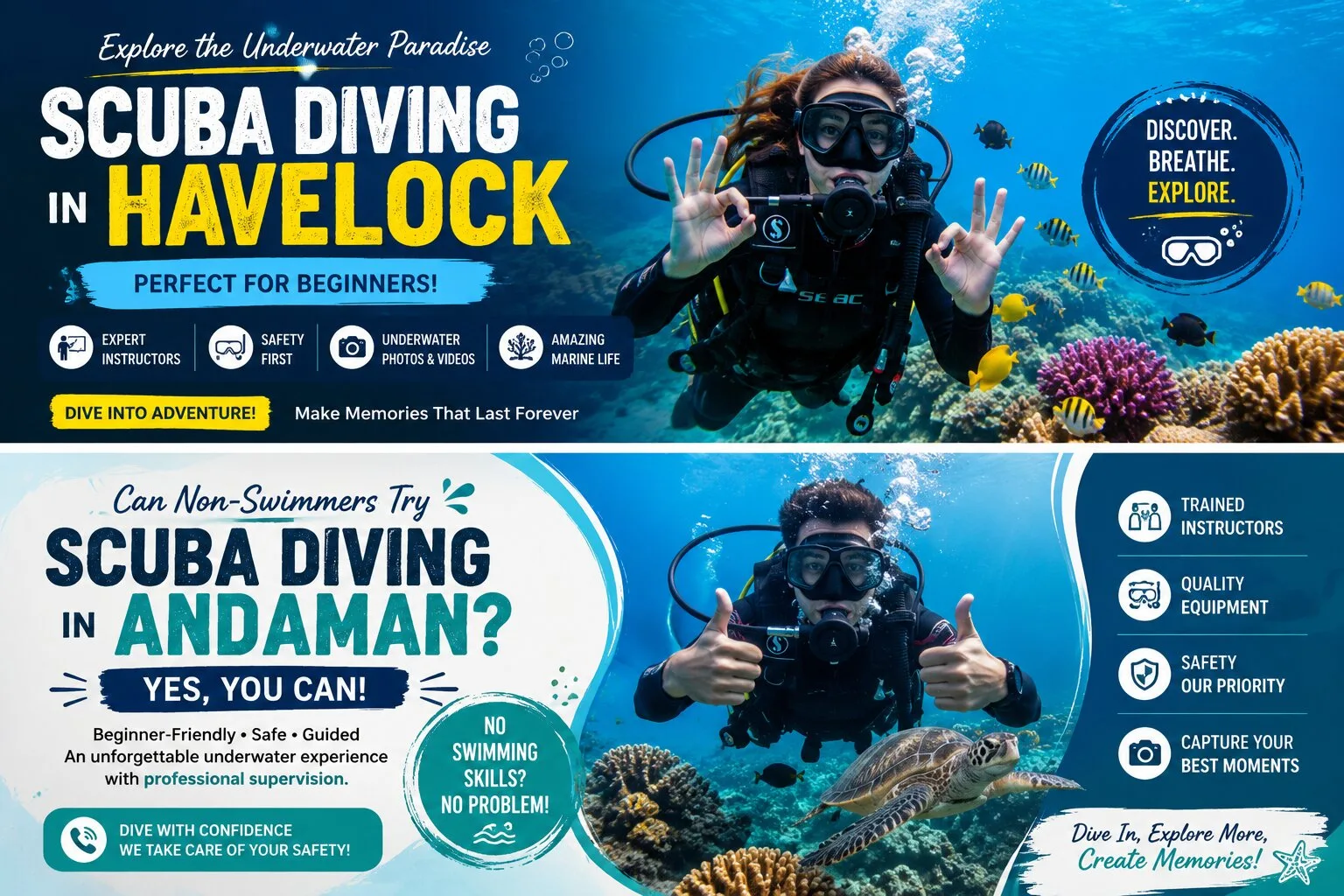
Among the many water activities available in the region, Scuba diving in Havelock has become especially popular with beginners, couples, families and adventure travellers. Havelock Island, also known as Swaraj Dweep, offers access to several diving environments where visitors may encounter reef fish, coral formations and changing underwater landscapes.
A first dive is not only about seeing marine life. It is also about learning how to remain calm, breathe slowly and move carefully in an unfamiliar environment.
Why Do Travellers Choose Havelock for Scuba Diving?
Havelock is one of the most recognised locations for water sports in the Andaman Islands. The island has a well-developed tourism network, experienced activity operators and access to different types of diving programmes.
The surrounding waters offer options for both first-time participants and certified divers. Beginners can choose supervised introductory experiences, while trained divers can explore locations that may require greater depth, improved buoyancy control and previous certification.
Another reason travellers prefer Havelock is convenience. Scuba diving can often be included alongside beach visits, island sightseeing and other water-based activities without requiring a completely separate travel plan.
However, travellers should not assume that every diving package offers the same experience. The diving location, supervision level, equipment quality, underwater time and photography inclusions can differ considerably.
Is Scuba Diving Difficult for Beginners?
Scuba diving may look difficult from the outside because participants wear specialised equipment and breathe underwater. In practice, beginner diving programmes are designed to introduce the activity gradually.
Before entering the water, participants usually receive instructions about:
- Breathing through the regulator
- Using underwater hand signals
- Clearing water from the mask
- Equalising pressure in the ears
- Maintaining a comfortable body position
- Following the instructor safely
The first few breaths may feel unusual. Some people adjust immediately, while others need additional time in shallow water. There is no need to rush. A responsible instructor allows the participant to become comfortable before moving forward.
The most important skill for a beginner is not speed or physical strength. It is the ability to remain calm and follow instructions.
Can Non-Swimmers Try Scuba Diving in Andaman?
Many travellers ask whether swimming knowledge is necessary for Scuba diving in Andaman. In selected introductory programmes, non-swimmers may be allowed to participate because the activity is conducted under close professional supervision.
Scuba equipment supports the diver in the water, and the instructor controls the movement and direction of the session. Nevertheless, a non-swimmer must clearly communicate any fear, discomfort or previous negative experience with water.
Being permitted to dive does not mean every person will feel equally confident. Someone who is extremely uncomfortable in deeper water may need a longer practice session or may decide not to continue.
Safety should always be more important than completing the activity.
Shore Diving and Boat Diving
First-time travellers may come across two common choices: shore diving and boat diving.
Shore Diving
Shore diving usually begins from a beach or a shallow coastal section. Participants enter the water gradually and practise the basic skills before moving towards the diving area.
This format can be helpful for people who want a slower introduction. It also allows beginners to become comfortable without immediately entering open water from a boat.
Boat Diving
Boat diving involves travelling to a selected diving point away from the beach. Participants enter the water from the boat and explore the underwater area with the instructor.
This option may offer access to a different marine environment, but it can feel more challenging for someone who is nervous about deep water.
Neither experience is automatically better. The choice should depend on personal confidence, medical fitness, sea conditions and the level of supervision provided.
What Can You Expect to See?
Underwater sightings are never completely predictable. The sea is a natural environment, not a controlled display.
Depending on the location and conditions, divers may observe small reef fish, groups of colourful fish, sea cucumbers, anemones, coral structures and other marine organisms. Occasionally, larger species may appear, but no responsible operator should promise a particular animal sighting.
Visibility can also change from one day to another. Wind, rainfall, currents and underwater movement can affect how clearly the surroundings can be seen.
A good diving experience should therefore not be judged only by the number of fish or the quality of photographs. The feeling of breathing underwater, moving slowly through the sea and observing marine life in its natural setting is often the most valuable part of the activity.
When Is the Best Time to Plan a Dive?
The more comfortable period for scuba diving generally falls during the months when the sea remains comparatively calm and weather conditions are stable. Many travellers plan their diving activities between October and May.
However, suitable conditions cannot be guaranteed simply because a trip falls within a preferred season. Weather may change, and activity schedules can be delayed or cancelled for safety reasons.
Travellers should avoid placing scuba diving at the final hour of a tightly planned itinerary. Keeping an extra day available can reduce disappointment if sea conditions change.
Health and Safety Considerations
Before booking, travellers should provide accurate information about their health. Breathing problems, heart-related conditions, serious ear issues, recent surgery, pregnancy or other medical concerns may affect eligibility.
Participants should also avoid alcohol before diving and should not hide a medical condition simply to take part in the activity.
Important questions to ask before confirming a booking include:
- Who will supervise the dive?
- Is the equipment checked regularly?
- How many participants will accompany one instructor?
- What happens if the participant becomes uncomfortable?
- Are photographs and videos included?
- What is the cancellation policy during bad weather?
- How much time is spent underwater?
The cheapest package may not always provide the safest or most satisfying experience.
Responsible Behaviour Underwater
Divers should remember that coral reefs and marine organisms are sensitive to physical contact. Touching coral, standing on the seabed, collecting shells or chasing fish can disturb the environment.
Beginners often move their fins without realising how close they are to the reef. Listening to the instructor and maintaining controlled movement helps reduce accidental damage.
Responsible diving means entering the sea as a visitor and leaving the underwater environment unchanged.
Why Scuba Diving Feels Different from Other Water Sports
Many water sports depend on speed, movement and excitement. Scuba diving offers a different kind of experience.
Underwater, communication becomes quieter. Movements become slower, and attention shifts towards breathing, balance and observation. Even a short introductory dive can create a strong memory because the environment feels completely separate from everyday life.
For some travellers, the most meaningful moment is not seeing a rare fish. It is the moment when nervous breathing becomes steady and the underwater surroundings begin to feel peaceful.
For people planning a visit to the islands, exploring available water activities through
https://www.experienceandamans.com/water-sports
can help them understand which experience matches their comfort level and travel schedule.
Frequently Asked Questions
1. Is Scuba diving in Havelock suitable for first-time divers?
Yes. Beginners can choose supervised introductory programmes that include basic training, safety guidance and instructor support throughout the experience.
2. Is swimming compulsory for beginner scuba diving?
Swimming may not be compulsory for selected introductory dives. However, the participant must be medically fit, comfortable enough in water and willing to follow the instructor’s directions.
3. Do beginners need a diving certificate?
A certificate is generally not required for a supervised introductory diving experience. Certification is needed for independent diving and certain advanced dive sites.
4. How much time is spent underwater?
Underwater time varies according to the programme, breathing comfort, air usage, sea conditions and instructor assessment. The complete activity usually includes briefing, preparation and travel time in addition to the dive.
5. Is scuba diving safe?
Scuba diving can be conducted safely when proper equipment, professional supervision, medical disclosure and correct safety procedures are followed. No adventure activity is completely risk-free.
6. Are underwater photographs included?
Some packages include photographs or short video clips, while others charge separately. Travellers should confirm the inclusions before booking.
7. Can children participate in scuba diving?
Age requirements differ according to the programme and operator. Parents should verify the minimum age, health conditions and supervision rules before booking.
8. What happens if the weather becomes unsuitable?
Diving may be delayed, moved or cancelled when sea conditions are considered unsafe. Travellers should check the rescheduling and refund policy in advance.
Final Thoughts
Scuba diving in Havelock offers travellers an opportunity to experience a side of the Andaman Islands that cannot be seen from beaches, ferries or viewpoints.
The best first dive is not necessarily the deepest or longest one. It is the dive where the participant feels safe, understands the instructions and has enough time to enjoy the underwater environment without pressure.
By selecting a responsible operator, sharing medical information honestly and respecting marine life, travellers can turn a short diving session into one of the most memorable experiences of their Andaman journey.