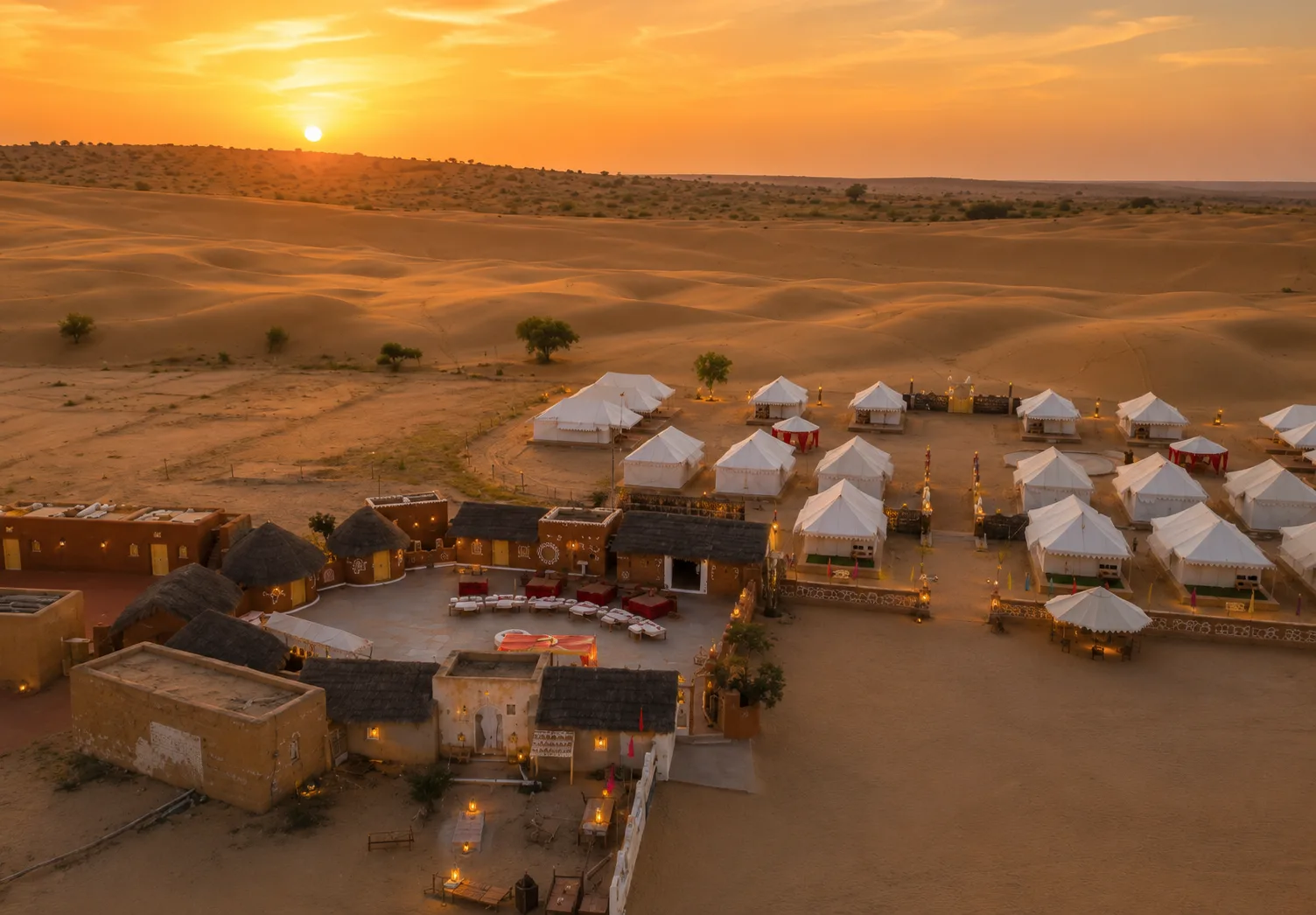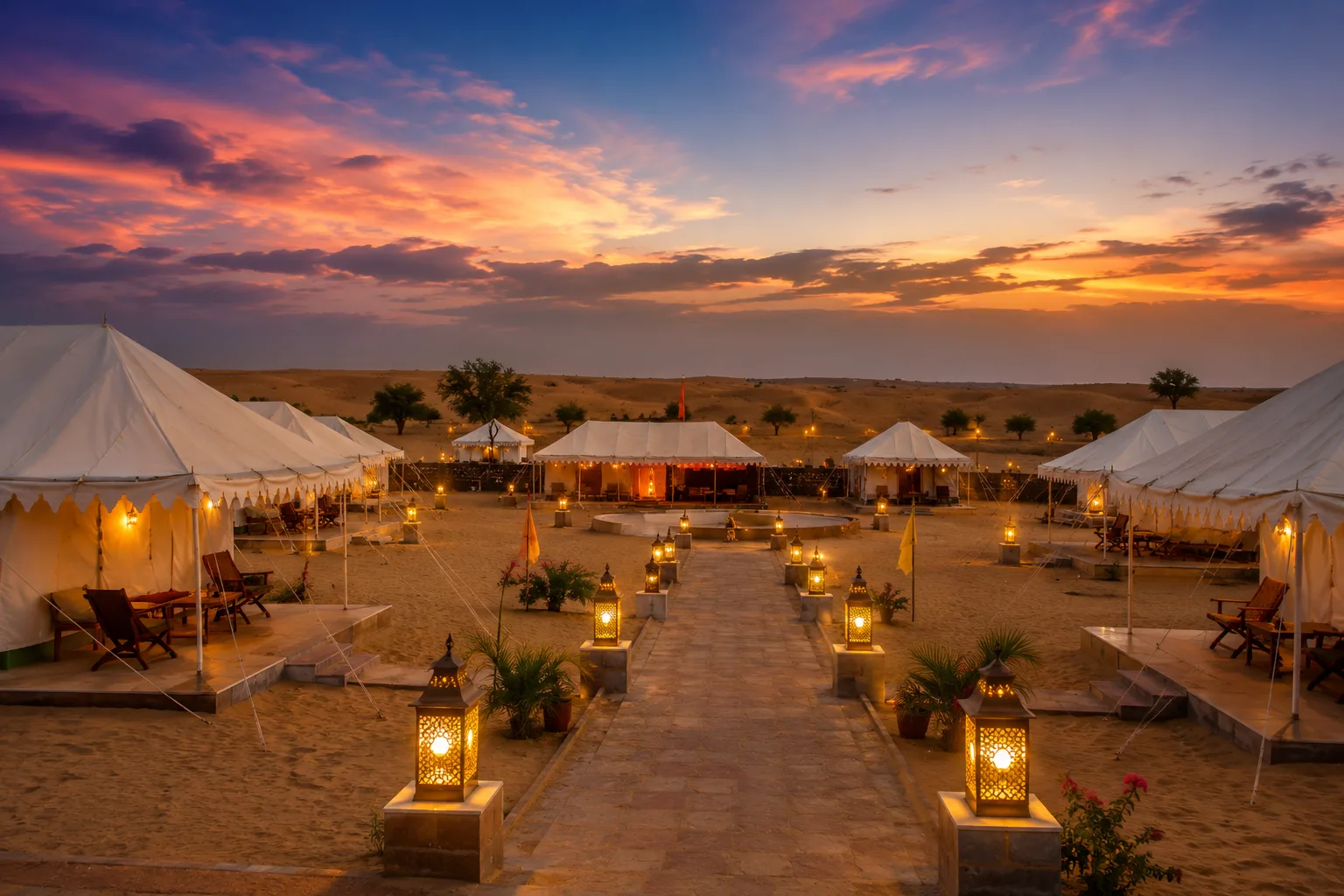
A small team retreat works best when its purpose, schedule and practical arrangements are clear. This guide covers how to plan meeting time, tent accommodation, meals, team activities and transport at Lohagarh Desert Resort in Jaisalmer. Confirm venue facilities, connectivity and group arrangements directly with the resort before inviting participants.
Define the retreat’s goal, group size and required facilities before booking. Ask the resort about meeting space, connectivity, accommodation, meals and current activities. Lohagarh Desert Resort offers desert tent stays and experiences, but organisers should confirm whether the property can support their specific agenda and group requirements.
A team retreat in Jaisalmer can give colleagues a change of setting for planning, reflection or collaboration. The desert location may feel different from an office routine, but a successful retreat still depends on a clear purpose and realistic logistics. Organisers should decide what the team needs to accomplish, then confirm whether the property can support the required schedule and facilities.
Lohagarh Desert Resort offers Swiss tent accommodation and desert experiences. A resort stay does not automatically include a dedicated meeting room, presentation equipment or reliable internet for a working session. Ask about the specific facilities needed and obtain confirmation before booking.
What should the retreat accomplish?
Begin with one clear outcome. A retreat might focus on setting priorities, reviewing a project, improving team communication or allowing a small group to plan without daily interruptions. That objective will determine how much structured work time you need and whether the trip should include overnight accommodation.
A team retreat in Jaisalmer should be designed around the group, not around an activity list. Decide who needs to attend, which decisions must be made and what preparation participants should complete before arrival. If the objective is work, avoid filling the schedule with activities that leave too little time for discussion.
Send the goal to participants in advance. Ask them to bring relevant documents, questions or project updates. This helps the on-site sessions stay focused and gives the team more time for meaningful conversation.
How do you check whether the resort can support meetings?
Before making a booking, describe the retreat’s work requirements to the resort. Ask whether there is an appropriate indoor space, what seating arrangements are possible, whether tables can be arranged for discussion and whether power outlets or presentation equipment are available. If a meeting space is not available, consider whether the group can work comfortably in another confirmed area.
Connectivity is also important. If the team needs video calls, cloud files or online presentations, ask about current Wi-Fi or mobile network conditions. Do not assume the connection will support a particular task throughout the stay. Have offline copies of important documents and tell participants if online work may be limited.
Request a written proposal covering space, equipment, timing, charges and any restrictions. The resort’s published package information may describe accommodation and experiences, but a team organiser should verify the specific meeting needs directly.
How should you plan accommodation for a team?
Collect the group size and rooming preferences before requesting a quote. Some colleagues may be comfortable sharing, while others may need separate accommodation. Ask about the available tent categories, occupancy limits, attached bathrooms, inclusions and any additional charges for extra guests.
The official Lohagarh Desert Resort package page lists tent categories and stay packages. Check current availability and pricing for the team’s dates rather than relying on old promotional details. If participants will arrive at different times, ask how late arrivals and room allocation will be handled.
Give each person clear information about the accommodation and what to bring. Mention the expected weather conditions and any practical details the resort confirms, such as arrival instructions, meal timings or activity arrangements.
How can you structure the workday?
A retreat agenda should alternate focused work with breaks. Start with the objective and the decisions the team needs to make. Use short sessions for presentations, followed by discussion or individual work. Schedule a proper meal break and give participants time to rest before any evening activity.
A practical schedule might include a morning planning session, a short break, a working discussion, lunch, a quieter afternoon review and a closing summary. The exact timetable should reflect the group’s travel and the facilities confirmed by the resort. Leave time for arrival, check-in and transitions between spaces.
At the end of each session, record decisions, owners and deadlines. This prevents the retreat from becoming a series of conversations without follow-through. Share the summary with the team after the event.
How should meals and team activities fit in?
Ask about meal timings, menu arrangements, dietary requests and charges. If the group has a fixed work schedule, tell the resort when meals should be served and ask what arrangements are possible. Collect allergies and dietary preferences in advance, then confirm what the kitchen can accommodate.
Team activities can provide a change of pace, but they should be suitable for everyone. Ask the resort what experiences are currently available, how long they take, what they cost and whether there are any safety or age requirements. Participation should not be assumed if an activity is physically demanding or not suitable for every team member.
The resort’s desert experiences can be discussed as optional parts of the retreat. Confirm availability and details for the selected dates before presenting an activity as part of the programme.
How should you coordinate transport and timing?
Share the arrival point, transfer plan and contact details with participants before departure. If the team is travelling together, confirm vehicle capacity and luggage space. If colleagues are arriving separately, provide a clear check-in time and tell them whom to contact if there is a delay.
Build a buffer between travel and the first work session. A team that begins immediately after a long journey may not be ready to focus. Allow time to settle in, have refreshments and review the agenda before starting.
Before returning, confirm departure timing and check whether the group needs to settle any extra charges or return equipment. One organiser should keep the booking details, contact numbers and confirmed schedule in one place.
Retreat planning checklist
Define the goal, share the attendee count and room needs, confirm meeting space and connectivity, obtain a written quote, clarify meals and activities, plan transport and leave buffers around the work sessions. These steps help the team avoid relying on unconfirmed assumptions.
Frequently Asked Questions
Q.1 Can Lohagarh Desert Resort host a team retreat in Jaisalmer?
ANS. Lohagarh Desert Resort offers tent accommodation and desert experiences that a team may consider for a retreat. Organisers should contact the resort with the group size, work agenda and facility needs. Ask specifically about meeting space, seating, connectivity, equipment, meals and activity availability. A suitable retreat setup should be confirmed in writing before the team travels.
Q.2 Does Lohagarh Desert Resort provide a meeting room for a team retreat in Jaisalmer?
ANS. Organisers should ask Lohagarh Desert Resort directly whether a dedicated meeting room or suitable indoor space is available for their dates. Confirm capacity, seating layout, power access, equipment, connectivity, access times and any charges. Do not assume that a tent stay includes a meeting facility or that a room shown in general property information is available for meetings.
Q.3 Can a Jaisalmer team retreat combine work sessions and desert activities?
ANS. A team may combine work time with optional resort experiences if the schedule and current operations allow. Lohagarh Desert Resort can confirm which activities are available, how long they take and any safety conditions or extra charges. Keep activities optional when the group has different comfort levels, and leave enough time for the work objectives agreed before the trip.
Q.4 How should a company plan meals at a team retreat in Jaisalmer?
ANS. Share meal times, group size, allergies and dietary preferences with Lohagarh Desert Resort before arrival. Ask what menu arrangements are available and whether meals can be timed around the agenda. Confirm any package inclusions and extra charges in writing. This helps organisers build a realistic schedule and gives the resort time to respond to the group’s needs.
Q.5 What should organisers confirm before booking a team retreat in Jaisalmer?
ANS. Organisers should confirm the date, tent categories, occupancy, meeting facilities, connectivity, meals, activities, transport and all payment terms with Lohagarh Desert Resort. Ask which features are included and which cost extra. If the retreat depends on a specific work setup or activity, obtain written confirmation of that arrangement before inviting participants or collecting their contributions.
Final Thoughts
A desert retreat can provide a memorable setting for a team, but the work plan and facilities need to match. Define the objective, check the meeting setup, confirm meals and accommodation, and make activities optional. Lohagarh Desert Resort can then respond to a clear brief for the group’s dates.