
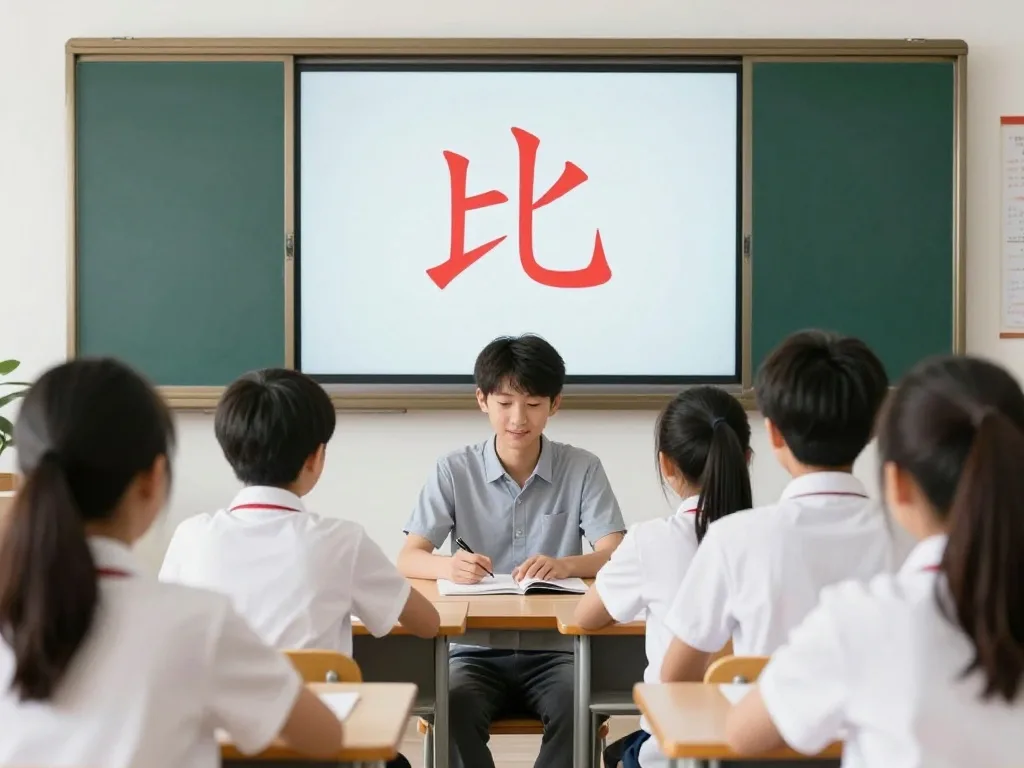
Chinese characters can feel difficult at first. Students may learn a character in class and forget it a few days later. This is common, especially for learners who are used to alphabet-based languages.
The good news is that students do not need to rely on endless copying. They can learn characters by understanding their parts, using memory tricks, and meeting the same characters in different situations. Research online Chinese language learning also supports using character structure, stories, games, and active practice rather than relying only on passive memorisation.
1. Teach Characters in Small Groups
Giving students too many new characters at once can make learning stressful. Start with a small group and give students enough time to recognise and use them.
For example, a lesson could introduce five to eight characters. Students can first learn their meanings and sounds. They can then practise writing and using them in simple words.
Small groups make it easier for students to notice differences between characters. They also give teachers a chance to check understanding before introducing more vocabulary.
2. Explain Character Components
Chinese characters are not simply random drawings. Many contain familiar components that can give clues about meaning or pronunciation.
Teachers can point out these parts when introducing a new character. This gives students something familiar to connect with.
For example, the character 休 (xiū) means "to rest". It contains 人 (person) and 木 (tree). A student can imagine a person resting beside a tree.
These simple connections can make a character easier to recall. Research into Chinese character learning has also found that teaching radicals and character structure can support learners' memory.
3. Use Short Memory Stories
A good story can turn an unfamiliar character into something meaningful.
Ask students to create a short picture or story around a character. It does not have to be complicated. In fact, funny and unusual stories can be easier to remember.
Take 明 (míng) as an example. It contains 日 (sun) and 月 (moon). Students can imagine the sun and moon together creating a bright sky.
The aim is not to teach every character through its historical origin. Instead, the story gives students a personal memory link.
Mnemonic and key-image approaches have been studied in Chinese education. One study found that key-image instruction improved both Chinese learning performance and students' interest, with effects still seen in later retention tests.
4. Practise Stroke Order
Writing a character repeatedly is not enough on its own. Students should understand how the strokes fit together.
Show the correct stroke order and let students copy it slowly. Then ask them to write the character without looking at the model.
This creates a useful shift from copying to recall.
Teachers can also use grids to help students understand size, position, and balance. Once students know where each part belongs, complicated characters can seem much less intimidating.
Multi-sensory activities can also help younger learners. Writing characters in the air, saying them aloud, or tracing them can give students different ways to remember the same information.
5. Connect Characters With Words
Students should not learn characters in isolation whenever possible.
Once a character has been introduced, show students a few common words that use it. Then use those words in short sentences.
For example, after learning 学 (xué), students might meet words such as 学生 (student) and 学习 (study).
This helps students understand that characters are part of real language. It also gives them repeated exposure without making revision feel like a spelling test.
6. Use Spaced Revision
A character that students know today may disappear from memory next week if they never see it again.
Short revision sessions can solve this problem. Instead of spending one long lesson reviewing everything, revisit characters regularly.
A simple schedule might look like this:
- Review new characters the next day.
- Check them again later in the week.
- Use them in a short activity the following week.
- Bring them back during later lessons.
This gives students several opportunities to recall the same information.
7. Turn Revision Into a Game
Games can make character practice less repetitive.
Teachers can use matching cards, character bingo, quick recognition challenges, or team activities. Students could match a character with its meaning, pronunciation, picture, or related word.
A classroom study of Chinese teaching found that teachers use games and competitions alongside explanations of character structure and radicals. These activities can make students more active during learning.
The game does not need to be complicated. Even a five-minute activity can give students useful practice.
8. Ask Students to Explain Their Memory Tricks
Every student remembers information differently.
One learner may remember a character through a picture. Another may prefer a story. Someone else may remember it after writing it several times.
Give students opportunities to explain how they remember particular characters. This encourages them to think about their own learning habits.
Research on adolescent Mandarin learners suggests that students develop different strategies for remembering characters and can benefit when teachers help them use those strategies effectively.
9. Make Characters Part of Everyday Learning
Students need to see characters outside formal revision.
Teachers can include simple Chinese signs, short messages, labels, menus, dialogues, and pictures in lessons. Parents can also encourage children to notice familiar characters when they come across Chinese online tutoring or in books.
Seeing a character in different settings helps students understand that it has a purpose beyond a worksheet.
10. Give Students Time to Recall
One of the most useful changes a teacher can make is to give students time to think.
Instead of immediately showing the answer, ask:
"What does this character mean?"
"How do you pronounce it?"
"Can you write it without looking?"
"Where have you seen this character before?"
These questions make students retrieve information from memory. That is different from simply recognising an answer on a page.
Helping Students Remember Chinese Characters
Remembering Chinese characters becomes easier when students understand what they are learning. Character components, simple stories, stroke practice, regular revision, games, and real examples can all play a part.
The key is consistency. Students do not need to master dozens of characters in one sitting. They need regular opportunities to see, use, write, and recall them.
For learners who need structured support, Chinese language lessons with Mixt Academy can provide guided practice and personalised learning suited to the student's level. A clear routine can help students approach Chinese characters with greater confidence and less frustration.