Medical bandages and tapes play an important role in wound care, injury management, and post-surgical recovery. From small cuts and abrasions to surgical wounds and orthopedic support, the right wound care products help protect the affected area, reduce the risk of infection, and support faster healing. Hospitals, clinics, healthcare professionals, and home caregivers all rely on quality bandages and medical tapes for effective patient care.
Choosing the correct medical bandage or tape is not always simple because different wounds and medical conditions require different levels of support, compression, absorption, and adhesion. Some products are designed for sensitive skin, while others provide strong fixation and stability for dressings and medical devices.
Understanding the types, uses, and benefits of medical bandages and tapes can help patients and healthcare providers make better decisions for safe and comfortable wound management.
What Are Medical Bandages & Tapes?
Medical bandages are protective materials used to cover wounds, support injured body parts, and secure dressings in place. They are commonly used in hospitals, clinics, first aid kits, and home healthcare settings. Depending on the application, bandages may provide compression, absorb wound fluids, or stabilize joints and muscles.
Medical tapes are adhesive products used to fix dressings, tubing, gauze, or bandages securely onto the skin. These tapes help keep wound dressings in place and prevent unnecessary movement that may interrupt the healing process.
Although bandages and tapes are often used together, they serve different purposes. Bandages mainly provide protection and support, while tapes are primarily used for fixation and dressing retention.
Different Types of Medical Bandages Used for Wound Care
Different medical conditions require different types of bandages. Each product is designed to provide specific benefits based on the wound type, injury level, and patient comfort.
Adhesive bandages are commonly used for small cuts, abrasions, and minor injuries. These bandages are easy to apply and provide quick protection against dirt and bacteria.
Elastic bandages are widely used for compression and orthopedic support. They help reduce swelling, stabilize joints, and support injured muscles. These bandages are often used in sports injuries, sprains, and rehabilitation.
Crepe bandages are lightweight and flexible, making them suitable for long-term support and dressing retention. They provide moderate compression and are commonly used for muscle strain and joint support.
Gauze bandages are highly absorbent and suitable for wound dressing applications. They help absorb wound exudate while maintaining proper airflow for healing.
Compression bandages are specially designed to improve circulation and manage conditions like edema, varicose veins, and venous ulcers.
Various Types of Medical Tapes Used for Secure Dressing Fixation
Medical tapes are available in different materials and adhesive strengths depending on the clinical requirement.
Paper tapes are soft, lightweight, and suitable for sensitive skin. These tapes are commonly used for elderly and pediatric patients because they reduce skin irritation.
Microporous surgical tapes are breathable and comfortable for extended use. They allow airflow while keeping dressings securely in place.
Cloth tapes provide strong adhesion and durability, making them suitable for securing heavy dressings and medical tubing.
Waterproof medical tapes are designed for moisture resistance and are useful in humid environments or situations where exposure to water is expected.
Elastic adhesive tapes provide flexibility and support during movement. These tapes are commonly used in sports medicine and orthopedic applications.
How to Choose the Right Medical Bandages & Tapes
Selecting the right medical bandage or tape depends on several important factors including wound type, skin sensitivity, support requirements, and duration of use.
For minor cuts and abrasions, lightweight adhesive bandages or gauze with surgical tape may be sufficient. Surgical wounds often require sterile dressings with strong yet skin-friendly adhesive fixation.
Patients with sensitive skin should use hypoallergenic and breathable medical tapes that minimize skin irritation and discomfort. Latex-free products are also preferred for patients with allergies.
Compression and support requirements are equally important when choosing bandages. Elastic and crepe bandages are suitable for swelling management and joint support, while soft absorbent rolls are ideal for wound cushioning and padding.
The duration of use also affects product selection. Long-term applications require breathable materials that remain comfortable on the skin for extended periods.
In environments where moisture or physical activity is involved, waterproof or elastic adhesive tapes may provide better durability and fixation.
Benefits of Using the Right Medical Bandages & Tapes
Using the correct bandages and tapes offers multiple benefits for patients and healthcare professionals. Proper wound coverage protects the affected area from external contamination and reduces infection risk.
Secure fixation helps maintain dressing stability and prevents unnecessary wound disturbance. This supports a more effective healing process and improves patient comfort.
Compression bandages help reduce swelling and improve circulation, especially in orthopedic and vascular care applications.
Breathable and skin-friendly materials reduce irritation and discomfort, making long-term wound care easier for patients.
High-quality medical tapes also improve dressing reliability, reducing the need for frequent dressing changes.
Common Mistakes to Avoid
Many people make mistakes while selecting or applying medical bandages and tapes. One common issue is using overly adhesive tape on delicate or sensitive skin, which may lead to irritation or skin damage.
Choosing the wrong bandage size can also affect wound protection and patient comfort. Bandages that are too tight may restrict circulation, while loose dressings may fail to provide proper support.
Ignoring product breathability is another common problem. Non-breathable materials may trap moisture and affect the healing process.
Delayed replacement of soiled or loose dressings can increase infection risk and reduce wound protection.
Proper application techniques and regular dressing changes are essential for safe and effective wound care.
Medical Bandages & Tapes Used in Hospitals and Home Care
Medical bandages and tapes are essential in both professional healthcare settings and home care environments. Hospitals use these products extensively for surgical dressing fixation, wound management, trauma care, and orthopedic support.
Home caregivers also rely on medical tapes and bandages for managing minor injuries, chronic wounds, post-surgical recovery, and elderly patient care.
Sports professionals frequently use compression and elastic bandages to support muscles and joints during physical activities.
As healthcare awareness continues to grow, the demand for reliable wound care products is increasing in clinics, nursing homes, rehabilitation centers, and home healthcare setups.
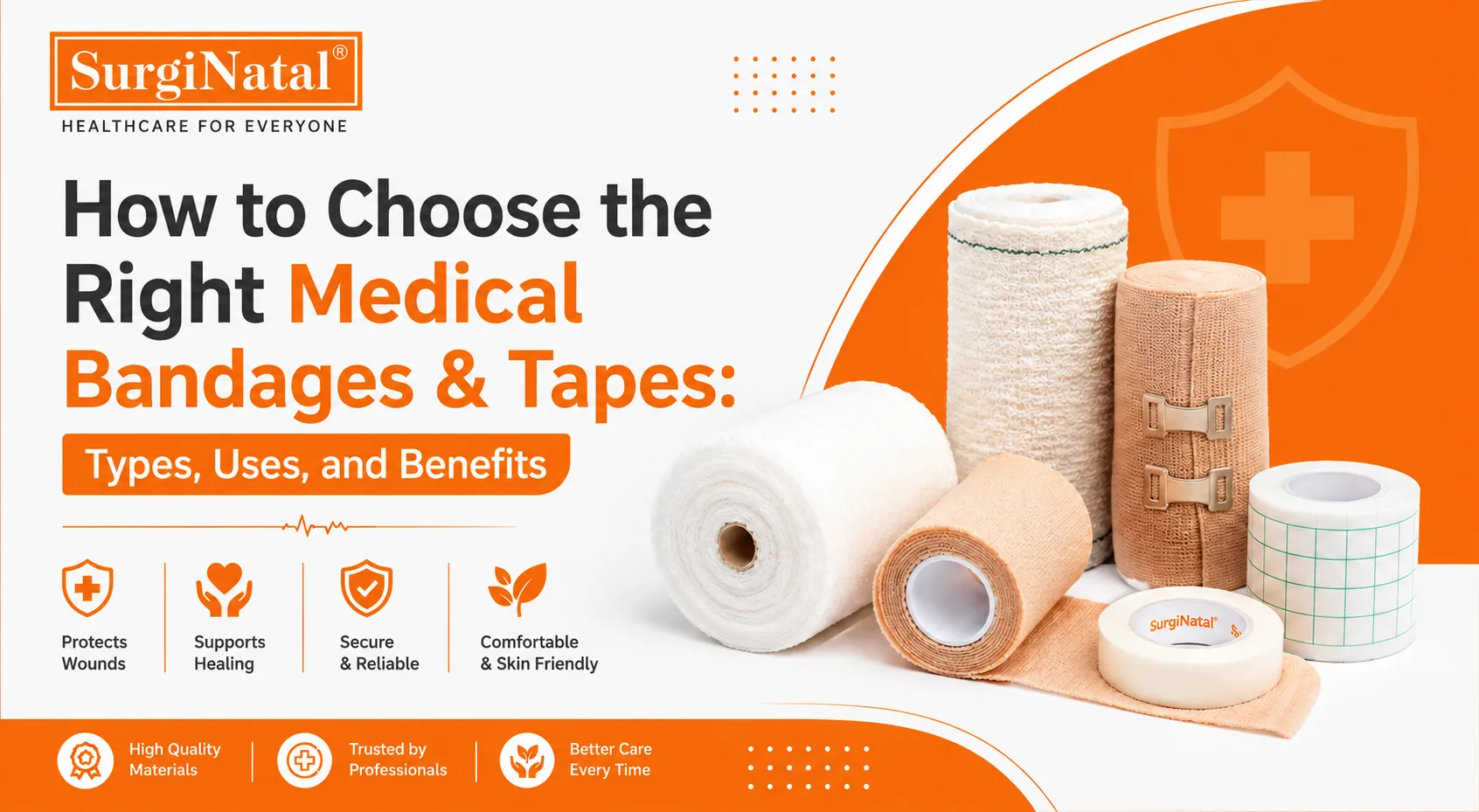
Popular SurgiNatal Medical Bandages & Tapes for Professional Wound Care
SurgiNatal offers a wide range of high-quality medical bandages and tapes suitable for hospitals, clinics, and home healthcare needs.
Gamjee Roll 15 CM
It is designed for soft cushioning and absorbent wound care applications. It provides comfort and protection for surgical and orthopedic dressing requirements.
Medigrip Adhesive Tape - 5 mtr
It offers secure dressing fixation with reliable adhesion for medical and surgical use.
Crepe Bandage 6CM*4MTR
It provides flexible support and compression for sprains, swelling management, and orthopedic care.
3M Elastic Adhesive Bandage - 10 cm*4 mtr
It is suitable for strong support, compression therapy, and sports injury applications.
Cotton Bandage - Pack of 10 Pcs - 5cm*2.5mtr
It is commonly used for dressing retention, wound coverage, and first aid applications.
Soft Roll 10cm x 3 MTR
It provides soft padding and protection for sensitive wounds and dressing support.
These products help healthcare professionals and caregivers manage wound care efficiently while maintaining patient comfort and safety.
Tips for Safe Application and Removal
Before applying any bandage or medical tape, the wound area should be properly cleaned and dried. Clean application helps reduce contamination and supports better healing.
Bandages should be wrapped firmly but not too tightly. Proper wrapping helps maintain circulation while providing sufficient support.
When removing medical tapes, gentle peeling techniques should be used to avoid skin damage. Skin-friendly adhesive removers may also help in sensitive cases.
Dressings should be replaced regularly, especially if they become wet, loose, or contaminated.
Monitoring the wound for signs of redness, swelling, or infection is also important during the healing process.
Why Buy Quality Medical Bandages & Tapes Online?
Buying medical bandages and tapes online provides convenience and access to a wide range of healthcare products. Healthcare providers and home users can easily compare products, sizes, and specifications before making a purchase.
Online medical stores also provide access to trusted healthcare brands and bulk purchasing options for hospitals and clinics.
Reliable online suppliers ensure product quality, proper packaging, and timely delivery for healthcare needs.
Choosing certified and high-quality wound care products helps improve treatment outcomes and patient satisfaction.
Conclusion
Choosing the right medical bandages and tapes is essential for effective wound care, injury support, and patient comfort. Different wounds and medical conditions require different levels of compression, absorption, flexibility, and fixation.
Understanding the types, uses, and benefits of medical bandages and tapes can help healthcare professionals and caregivers select suitable products for safe and efficient treatment.