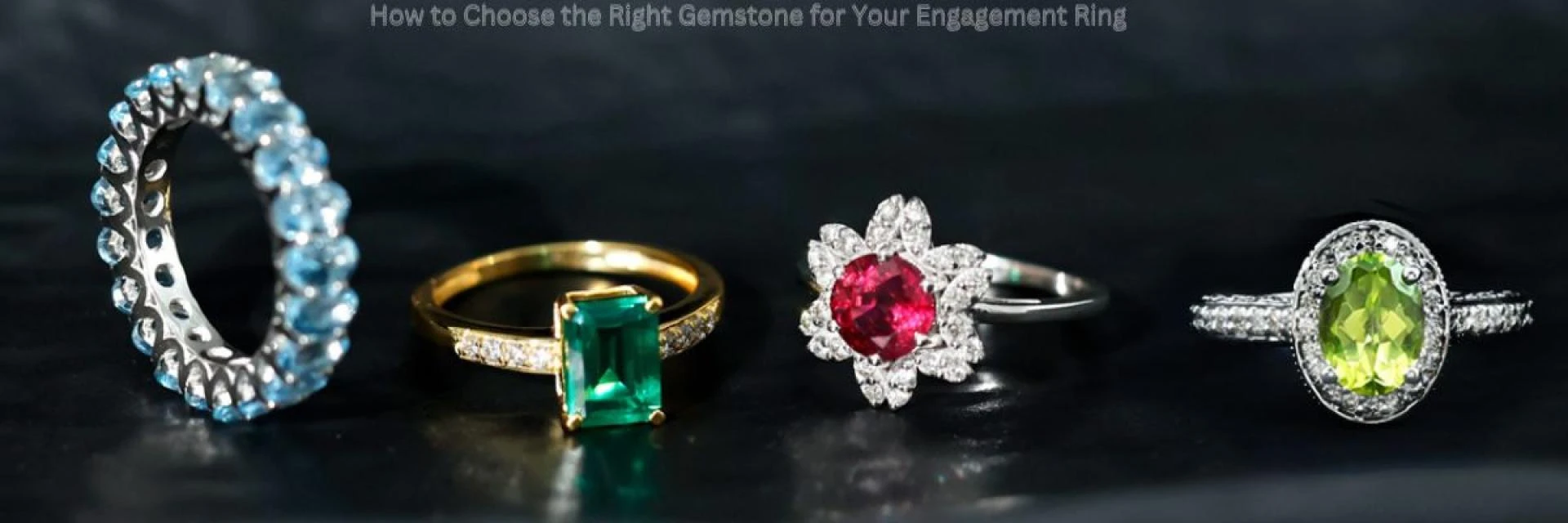
If you are purchasing an engagement ring, the gemstone is equivalent to the setting or band. If you are one of the people who believe that the beauty of a diamond will never go out of fashion, then you could be one of the people who loves to take a pop of colourful gemstone rings or perhaps you find yourself interested in one of the eco-friendly, sustainable options and the gemstone you opt for speaks to both your personal preference and your emotional expression. This guide breaks down various types of gemstones, from precious to semiprecious to lab-grown, that will help you pick the best gemstone for engagement rings.
Overview of Gemstone Types
Precious Gemstones
Diamond: One gemstone that is still most desired to be adorned on an engagement ring handed down through generations, the diamond reflects brilliance and hardness. It delivers a clear, classical look with a symbol of purity and eternity. As the hardest material in existence, it ensures durability for daily wear.
Ruby: Ruby is fire red. A colour associated with passion and love. It is also one of the hardest gemstones, making it highly durable for an engagement ring.
Emerald: The emeralds, characterized by their beautiful green colour, represent rebirth and love though slightly softer than a diamond or a sapphire, are still the classiest and aesthetically pleasing choice.
Semi Precious Gemstones
Semiprecious gemstones appear to be more accessible than their precious counterparts; however, they are still stunning and of value. Some of the most popular semi-precious options include:
Amethyst: It features soothing purple undertones and is known in the market for something that stands unique.
Garnet: Garnet usually appears in rich shades of red. The wearer of garnet is believed to be blessed with love and protection.
Aquamarine: Aquamarine features serenely hued tones. Perhaps, it is a refreshing and stunning piece for an engagement ring.
Lab-Grown Gemstones
Lab-grown stones are chemically, physically and optically identical to natural gemstones and are not naturally occurring, but rather cultured. Some of the reasons why lab-grown gemstones gain popularity over natural gemstones include; that they are always more affordable and environment-friendly since there is no mining.
It never compromises on the quality or beauty of having a lab-grown gemstone. It is the choice of many customers for an ethical source with a lower price. When a person is seeking the best gemstone for an engagement ring, these lab-grown options may turn out to be an ideal option between luxury and sustainability.
Popular Gemstone Choices
Diamond
The classic choice is a diamond. Such a gem has the highest brilliance and hardest surface.
Sapphire
Now, sapphire hues run wide and far with colours all across the spectrum, a good choice for people who like colour in their engagement rings. Sapphire has always been associated with royalty. This stone comes in a beautiful deep blue. A sapphire engagement ring is a wonderful way to merge tradition with a modern twist.
Ruby
If you want to make a statement, you might consider a ruby since this stone boasts a vibrant red colour along with exceptional hardness, making it both practical and visually striking. Rubies also go well with either gold or platinum settings.
Emerald
Emeralds are known for their bright green colour and dramatic inclusions, which are often referred to as the stone's "garden." Although they do require a bit more care than most other precious stones, an emerald engagement ring makes for a striking, exclusive choice that exudes sophistication.
NOTE=> Shop Colored Gemstone Engagement Rings
Non-Traditional Gemstones
For couples wanting to go a little off the beaten path, non-traditional gemstones make all the difference between a personal and generic engagement ring. Here are just a few of the hottest options that are currently trending:
Opal
With truly magical iridescence and colour play, an Opal could be an ethereal choice for an engagement ring. As every opal is distinct and with a soft, glowing appearance, it's a connoisseur's gem for someone wanting an elegant look.
Morganite
Morganite is a soft pastel pink stone. This stone has recently gained popularity for its romantic and feminine hue. Settings in rose gold are also very popular as they complement the blush tones of this stone. Among the affordable alternatives to traditional coloured gemstone rings, morganite provides a subtle yet distinctive colour to an engagement ring.
Moissanite
Though sometimes mistaken for diamonds, moissanite has a brilliance and fire that exceeds many of the classic stones. Typically it is less expensive than most of the classic gemstones and looks like any other that is in great demand. Moissanite is nearly as hard as diamonds, so it can therefore withstand regular wear.
Lab-Grown Gemstones: The New Alternative
Why Lab-Grown?
Affordability: Lab-grown diamonds and other stones are in general more affordable. Thus, you can get a larger stone with a better quality within your budget.
Ethical sourcing: As these are lab-created stones, there is no chance of contributing to any conflict or unethical practices of mining.
If you're looking for the best gemstone for engagement rings and want to avoid breaking the bank, as well as that conflict of consciousness with natural stones, then lab-grown is the best choice.
Conclusion
When you choose your best gemstone for engagement rings, there are a host of factors that will influence your choice, including style, budget and also values. You can opt for a "vibrant coloured gemstone ring," like a sapphire or ruby or buck the trend with opal or even moissanite. In the final analysis, it's just the gemstone that has to speak to you.