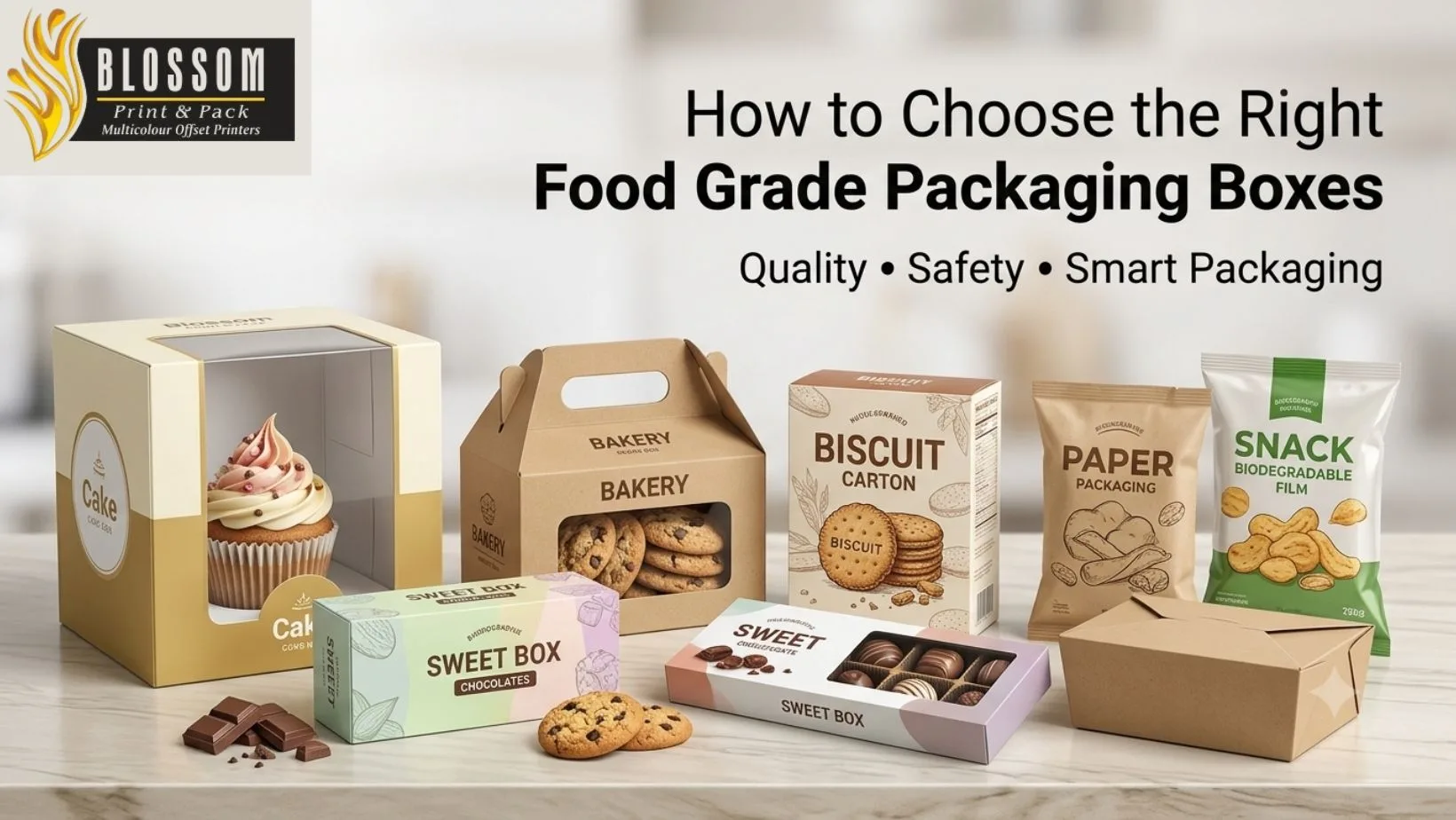
Choosing the right packaging is an important decision for any food business. Whether you manufacture bakery products, snacks, sweets, confectionery or ready-to-eat meals, packaging plays a major role in protecting your products and presenting them professionally. The right box should not only look attractive but also suit the food product, its storage conditions and transportation requirements.
Food Grade Packaging Boxes help businesses pack food products using materials suitable for the intended food-contact application. However, not every packaging material or box design works for every product. Factors such as material quality, box structure, moisture resistance, printing and food safety requirements should be considered before making a choice.
If you are planning to upgrade your packaging or launch a new food product, here are some important factors to consider.
1. Understand Your Food Product Requirements
The first step is to understand what type of food you want to pack. Different products have different packaging needs. For example, biscuits and dry snacks require different protection compared to cakes, chocolates or oily food items.
Before selecting packaging, consider:
- Bakery products: Cakes, pastries and cookies need boxes that provide proper support and help prevent damage.
- Dry snacks: Chips, namkeen and biscuits require packaging that helps protect them from moisture and external contamination.
- Sweets and chocolates: These products may need attractive boxes with suitable internal compartments or protective inserts.
- Ready-to-eat food: Packaging should be appropriate for the food's temperature, moisture and handling requirements.
- Frozen products: Materials and packaging structures should be suitable for the required freezing and storage conditions.
Understanding these requirements helps you select packaging that is practical for your products.
2. Choose the Right Packaging Material
Material selection is one of the most important parts of food packaging. The material should be suitable for the type of food being packed and the conditions in which it will be stored.
Common options include paperboard, cardboard and other food-contact-approved packaging materials. Paperboard cartons are often considered for bakery products, confectionery, dry snacks and other packaged foods.
When selecting Food Grade Packaging, businesses should check whether the material is appropriate for direct or indirect food contact, depending on the packaging design.
For products containing oil, moisture or liquids, additional protective barriers may be required. It is also important to check the suitability of printing inks, adhesives and coatings used during production.
3. Consider Box Size, Shape and Strength
Packaging should fit the product properly. A box that is too large may allow the food to move around, while a box that is too small can damage the product or make packing difficult.
Choose a box structure based on the product's dimensions, weight and shape. For delicate bakery products, a sturdy structure can provide better support. For chocolates or assorted sweets, customised compartments can help keep individual pieces organised.
Well-designed Food Packaging Boxes should also be easy to assemble, close and handle. If your products are transported over long distances, consider the strength of the material and how the boxes will be stacked during storage and delivery.
4. Focus on Customisation and Brand Presentation
Packaging is one of the first things customers notice about a product. A well-designed box can help your brand look professional and create a positive impression.
Custom Food Packaging Boxes allow businesses to include their logo, brand colours, product name and other important details. You can choose different box sizes, shapes and designs according to your product category and branding requirements.
For example, a bakery may prefer elegant printed boxes for cakes and pastries, while a snack brand may choose colourful packaging that highlights its product range.
The design should remain simple, readable and consistent with your brand identity. Attractive packaging does not always need complicated graphics; a clean layout with clear product information can be equally effective.
5. Check Printing Quality and Finishing Options
Good printing can make a noticeable difference to packaging presentation. Poor colour quality, unclear text or misplaced logos can affect how customers perceive your product.
Professional Food Packaging Printing helps businesses create packaging with clear product details, consistent colours and attractive branding.
Depending on the material and intended use, businesses can explore options such as:
- Matte or gloss lamination
- Spot UV finishing
- Foil stamping
- High-quality colour printing
- Custom artwork and logo placement
Before approving bulk production, always review the artwork and a physical sample where possible. Also ensure that inks and finishes are suitable for the intended food-packaging application.
6. Prioritise Food Safety and Compliance
Food safety should never be overlooked when choosing packaging. Businesses must ensure that packaging materials meet applicable food-contact safety requirements.
In India, food businesses should consider the relevant Food Safety and Standards Authority of India (FSSAI) regulations for packaging materials.
Ask your supplier about material specifications, food-contact suitability and available compliance documents. You should also consider whether the packaging is appropriate for the product's shelf life, storage temperature and moisture conditions.
Taking these precautions helps businesses make informed decisions and reduces the risk of selecting unsuitable packaging.
7. Work with an Experienced Packaging Partner
Selecting the right packaging becomes easier when you work with a reliable supplier. Experienced Food Packaging Manufacturers can help you understand material choices, box structures, printing methods and customization options.
Before finalising a supplier, consider their printing capabilities, production quality, customization support and ability to handle your order requirements.
Working with an experienced packaging and printing company can also help maintain consistency across different packaging designs and production batches.
Conclusion
Choosing the right food packaging requires more than selecting an attractive box. Businesses should consider product requirements, material suitability, box strength, printing quality and applicable food safety standards. The right packaging can help protect products, improve customer experience and create a stronger brand identity.
Blossom Print & Pack is a printing and packaging company in Mumbai offering customised food packaging printing solutions for businesses and brands. With a focus on quality printing, practical designs and customized packaging requirements, we help businesses create packaging that supports both product presentation and brand recognition.