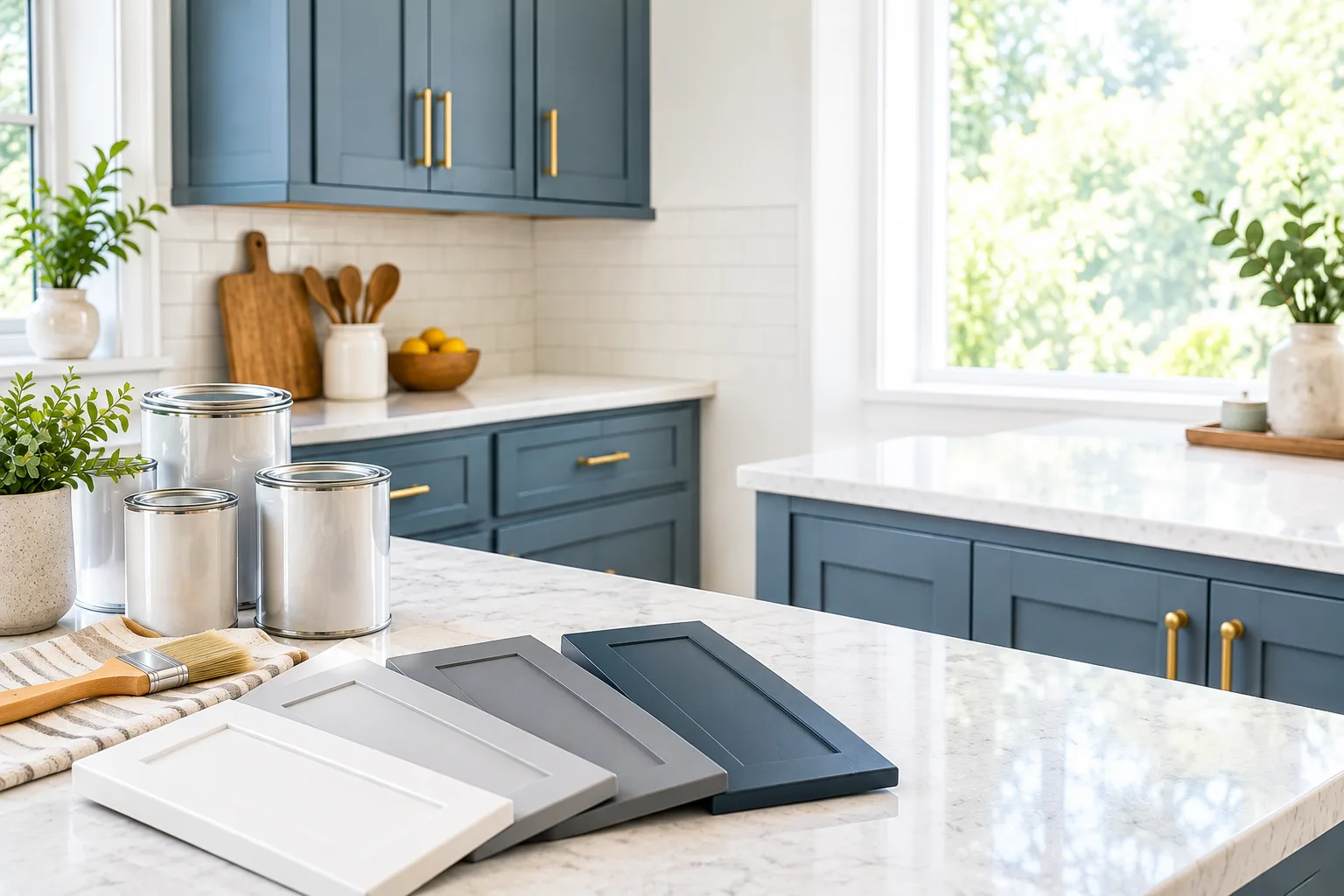
Kitchen cabinets take more abuse than almost any other painted surface in your home. They collect grease, steam, fingerprints and spills, and they get opened and wiped down every day. If you want to refresh your kitchen without the cost of replacing cabinets, the paint finish you choose will shape how good the cabinets look and how well they hold up.
This guide explains how to choose durable paint finishes for kitchen cabinets, how sheen compares with the rest of the coating system, and how to protect the result. It’s written for Dunwoody and Metro Atlanta homeowners, and it’s useful whether you hire a professional or paint them yourself.
Why Durability Matters for Kitchen Cabinets
Unlike bedroom walls, cabinets face constant contact and contamination:
- Grease and food splatter build up near the range and on upper cabinets above it.
- Moisture and steam from cooking, dishwashers and sinks stress the finish around the sink and dishwasher.
- Frequent handling wears paint around pulls, knobs, door edges and drawer fronts.
- Cleaning products can dull or soften a finish that isn’t fully cured or isn’t made for repeated washing.
Georgia’s humid summers can add to the moisture load, so a finish that tolerates regular cleaning and humidity swings is worth prioritizing.
Understanding Different Paint Finishes for Kitchen Cabinets
Sheen describes how much light a dried paint film reflects. Generally, higher sheen means a smoother, harder-looking surface that wipes clean more easily, but it also shows flaws more.
FinishAppearanceCleanabilityShows imperfectionsTypical kitchen cabinet suitabilityMatteFlat, no shineLowest; can mark or burnish when scrubbedHides wellRarely recommended for high-touch cabinetsEggshellSoft, low glowModerateHides fairly wellOccasionally used where cleaning demands are lightSatinSoft sheen, subtle glowGoodModeratePopular, balanced choiceSemi-glossNoticeably shinyVery goodShows moreCommon for cabinets, especially hard-use kitchensGlossMirror-likeVery goodShows the mostBold, formal look; needs excellent prep
Sheen is only one factor. Durability comes from the whole coating system: the surface preparation, the primer, the paint formulation, the application and the curing. A well-applied satin in a cabinet-grade product can outperform a poorly applied semi-gloss, and the reverse is also true.
Satin vs. Semi-Gloss Cabinet Paint: Which Is Better?
These are the two most common choices, and neither is universally better.
Satin has a soft, modern look. Its lower reflectivity is more forgiving of brush marks, minor surface texture and uneven wood grain. It cleans well for most households and tends to suit homeowners who want a refined, less shiny finish.
Semi-gloss is shinier and generally wipes clean a bit more easily, which appeals to busy kitchens with heavy cooking or young children. The trade-off is that the added reflectivity highlights dents, sanding marks, patched areas and old wood grain.
When each may fit:
- Choose satin if your cabinets have minor imperfections, your kitchen has abundant natural light that would exaggerate shine, or you prefer a softer look.
- Choose semi-gloss if cleanability is your top concern and your cabinets are smooth and in good condition (or will be well prepped).
In both cases, check that the product comes in your chosen sheen and is intended for cabinets and trim.
How to Choose the Best Paint Finish for Your Kitchen Cabinets
Weigh these factors together:
- Kitchen usage. A household that cooks daily with a lot of frying needs easier cleaning than a lightly used kitchen.
- Cleaning habits. If you wipe cabinets often, lean toward a sheen and product designed for frequent cleaning.
- Lighting. Strong window light or under-cabinet lighting emphasizes sheen and any surface flaws.
- Cabinet condition. Dings, open grain (like oak) and previous finishes affect what you’ll see. Higher sheens reveal more.
- Desired look. Decide between a soft, contemporary feel and a crisp, glossy one.
- Manufacturer guidance. Always check the product’s technical data sheet for recommended primers, sheens, film thickness and cure times.
Many paint makers offer products formulated for cabinets and trim. For example, Sherwin-Williams describes its Emerald Urethane Trim Enamel as a water-based enamel that resists yellowing compared with traditional oil-based coatings and is suited to frequently cleaned areas, offered in satin, semi-gloss and gloss. You can compare manufacturer guidance, such as Sherwin-Williams’ cabinet refinishing product guide, which urges you to consider the cabinets’ condition and expected wear before picking a paint. Whichever brand you consider, read the technical data sheet and follow it.
What Makes Cabinet Paint Durable?
Durable cabinet paint is a system, not a single can of paint.
- A coating made for cabinets and trim. Wall paint is typically not formulated for repeated contact, scrubbing and hardness.
- Thorough cleaning and degreasing. Kitchen cabinets carry invisible grease that prevents adhesion if left behind.
- Proper surface prep. This usually means sanding or another prep step the manufacturer specifies, plus filling and smoothing damage.
- A compatible primer. Glossy, previously finished or stain-prone surfaces often need a bonding primer. Check the product’s requirements.
- Correct application. Thin, even coats generally cure better than heavy ones.
- Recommended recoat intervals. Rushing coats can trap solvent or water and weaken the film.
- Full curing time.
Drying vs. curing: Paint can feel dry to the touch within hours, but the film keeps hardening for days or weeks. Drying and curing times vary with the product, temperature, humidity, film thickness and ventilation, so follow the manufacturer’s technical data sheet. Until the finish cures, it’s more vulnerable to scuffs, sticking and damage from cleaning.
Common Mistakes That Reduce Cabinet Paint Durability
- Inadequate preparation, especially skipping degreasing
- Skipping primer when the product or surface calls for it
- Applying coats too heavily or too many, which can lead to sagging, soft film and slow curing
- Using unsuitable paint, such as standard wall paint
- Reassembling too early, which can cause doors to stick, rub or mark
- Cleaning before the finish cures, which can dull or damage it
How to Maintain Painted Kitchen Cabinets
How to protect painted kitchen cabinets comes down to a few habits:
- Wait until the finish has cured before routine washing, per the manufacturer.
- Clean gently with a soft cloth or sponge and mild, non-abrasive soap and water, then dry.
- Avoid abrasive pads and harsh chemicals that can scratch or dull the surface.
- Wipe up grease and spills promptly, especially near the stove and sink.
- Manage moisture around the dishwasher, sink and coffee maker.
- Follow product-specific care instructions from the paint manufacturer.
- Fix small chips quickly so moisture and dirt don’t spread under the edge.
DIY vs. Professional Cabinet Painting
You can paint cabinets yourself, and many people do. The challenge is that results depend on details that are easy to underestimate: removing and labeling doors, degreasing, sanding, priming, controlling dust, spraying or brushing a smooth finish, and giving each coat the right time to dry and cure. Mistakes in these stages often show up months later as chipping or peeling.
Professional kitchen cabinet painting can help with consistent prep, smoother application and proper curing. It can also reduce the disruption of a multi-day job. If you’re considering it, learn more about professional cabinet refinishing from Dunwoody Painters.
A safety note for older homes: If your home was built before 1978, the paint may contain lead. The EPA says that anyone paid to disturb painted surfaces in pre-1978 homes must be certified in lead-safe work practices, and it recommends homeowners hire a certified contractor. Learn more through the EPA’s lead-safe renovation, repair and painting program, and ask any contractor about their lead-safe certification before work begins. epa
Frequently Asked Questions
What is the most durable paint finish for kitchen cabinets?
No single sheen is always the most durable. Semi-gloss and satin are common choices, but durability depends on the product formulation, preparation, primer, application and curing.
Is satin or semi-gloss better for kitchen cabinets?
Satin is more forgiving of imperfections and has a softer look. Semi-gloss is generally easier to wipe clean but shows flaws more. Choose based on your cabinets’ condition, lighting and cleaning needs.
What type of paint works best on kitchen cabinets?
Choose a coating formulated for cabinets and trim, such as a urethane-modified or hybrid enamel, and use the primer the manufacturer recommends. Check the technical data sheet for compatibility with your surface.
How long does painted cabinet finish last?
It varies widely with product quality, preparation, kitchen use and maintenance. No honest estimate fits every kitchen, so avoid anyone promising a specific lifespan without conditions.
How long should painted cabinets cure before regular use?
Cure times vary by product, temperature, humidity, film thickness and ventilation. Follow the manufacturer’s technical data sheet, and go easy on cleaning and heavy use until the finish has fully cured.
How can I prevent painted kitchen cabinets from chipping?
Prepare the surface carefully, use the right primer and a cabinet-grade paint, apply thin coats, allow full curing before reassembly and heavy use, and clean gently afterward.
Conclusion: Choose a Finish You Can Live With
The best durable paint finishes for kitchen cabinets balance sheen, cleanability and appearance with the condition of your existing cabinets. Satin and semi-gloss are popular starting points, but the right product, thorough prep and proper curing matter as much as the sheen.
If you’d rather leave the prep, application and curing to experienced hands, Dunwoody and Metro Atlanta homeowners can explore Dunwoody Painters’ cabinet refinishing services and request an estimate to discuss their kitchen.