
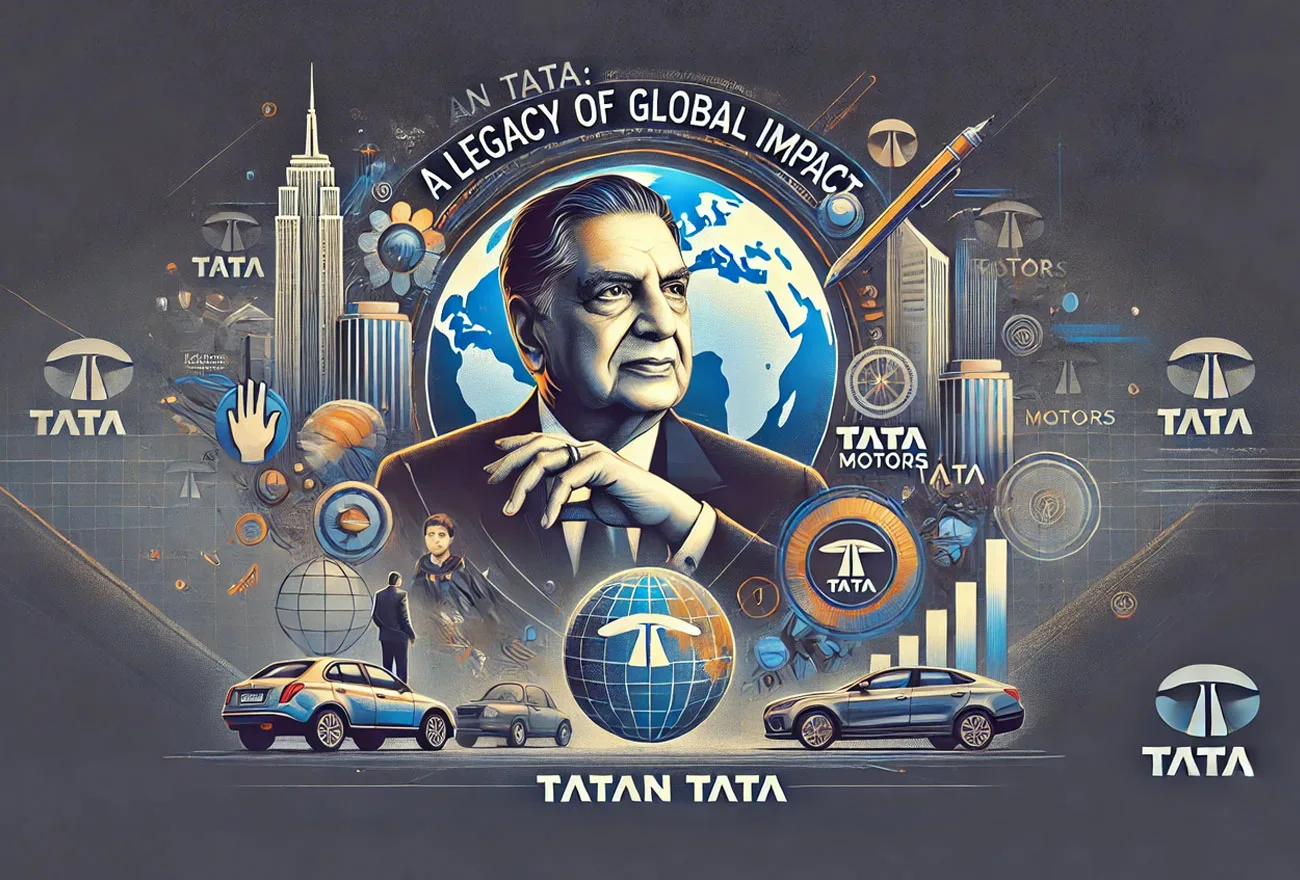
Tata Motors’ journey from a traditional Indian engineering company to a globally recognised automobile manufacturer is closely connected with the vision of Ratan Tata. His leadership brought together ambition, innovation and long-term thinking, helping transform the company and leaving a lasting mark on India’s automotive industry.
At Motorbazee, we look back at this remarkable journey not simply as a business success, but as a story of how bold ideas, determined leadership and continuous innovation can shape an entire industry.
Visit Us:- How Tata Motors Reached All-Time Highs Thanks to Ratan Tata: a Tribute from Motorbazee
From Commercial Vehicles to Passenger Cars
For decades, Tata Motors was primarily known for its commercial vehicles. Under Ratan Tata’s leadership, the company began looking beyond its traditional strengths and entered the passenger-car market with a clear objective: develop vehicles that could meet the needs of Indian customers.
That vision resulted in the Tata Indica in 1998, which became an important milestone in India’s automobile history. The Indica was developed as an indigenous passenger car and represented Tata Motors’ ambition to build its own capabilities in passenger-vehicle engineering.
The journey was not without challenges. Early versions of the Indica faced criticism, but Tata Motors responded with improvements and introduced upgraded versions. The Indica V2 eventually became a popular model, showing how customer feedback and continuous improvement could turn an ambitious project into a successful product.
A Global Vision: Jaguar Land Rover
One of the most significant chapters in Ratan Tata’s Tata Motors journey came in 2008, when Tata Motors acquired Jaguar Land Rover from Ford Motor Company.
The acquisition was a bold international move for an Indian automobile manufacturer. Jaguar and Land Rover were already established names in the global luxury and premium vehicle markets. Bringing them into the Tata Motors group gave the company a stronger international presence and access to global automotive expertise.
Over the years, Jaguar Land Rover became an important part of Tata Motors’ business story. The acquisition demonstrated the group’s willingness to think beyond domestic markets and participate in the global automobile industry.
Building a New Generation of Tata Cars
Ratan Tata’s influence extended beyond major acquisitions. His focus on innovation encouraged Tata Motors to develop products across different segments.
The company introduced vehicles such as the Tata Nano, Tiago and Nexon, expanding its presence in the passenger-vehicle market. The Nexon later became particularly important as Tata Motors entered the growing electric-vehicle segment with the Nexon EV.
This transition from conventional automobiles to electric mobility reflected a changing automotive landscape. Tata Motors increasingly focused on technology, design, safety and alternative powertrains while developing vehicles for a new generation of customers.
More Than Numbers: A Leadership Legacy
Tata Motors’ story cannot be measured only through stock-market milestones, sales figures or financial performance. Behind the numbers is a larger story of vision and transformation.
Ratan Tata encouraged the belief that Indian companies could create products for Indian consumers while also competing on a global stage. His leadership period saw Tata Motors expand its passenger-vehicle ambitions, enter international markets and take on projects that required significant investment and confidence.
He stepped down as Chairman of Tata Sons in 2012 and later served as Chairman Emeritus. Ratan Tata passed away in October 2024 at the age of 86, leaving behind a legacy that continues to influence the Tata Group and millions of people who admired his work.
For Motorbazee, his contribution to the automobile industry represents more than corporate growth. It represents the courage to take ambitious decisions, the willingness to learn from challenges and the determination to build something meaningful for the future.
FAQ
1. What was Ratan Tata’s contribution to Tata Motors?
Ratan Tata played an important role in Tata Motors’ transformation into a passenger-vehicle manufacturer with a growing international presence. Projects such as the Indica and the Jaguar Land Rover acquisition became important milestones during this journey.
2. Why was the Tata Indica important?
The Tata Indica was an important milestone because it represented Tata Motors’ ambition to develop an indigenous passenger car. Its development helped strengthen the company’s capabilities in the passenger-vehicle segment.
3. When did Tata Motors acquire Jaguar Land Rover?
Tata Motors acquired Jaguar Land Rover from Ford Motor Company in 2008. The deal became one of the most significant international milestones in Tata Motors’ history.
4. Did Ratan Tata alone make Tata Motors successful?
No. Tata Motors’ growth was the result of the combined efforts of its engineers, employees, management teams, suppliers, dealers and business partners. Ratan Tata’s leadership and strategic vision were important parts of that broader journey.
5. What is Ratan Tata’s legacy in the automobile industry?
His automotive legacy is closely associated with indigenous product development, global expansion and a willingness to take ambitious long-term decisions. His vision helped strengthen the belief that an Indian automobile company could compete in an increasingly global industry.
A Tribute from Motorbazee
Ratan Tata’s journey with Tata Motors reminds us that the automobile industry is not built only with engines, technology and machines. It is also built with vision, courage and people who are willing to think beyond the present.
From the Tata Indica to Jaguar Land Rover and the company’s growing focus on electric mobility, the journey reflects decades of ambition and evolution.
For Motorbazee, this is more than a story about Tata Motors reaching remarkable heights. It is a tribute to a leader whose vision helped redefine what an Indian automobile company could aspire to achieve.