
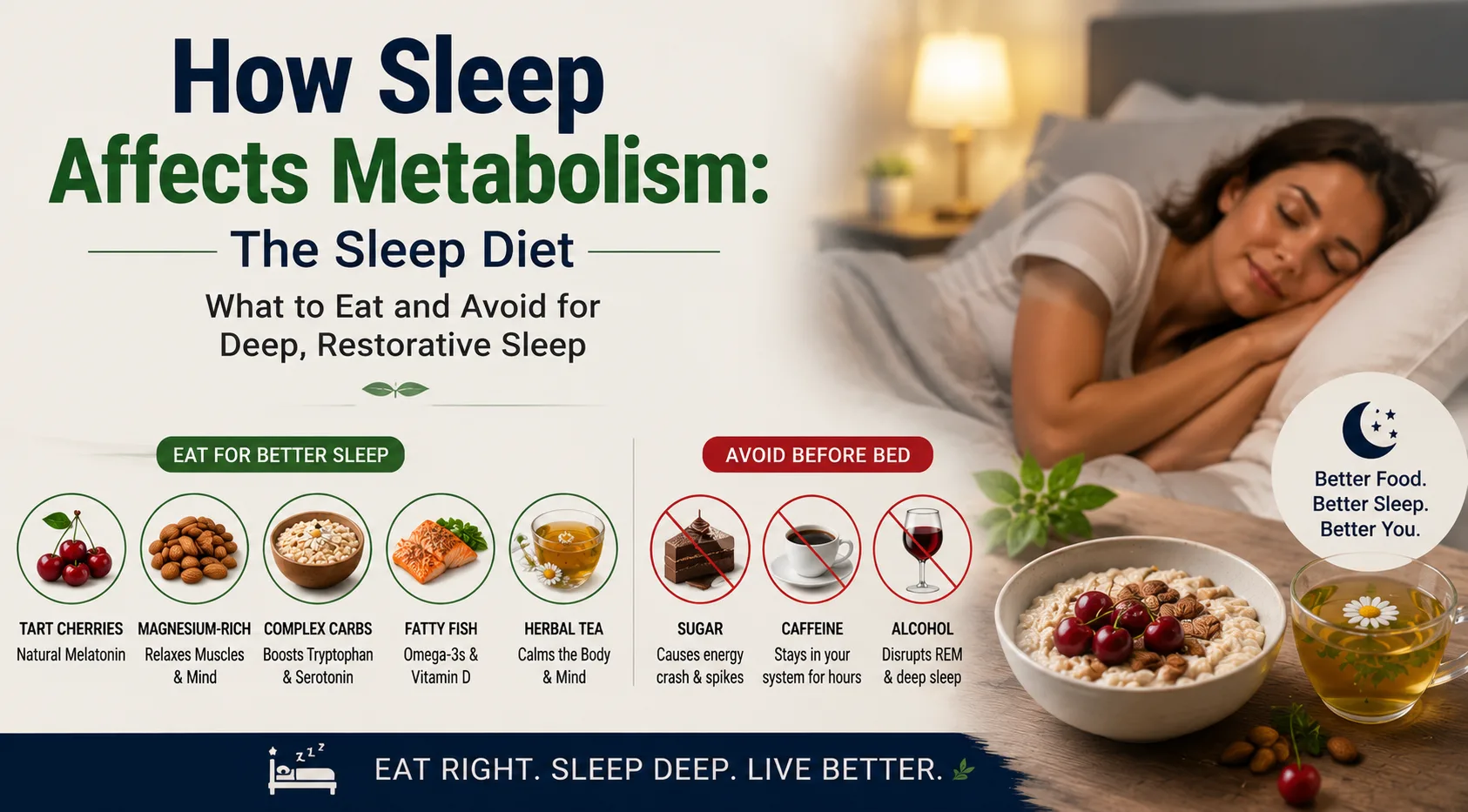
We have all been there: staring at the ceiling at 2 AM, wondering why our brain refuses to power down. Understanding how sleep affects metabolism can also explain why poor sleep often influences appetite, food choices, and energy balance the following day. While most people look to their stress levels, screen time, or bedroom environment for answers, they often overlook a surprisingly powerful regulator of sleep: their dinner plate.
The relationship between what we eat and how we sleep is a two-way street. Just as poor sleep drives us to crave sugary, high-fat foods the next day, our dietary choices throughout the day especially in the evening can either pave the way for deep, restorative rest or trigger a night of tossing and turning.
If you are struggling to drift off, adjusting your nutrition is a gentle, natural, and highly effective place to start. Here is an evidence-based guide to the foods that help you sleep UK nutritionists recommend, and the hidden dietary saboteurs you should avoid.
How Sleep Affects Metabolism And The Gut-Brain-Sleep Connection
To understand why food impacts sleep, we have to look at the gut-brain axis. Your digestive system and your brain are in constant communication via the vagus nerve. Furthermore, about 90% of your body’s serotonin—a precursor to the sleep hormone melatonin—is produced in the gut.
Sleep also plays an important role in regulating appetite, glucose handling, energy use, and other metabolic processes. This is why how sleep affects metabolism is closely connected with both dietary habits and sleep quality.
If your digestive system is working overtime processing a heavy, incompatible meal, it sends stress signals to the brain. This physiological arousal keeps your nervous system in a state of alertness, completely overriding the biological signals that tell your body it is time to sleep.
5 Evidence-Based Foods That Promote Sleep
You do not need to buy expensive supplements to eat your way to better sleep. Incorporating specific, nutrient-dense whole foods into your evening routine can naturally support your body's sleep architecture.
Tart Cherries And Natural Melatonin
Montmorency cherries are one of the few natural dietary sources of melatonin, the hormone that dictates your sleep-wake cycle. Several studies have shown that drinking tart cherry juice can increase sleep duration and improve sleep quality in adults with insomnia [2]. In the UK, you can easily find Montmorency cherry juice in health food shops or online. A small glass diluted with water an hour before bed can be a helpful addition to a wind-down routine.
Magnesium-Rich Foods
Magnesium is a crucial mineral that acts as a natural relaxant. It binds to calming receptors in the brain and helps to quieten the central nervous system, while also relaxing muscle fibres. A deficiency in magnesium has been linked to poor sleep quality and restless legs syndrome.
To boost your intake, incorporate foods like spinach, kale, pumpkin seeds, and almonds into your evening meals. A small handful of almonds as an evening snack provides a useful combination of magnesium and healthy fats.
Complex Carbohydrates And Tryptophan
Tryptophan is an essential amino acid that your body converts into serotonin, and eventually into melatonin. However, tryptophan has a hard time crossing the blood-brain barrier on its own.
This is where complex carbohydrates come in. Eating a serving of complex carbs, such as oats, wholemeal bread, or sweet potatoes, triggers a mild, healthy release of insulin. This insulin clears other, larger amino acids out of your bloodstream, leaving a clearer path for tryptophan to enter the brain and do its job [3]. A small bowl of porridge made with milk an hour or two before bed is a classic, scientifically sound sleep-supporting option.
Fatty Fish (Omega-3s And Vitamin D)
Oily fish such as salmon, mackerel, and sardines are incredibly rich in Omega-3 fatty acids and Vitamin D. Research published in the Journal of Clinical Sleep Medicine found that people who consumed fatty fish regularly had significantly better sleep quality and fell asleep faster than those who ate meat or poultry.
The anti-inflammatory properties of Omega-3s, combined with the regulation of serotonin by Vitamin D, make fish an excellent dinner choice for sleep health.
Herbal Allies: Chamomile And Passionflower
While not strictly "food," herbal teas are a cornerstone of the UK evening routine for good reason. Chamomile contains apigenin, an antioxidant that binds to specific receptors in your brain that may reduce anxiety and initiate sleep. Passionflower tea has also shown promise in clinical trials for improving subjective sleep quality.
Swapping your standard builders' tea, which contains caffeine, for a caffeine-free herbal alternative after 3 PM is a simple but transformative switch.
The Hidden Saboteurs: What To Avoid Before Bed
Knowing what to leave off your plate in the evening is just as important as knowing what to put on it.
The Late-Night Sugar Trap
It is incredibly tempting to reach for a biscuit, a bit of chocolate, or a slice of toast when you are tired. However, consuming refined sugars before bed can cause rapid changes in blood glucose, which may affect how you feel during the night.
Poor sleep and irregular eating patterns can also reinforce one another. In the longer term, understanding how sleep affects metabolism can help explain why consistently disrupted sleep may influence appetite regulation and dietary choices.
If you find yourself waking up sweating, with a racing heart, or craving sugar at 3 AM, it may be worth discussing persistent symptoms with a healthcare professional. You can also read our deep dive into how sleep problems in the UK directly impact your metabolism and fat loss to understand how sleep and metabolic health are connected.
Caffeine’s Half-Life
Many people underestimate how long caffeine stays in the system. Caffeine has a half-life of roughly 5 to 6 hours. This means if you have a cup of tea or coffee at 4 PM, a substantial amount of that caffeine may still be circulating in your bloodstream at bedtime, blocking the adenosine receptors that make you feel sleepy .
The NHS advises cutting off caffeine at least 6 hours before bedtime. Be mindful of hidden caffeine in dark chocolate, energy drinks, and even some over-the-counter cold medications.
The Alcohol Illusion
A nightcap is perhaps the most common sleep myth in the UK. While a glass of wine might make you feel drowsy and help you fall asleep faster, alcohol is a central nervous system depressant that can fragment your sleep. As your body metabolises the alcohol in the second half of the night, it can lead to frequent awakenings, night sweats, and disrupted REM sleep. You may sleep, but the quality of that sleep can be poorer.
Simple Evening Meal Ideas For Better Sleep
You do not need a complicated recipe book to eat for sleep. Here are two simple, UK-friendly evening meal concepts that balance tryptophan, complex carbs, and magnesium:
- The Fish Supper: Baked salmon (Omega-3s) served with a generous portion of steamed spinach (magnesium) and a small baked sweet potato (complex carbs).
- The Comforting Bowl: Oats (complex carbs) made with milk (more tryptophan), topped with a tablespoon of pumpkin seeds (magnesium) and a few tart cherries.
When Timing Matters
Finally, when you eat is just as critical as what you eat. The NHS recommends leaving at least 2 to 3 hours between your last main meal and your bedtime .
Lying down immediately after a heavy meal can cause acid reflux and indigestion, which are common physical barriers to falling asleep. By eating earlier, you give your digestive system the time it needs to process the food while you are still upright, allowing your body to redirect its energy towards repair and recovery once you hit the pillow.
Understanding how sleep affects metabolism highlights why healthy sleep habits and sensible meal timing should be considered together. A balanced evening meal, sensible caffeine intake, and consistent sleep routine can all contribute to better overall sleep and metabolic wellbeing.