As global environmental regulations become increasingly stringent and industries strive for sustainable growth, effective wastewater management is rapidly moving from an afterthought to a top priority. In this quest, Polyacrylamide Wastewater Treatment has emerged as a game-changer, revolutionizing how factories, plants, and large-scale enterprises handle industrial effluent. No longer is wastewater just a byproduct to be disposed of; with modern treatment technologies, it has become a valuable resource to be managed, reused, and optimized.
At Shandong UPS Chemical Co., Ltd., we have witnessed the transformation first-hand. Across countless industries—from textiles, papermaking, and petrochemicals to mining and food processing—Polyacrylamide Wastewater Treatment is not merely a technical solution but a catalyst for improved efficiency, compliance, and environmental stewardship. By facilitating superior solid-liquid separation, reducing chemical consumption, and enhancing sludge dewatering, Polyacrylamide-based treatment processes address both operational costs and ecological impact.
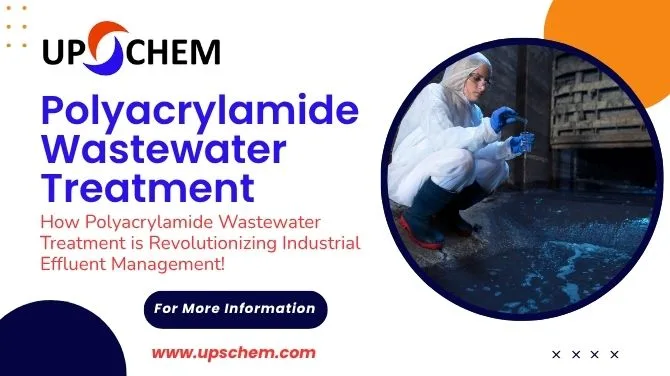
How Polyacrylamide Wastewater Treatment is Revolutionizing Industrial Effluent Management?
1. Understanding Polyacrylamide and Its Role in Wastewater Treatment- What is Polyacrylamide?
Polyacrylamide (PAM) is a high-molecular-weight, water-soluble polymer made from acrylamide subunits. Depending on its chemical structure, it can be synthesized in various forms—nonionic, anionic, or cationic—each suited for specific treatment needs. In the context of wastewater treatment, PAM is primarily used for its ability to act as a flocculant, aggregating fine suspended particles into larger clumps (flocs) that settle or filter out more easily. - Why Polyacrylamide?
Traditional treatment methods—including simple sedimentation, lime addition, or metal salt coagulants (such as alum and iron salts)—are often limited by slower reaction times, high chemical dosages, and costly sludge handling. Polyacrylamide Wastewater Treatment stands out because:
- It dramatically enhances solid-liquid separation efficiency
- Requires lower dosages compared to traditional inorganic coagulants
- Produces denser, easier-to-handle sludge
- Is highly adaptable to changing wastewater characteristics
These features not only streamline operations but also accommodate increasingly tough discharge standards.
2. The Science Behind Polyacrylamide Wastewater TreatmentThe Process Explained
The industrial effluent stream typically contains a complex mixture of organic and inorganic particulates, colloids, dissolved solids, heavy metals, and possibly hazardous contaminants. When polyacrylamide is introduced:
- Charge Neutralization: The polymer neutralizes the charges on suspended particles, particularly when using cationic or anionic forms matched to the effluent’s chemistry.
- Bridging Mechanism: Long polymer chains bind multiple particles together, forming flocs large enough to settle quickly or be filtered/centrifuged efficiently.
- Dehydration Aid: In sludge treatment, polyacrylamide improves water removal, producing drier, lighter sludge and reducing disposal or further treatment costs.
This process is faster, more controllable, and results in significantly improved water clarity and lower total suspended solids (TSS).
3. Key Benefits of Polyacrylamide Wastewater Treatmenta) Enhanced Effluent Quality
Whether your industry faces strict local regulations or wishes to pursue water reuse, clarity matters. Polyacrylamide achieves:
- Lower TSS and turbidity
- Improved color and odor removal
- Lower levels of chemical oxygen demand (COD) and biological oxygen demand (BOD) due to better solids removal
b) Cost Savings
- Reduced chemical consumption: Lower doses because of high efficiency.
- Energy savings: Faster sedimentation and filtration processes mean less pumping and process time.
- Sludge handling savings: Drier, compact sludge lowers hauling and disposal costs.
c) Operational Convenience
- Automated dosing and easy adjustment: Polyacrylamide formulations can be dialed in for varying flows and contaminants.
- Compatibility with modern and legacy systems: Can often be retrofitted to existing clarifiers or dewatering presses.
d) Flexible Applications
- From primary and secondary clarifiers to dissolved air flotation (DAF), belt presses, and even advanced membrane bioreactors, Polyacrylamide Wastewater Treatment is a multi-purpose tool.
At Shandong UPS Chemical Co., Ltd., we supply polyacrylamide solutions to a diverse set of industries:
- Textile and dye manufacturing for color removal and fiber fines capture
- Pulp and paper mills to recover valuable fibers and clarify process water
- Mining sectors for tailings pond consolidation, mineral recovery, and water reuse
- Petrochemical plants for separating emulsified oils and solids
- Food processing for separating organic debris and thickening sludge
- Municipal wastewater treatment plants for sludge dewatering and clean water generation
In each case, the tailored selection of anionic, cationic, or nonionic PAM is crucial for optimum performance.
5. Polyacrylamide Wastewater Treatment vs. Traditional MethodsTraditional Coagulants/Flocculants
Historically, industries have relied on metal salts (alum, ferric chloride) for coagulation, followed by settling and filtration. Downsides include:
- Higher volume of chemical use
- Bulky, unwieldy sludge
- Potential for secondary pollution (increase in salinity, aluminum residuals, etc.)
Polyacrylamide Advantages
- Operates at lower, safer concentrations
- Produces less and better-quality sludge
- Is less corrosive to equipment
- Has adjustable charge density, molecular weight, and application window
Consequently, Polyacrylamide Wastewater Treatment is easier to optimize for unique industrial challenges while supporting better environmental outcomes.
6. Implementation Tips: Getting the Most Out of Polyacrylamidea) Correct Product Selection
Choose the right ionic type (anionic/cationic/nonionic) and molecular weight, based on:
- Wastewater composition and pH
- Presence of oils or heavy metals
- Specific dewatering or clarification goals
At Shandong UPS Chemical Co., Ltd., we assist customers through detailed jar tests and pilot trials.
b) Optimum Dosing and Mixing
- Overdosing can reduce floc quality or create milky effluent.
- Underdosing results in incomplete solid removal.
- Use automated, programmable dosing pumps for consistency.
- Ensure rapid, thorough dispersion in influent streams.
c) Storage and Handling
- Polyacrylamide powder must be protected from moisture and heat.
- Emulsions require agitation before use.
- Use PPE when handling bulk bags or solutions to avoid slippery surfaces.
d) Continuous Monitoring
- Check turbidity, TSS, settled water, and sludge characteristics
- Adjust dosing as influent quality varies (e.g., after heavy rainfall or process upsets)
Polyacrylamide Wastewater Treatment is aligned with stricter global discharge regulations. By lowering residual suspended solids and improving sludge characteristics, it helps industrial clients:
- Meet or exceed national discharge standards (e.g., GB, EPA, EU, etc.)
- Prepare for water reuse or recycling, essential in water-scarce regions
- Reduce environmental impact and company liability
Polyacrylamide products from Shandong UPS Chemical Co., Ltd. are engineered for minimal residual monomer, ensuring environmental safety and compliance.
8. The Future: Sustainable Trends in Polyacrylamide Wastewater TreatmentLooking forward, this technology continues to evolve:
- Biodegradable and green-modified PAMs are under development for further reducing environmental footprint.
- Smart automation and AI-driven dosing systems are optimizing chemical use in real time.
- Integration with zero-liquid-discharge (ZLD) and circular economy models is accelerating.
Forward-thinking companies are increasingly seeing Polyacrylamide Wastewater Treatment not just as a compliance cost, but a competitive advantage and pillar of corporate responsibility.
The era of simply discharging industrial waste is over. With the advent of Polyacrylamide Wastewater Treatment, companies now have a proven, powerful tool to not only comply with strict environmental standards but also to reclaim water, lower costs, and operate more sustainably. From its scientific foundations to practical, everyday advantages in the world’s toughest effluent environments, polyacrylamide is changing how industry views wastewater—from liability to opportunity.
Frequently Asked Questions (FAQ)Q1: How safe is polyacrylamide for the environment and for workers?
A: When used according to manufacturer guidelines, polyacrylamide is safe for workers and the environment. Our formulations are designed with ultra-low residual acrylamide monomer content. Always use PPE to prevent slipping and avoid inhalation/ingestion of powders.
Q2: How do I choose between anionic, cationic, and nonionic polyacrylamide?
A: The optimal choice depends on the type and charge of suspended solids in your wastewater. Anionic PAM works best for mineral and inorganic particles; cationic PAM is better for organic-rich or industrial sludges; nonionic PAM is suitable for low ionic strength waters. Consult Shandong UPS Chemical Co., Ltd. for a tailored recommendation.
Q3: Can Polyacrylamide Wastewater Treatment be used for potable water?
A: Yes, with the correct grades and dosing controls, polyacrylamide is approved and widely used for municipal water treatment. Our products meet stringent safety standards for potable water applications.
Q4: Is polyacrylamide compatible with other coagulants or treatment chemicals?
A: Yes. Polyacrylamide is often used following inorganic coagulants (e.g., alum) to further agglomerate residual particles and improve dewatering. Compatibility trials are always recommended for optimal performance.
Q5: How much polyacrylamide is typically needed for wastewater treatment?
A: Dosage varies based on effluent characteristics, process, and PAM type—commonly ranging from a few parts per million (ppm) up to several hundred grams per ton of dry sludge. User trials are the best way to determine optimal dosing.
Q6: Can PAM-treated sludge be used for further recycling or incineration?
A: Yes, the addition of polyacrylamide does not interfere with most downstream recovery, composting, or incineration processes, often making handling and final disposal easier.
Q7: What’s the difference between powder and emulsion forms of polyacrylamide?
A: Powder is highly concentrated, stable, and easy to transport, but requires dissolution before use. Emulsions are liquid dispersions that are quicker to prepare but need gentle agitation and are more sensitive to storage conditions. Your choice depends on plant scale, dosing automation, and storage capacity.
Q8: Are there any restrictions for discharge after Polyacrylamide Wastewater Treatment?
A: Discharge standards typically pertain to overall residuals (TSS, COD, etc.). Our PAM products comply with international regulations for residual monomer. Local rules may set specific limits—check with your regulator or our compliance experts.
Q9: What are the most common process challenges when first adopting Polyacrylamide Wastewater Treatment?
A: Typical issues include overdosing, insufficient mixing, or improper product selection. Working with an experienced supplier like Shandong UPS Chemical Co., Ltd. and running initial jar tests minimizes these risks.
Q10: How can I get technical or on-site support for Polyacrylamide Wastewater Treatment?
A: Reach out to Shandong UPS Chemical Co., Ltd. for process audits, dosing optimization, pilot equipment, and operator training. Our experts are ready to guide you from assessment through full-scale implementation.