
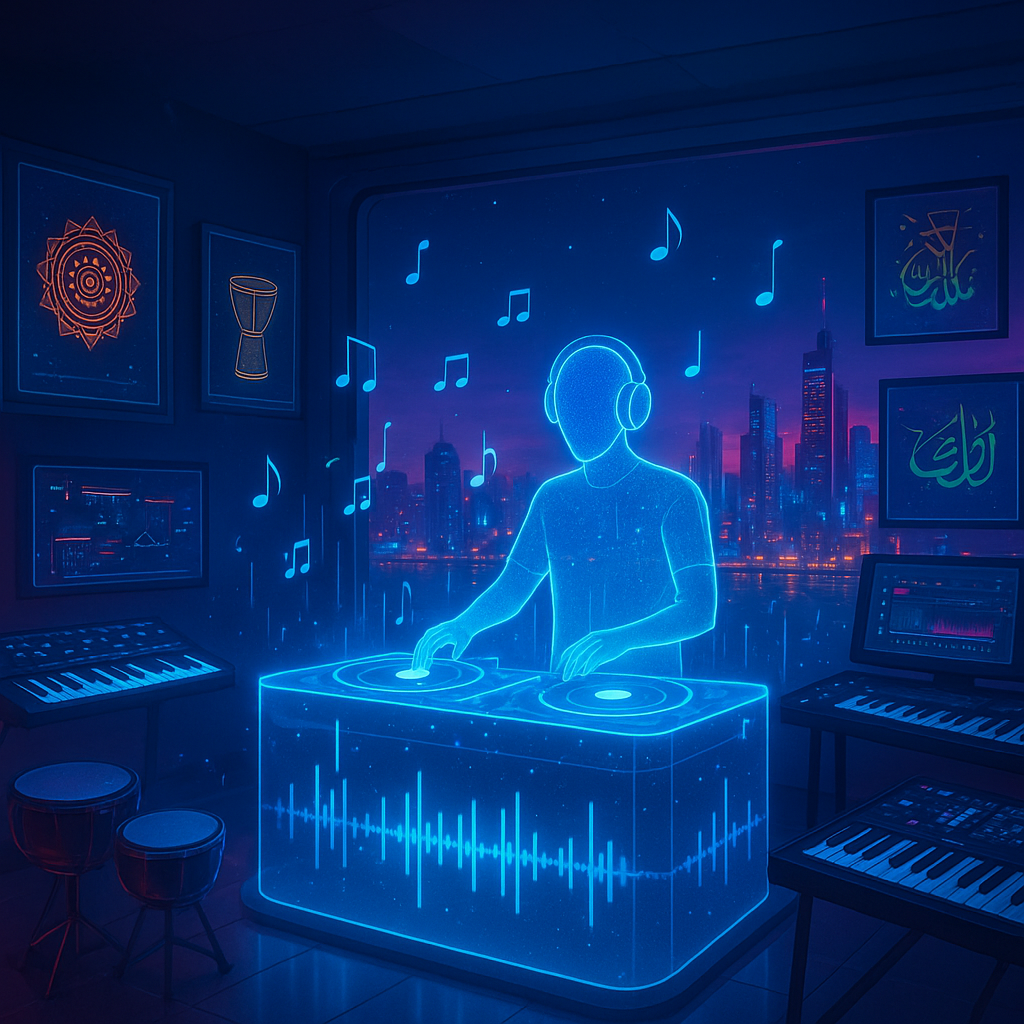
The Soundtrack of a Shifting Culture: A Moment in 2026
On a warm spring evening in May 2026, millions across the globe tuned into a virtual concert unlike any before it. This event wasn’t held in a traditional stadium but streamed live from a fully immersive metaverse stage, where holographic artists performed alongside AI-generated collaborators. The fusion of human creativity and cutting-edge technology captivated audiences, illustrating how music has become a dynamic intersection of culture, identity, and innovation. This scene reflects much more than entertainment—it symbolizes music’s evolving role as a medium shaping social connections, technological advancements, and cultural narratives worldwide.
Music’s power to evoke emotion and unite people endures, yet its form and function continue to evolve rapidly. According to industry analysts, global music revenues surpassed $80 billion in 2025, with digital formats accounting for 78% of that figure. Streaming remains dominant, but the rise of immersive experiences, AI composition tools, and decentralized music economies are redefining how creators and fans engage with music. This transformation challenges traditional conceptions of artistry, ownership, and cultural representation.
As we explore music in 2026, it is essential to understand the complex forces shaping this evolution—from technological breakthroughs and shifting consumer behaviors to broader societal trends. This article offers a comprehensive analysis of music’s current landscape and what lies ahead for this vital form of human expression.
A Historical Lens: How Music Arrived Here
The journey to 2026’s musical landscape is rooted in decades of technological and cultural shifts. The late 20th and early 21st centuries saw seismic changes: the transition from physical media like vinyl and CDs to digital downloads and then streaming fundamentally altered music consumption. The launch of Spotify in 2008 and Apple Music in 2015 revolutionized accessibility, but also sparked debates over artist compensation and platform control.
Parallel to these shifts, the democratization of music production tools—ranging from affordable digital audio workstations to mobile recording apps—empowered countless bedroom producers and independent artists. This wave challenged the traditional gatekeepers of the music industry, enabling more diverse voices to emerge. Genres once marginalized found global audiences, reshaping pop culture and industry economics.
Meanwhile, early experiments with AI in music composition, such as OpenAI’s MuseNet and Google’s Magenta projects, paved the way for more sophisticated generative tools by 2020. These innovations expanded creative possibilities but also raised questions about authenticity and artistic value. Additionally, the rise of social media platforms like TikTok transformed music discovery, making virality a new currency for success.
By 2025, the integration of blockchain technology enabled new models for music rights management and fan engagement, including NFT-based releases and smart contracts that promised fairer revenue distribution. This historical context helps explain how music in 2026 is no longer just sound but a complex ecosystem of technology, culture, and commerce.
Data-Driven Dynamics: The Numbers Behind the Notes
Concrete data underscores the scale and complexity of music’s current transformation. According to the International Federation of the Phonographic Industry (IFPI), global recorded music revenues grew by 7.4% in 2025, reaching approximately $82 billion. Streaming services accounted for 78% of total revenues, with paid subscriptions contributing over $50 billion alone.
Interestingly, immersive music experiences—defined as concerts and festivals utilizing augmented reality (AR), virtual reality (VR), or metaverse platforms—generated an estimated $4.5 billion in 2025, up 65% from 2024. This sector’s growth is fueled by advances in VR headset affordability and faster 5G/6G mobile networks, enabling seamless, high-fidelity virtual performances.
The artist economy is also shifting. A 2026 report by MIDiA Research found that independent musicians now represent 48% of global music consumption, a significant rise from 35% in 2020. This rise is tied to platforms like Bandcamp, SoundCloud, and decentralized blockchain-based communities that allow artists to monetize directly without intermediaries.
Moreover, AI-assisted music creation tools are increasingly common. Over 30% of producers surveyed in a 2026 MusicTech Insights report confirmed regular use of AI for tasks such as composing melodies, arranging tracks, or mastering audio. These tools reduce production costs and accelerate workflows but also prompt debates about originality.
Here is a snapshot of key music industry metrics in 2026:
- Global music revenue: $82 billion (7.4% growth over 2024)
- Streaming revenue share: 78%
- Immersive music experience revenue: $4.5 billion (65% growth)
- Independent artist consumption share: 48%
- AI-assisted music production usage: 30%
These figures illustrate not only the market’s expansion but the underlying forces reshaping music’s production, distribution, and consumption.
2026’s Defining Developments: Technology Meets Creativity
This year, several technological advancements have pushed music into new frontiers. The proliferation of AI-generated music is now mainstream, with companies like Amper Music and Endel offering platforms that craft personalized soundtracks for users’ moods and environments in real time. These AI tools have become indispensable for content creators, advertisers, and even therapeutic contexts.
In parallel, the metaverse has matured as a venue for music. Platforms such as Decentraland, The Sandbox, and Meta’s Horizon Worlds regularly host large-scale concerts featuring avatars of global stars. These virtual events attract millions, often surpassing physical attendance records. Ticketing and merchandise sales are increasingly handled through blockchain-based tokens, enhancing transparency and fan participation.
Another notable development is the rise of multisensory music experiences. Innovations in haptic feedback technology allow listeners to feel vibrations and rhythms through wearable devices, deepening emotional engagement. Coupled with spatial audio advancements, these experiences are redefining how audiences perceive and interact with music.
Social media platforms continue to shape trends, but now with AI-curated content feeds tailored to individual tastes. TikTok remains influential, but emerging apps like EchoWave use AI to predict and promote future hit tracks before they trend, reshaping marketing strategies.
These trends reflect a convergence of technology and artistry, where the boundaries between creator, consumer, and medium blur. To understand the nuances of this convergence, see our detailed analysis in Six Defining Sounds Shaping Music’s Future Today.
Voices from the Industry: Perspectives on Music’s Evolution
Leading figures in music and technology offer varied insights on this transformative era. Grammy-winning producer and AI advocate Maya Chen explains:
“AI is not replacing musicians; it’s augmenting our creativity. Tools that once took weeks to master now allow us to experiment instantly, freeing artists to focus on expression rather than technical barriers.”
Conversely, veteran artist and activist Jamal Rivers voices caution:
“While technology opens doors, it also risks commodifying music into algorithm-friendly formulas. We must safeguard the soul of music—its human emotion and cultural roots—against homogenization.”
Industry executives highlight how blockchain and NFTs have empowered artists economically. Elena Garcia, CEO of a major independent label, notes that decentralized platforms have improved transparency in royalty payments and fostered closer artist-fan relationships.
At the same time, talent scouts emphasize the challenge of discovering authentic talent amid an overwhelming flood of content. AI-driven analytics help identify promising artists but also raise ethical questions about data privacy and algorithmic bias.
These perspectives underscore a central tension: balancing innovation with artistry and equity. For a practical guide to navigating today’s creative tools, refer to Mastering Music: Essential Expert Tips to Elevate Your Sound.
Looking Ahead: What’s Next for Music?
Peering into music’s future beyond 2026, several key trends emerge. First, the integration of AI and human creativity will deepen, with AI evolving from a tool to a collaborative partner. Expect more personalized, adaptive music experiences that respond in real time to listener emotions and contexts, enabled by biometric sensors and AI.
Second, the metaverse and immersive technologies will expand music’s social dimension. Virtual concerts and interactive music worlds will become commonplace, creating new revenue streams and fan engagement models. Artists may release music tied to NFTs that grant exclusive access or participatory roles in creative processes.
Third, sustainability and inclusivity will shape industry practices. As climate concerns grow, eco-friendly touring and production methods will gain importance. Simultaneously, initiatives promoting diverse voices and equitable compensation will reshape industry power dynamics.
Finally, regulatory frameworks around AI-generated content, data privacy, and digital rights management will evolve, influencing how music is created, shared, and monetized.
Here are five trends to watch closely:
- AI-human creative collaboration: Increasingly sophisticated co-creation tools.
- Immersive music ecosystems: Expansion of VR/AR concerts and multisensory experiences.
- Decentralized ownership: Wider adoption of blockchain for rights and royalties.
- Social discovery innovation: AI-driven platforms predicting and shaping trends.
- Ethical and sustainable music: Focus on equity, diversity, and environmental impact.
Music remains a vital force shaping culture and identity. Its ongoing transformations invite us to rethink what music is and who it belongs to. For a broader cultural exploration, see Why Music Remains the Pulse of Human Connection and Innovation.
As the boundaries between technology, creativity, and community continue to dissolve, music in 2026 invites us not just to listen, but to participate in a richer, more interconnected sonic future.