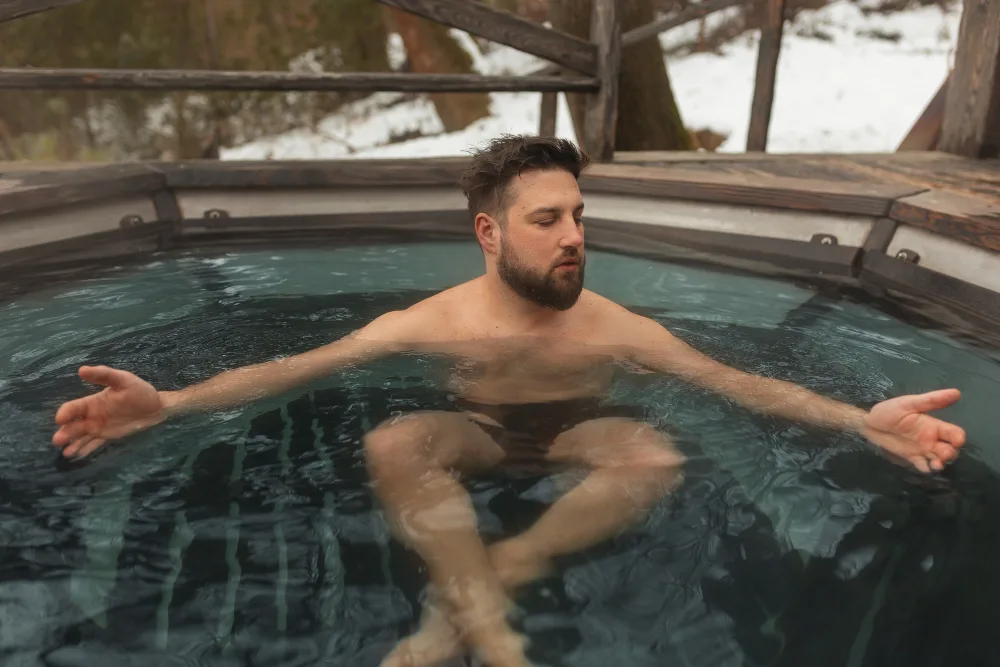
I spent an embarrassing amount of time trying to find one definitive answer to this question before I accepted something important, there isn't a single universal number, because duration and temperature are two sides of the same equation rather than separate variables. Once I stopped looking for a fixed "stay in for exactly this many minutes" rule and started thinking about the relationship between the two instead, using a cold plunge therapy tub actually got a lot more intuitive.
Let me walk you through how long you should stay in a cold plunge based on water temperature, what reasonable ranges actually look like, and how to figure out your own number rather than chasing someone else's.
Why Colder Water Shortens Your Window
The core physics here is worth understanding because it explains everything else. Water conducts heat away from your body dramatically faster than air does at the same temperature, which is exactly why cold water feels so much more intense than cold air ever could. That rapid heat loss means a drop of just a few degrees in water temperature compresses your safe exposure window considerably, far more than the same temperature drop would in open air.
This is why duration and temperature have a genuinely inverse relationship. The colder the water, the faster your core temperature starts dropping, and the sooner you need to get out regardless of how tough you feel in the moment.
General Ranges Worth Knowing
I'll be upfront that different sources give slightly different numbers here, and honestly, that variation itself tells you something, individual tolerance plays a real role, and no single chart applies perfectly to everyone. That said, a reasonable general pattern looks something like this. In the upper fifties to mid sixties Fahrenheit, sessions of around one to five minutes are typical, with beginners sticking closer to the shorter end. In the low fifties down to around forty-five degrees, most people land somewhere between one and five minutes as well, though this range tends to feel noticeably more intense and beginners should lean toward the shorter end here too. Below about forty-five degrees, sessions generally shrink to thirty seconds up to two or three minutes, even for people with real cold tolerance built up over time.
The pattern that holds across nearly every source I looked at, even where specific numbers varied, is consistent. Colder water means less time, full stop, and pushing duration at the coldest end of the range doesn't add meaningful extra benefit, it mostly just adds risk.
Why Exceeding These Windows Gets Risky
Staying in too long at a given temperature isn't just uncomfortable, it carries real physiological risk. As your time in cold water extends, your core temperature continues dropping even after you get out, something known as afterdrop, which can continue for several minutes post-plunge and catch people off guard if they assumed the risk ended the moment they stepped out. Extended exposure, especially at colder temperatures, raises genuine hypothermia risk, and the signs, uncontrollable shivering, confusion, numbness that doesn't resolve, are signals to end a session immediately rather than something to push through for the sake of hitting a specific time goal.
This is really why duration guidelines exist in the first place, not as arbitrary rules, but as a practical buffer against a genuine physiological risk that increases the longer you stay in, particularly at colder temperatures.
Finding Your Own Number
Rather than chasing someone else's exact minute count, a more useful approach is finding the coldest temperature you can sit in calmly for a couple of minutes while maintaining controlled, steady breathing. That threshold, where you're genuinely challenged but not panicking or losing control of your breath, is a far better personal guide than any fixed chart. As that threshold shifts over weeks of consistent practice, you can extend duration or lower temperature gradually, but the two shouldn't move together carelessly, adjust one variable at a time so you always know what's actually changing your experience.
Weekly total exposure matters more than any single session's length too. A commonly cited benchmark lands around eleven minutes of total cold exposure per week, spread across multiple sessions rather than one long sit. That framing takes some pressure off any individual plunge, since consistency across the week matters more than how long you managed to grit through on any one occasion.
A Few Safety Notes
Never plunge alone, particularly at colder temperatures or earlier in your practice. Anyone with cardiovascular conditions, uncontrolled blood pressure, or significant cold sensitivity should check with a doctor before setting a regular duration and temperature combination. And if you ever find yourself extending a session purely to prove something to yourself rather than because it still feels manageable, that's usually a sign to get out rather than push further.
The Bottom Line
There's no single correct number here, just a relationship worth understanding, colder water earns a shorter stay, and pushing past that trade-off doesn't add benefit, it mostly adds risk. A reasonable starting point is a minute or two at a temperature that genuinely challenges you without overwhelming you, building gradually from there based on how your own body responds rather than any fixed chart you found online.