
In business transactions, quotations play an important role in defining pricing, services, and terms between sellers and customers. Whether you are a freelancer, service provider, supplier, or growing company, a well-prepared quotation helps create transparency and builds trust with potential clients.
However, one common question businesses often face is: How long should a quotation be valid? The answer depends on several factors, including industry standards, market conditions, product availability, and pricing changes.
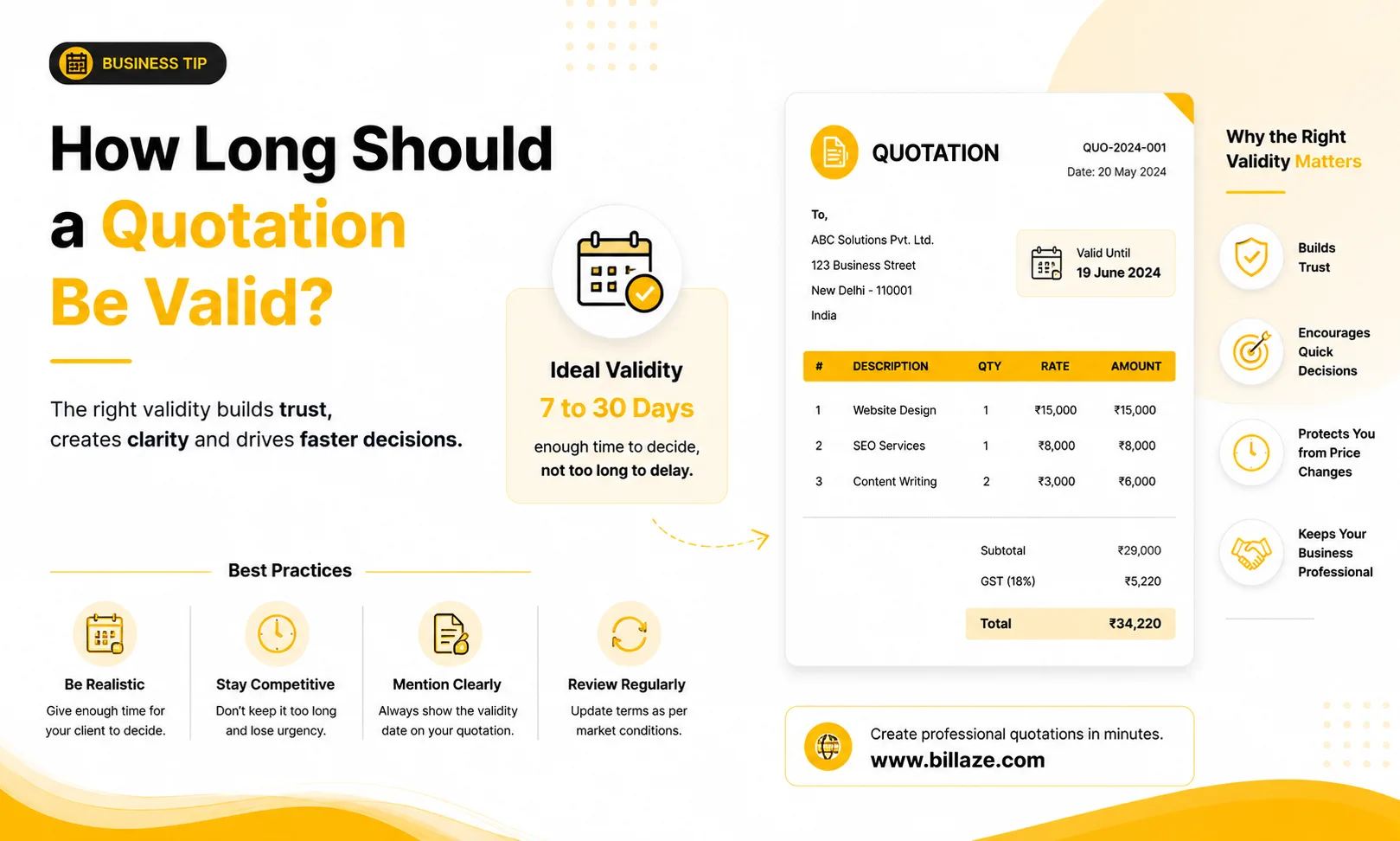
A quotation validity period tells customers how long the offered price and terms will remain applicable. Setting the right validity period helps businesses avoid unexpected losses while giving customers enough time to make purchasing decisions.
Today, businesses can easily prepare professional quotations using digital tools. A Quotation Generator Online helps create accurate quotations quickly, ensuring that pricing details, terms, and validity periods are clearly mentioned.
In this article, we will discuss quotation validity, factors that influence it, and best practices businesses should follow when creating quotations.
What Is a Quotation Validity Period?
A quotation validity period refers to the specific time duration during which the prices and conditions mentioned in a quotation remain unchanged.
For example, a quotation may state:
"This quotation is valid for 30 days from the date of issue."
This means the customer can accept the offer within 30 days under the same pricing and terms. After this period, the seller has the right to revise prices or update conditions.
The validity period protects both parties:
- Customers get enough time to review and decide.
- Businesses protect themselves from sudden price changes.
Why Is Quotation Validity Important?
A quotation is more than just a price estimate. It represents a business commitment for a specific period. Clearly defining validity helps prevent misunderstandings and improves communication.
Protects Against Price Fluctuations
Market prices can change due to:
- Raw material costs
- Supplier price changes
- Currency fluctuations
- Transportation expenses
- Market demand
A quotation without a validity period may create problems if costs increase after the offer is provided.
Helps Customers Make Decisions
Customers often compare multiple quotations before making a final decision. A reasonable validity period gives them enough time to evaluate options without feeling pressured.
Creates Professional Business Communication
A quotation with clear terms and conditions appears more professional. It shows that the business follows organized processes and understands commercial requirements.
How Long Should a Quotation Usually Be Valid?
There is no universal validity period that works for every business. The ideal duration depends on the type of product or service being offered.
Common quotation validity periods include:
7 to 15 Days
Short validity periods are usually suitable for:
- Fast-changing markets
- Limited stock products
- Digital services with changing requirements
- Time-sensitive offers
For example, technology products and raw materials may require shorter quotation periods because prices can change frequently.
30 Days
A 30-day validity period is one of the most commonly used options across industries.
It works well for:
- Professional services
- Consulting projects
- Software solutions
- Business services
- Standard product orders
This gives customers sufficient time to review the quotation while protecting businesses from long-term price changes.
60 to 90 Days
Longer validity periods may be suitable for:
- Large projects
- Construction contracts
- Enterprise solutions
- Long-term partnerships
However, businesses should carefully evaluate market stability before offering extended validity.
Factors That Affect Quotation Validity
Several factors influence how long a quotation should remain valid.
Industry Type
Different industries have different pricing stability.
For example:
- Construction materials may have frequent price changes.
- Consulting services may maintain stable pricing for longer periods.
- Technology products may change prices quickly due to updates and market trends.
Businesses should consider their industry's pricing environment before deciding validity.
Product or Service Nature
The type of offering also affects quotation duration.
Products with changing costs require shorter validity periods, while fixed-price services can often have longer validity.
Market Conditions
Economic conditions can impact pricing decisions.
Factors such as:
- Inflation
- Supply chain issues
- Currency changes
- Demand fluctuations can influence how long a business can maintain quoted prices.
Project Complexity
Large projects often require more time for customer evaluation. Businesses working on complex solutions may provide longer validity periods to allow proper decision-making.
What Should Be Included in a Quotation?
A professional quotation should include more than just pricing information.
Important elements include:
Business Details
Include:
- Company name
- Address
- Contact information
- Tax details (if applicable)
Customer Information
Mention:
- Customer name
- Company details
- Contact information
Product or Service Details
Clearly explain:
- Description
- Quantity
- Price
- Delivery timeline
Terms and Conditions
Include important details such as:
- Payment terms
- Delivery conditions
- Warranty information
- Quotation validity period
Clear terms reduce confusion and create better business relationships.
How to Write a Clear Quotation Validity Statement
A quotation validity statement should be simple, clear, and easy for customers to understand. Avoid complicated language and clearly mention the duration for which the offer will remain active.
Some examples include:
Example 1:
"This quotation is valid for 30 days from the date of issue. Prices and terms may change after the validity period."
Example 2:
"The quoted prices are valid until 15 August 2026. Any changes after this date will require a revised quotation."
A clear validity statement protects your business while maintaining transparency with customers.
Best Practices for Managing Quotation Validity
Managing quotation validity properly can improve your sales process and reduce confusion. Businesses should follow these practices:
Review Market Conditions Before Setting Validity
Before deciding a quotation period, consider whether your prices are likely to change.
For example:
- Stable service businesses can offer longer validity.
- Product-based businesses with changing costs may need shorter periods.
Choosing the right validity duration helps balance customer convenience and business protection.
Avoid Making Validity Too Short
A quotation that expires too quickly may pressure customers unnecessarily. They may not have enough time to compare options or complete internal approval processes.
For business clients, especially larger organizations, decision-making may involve multiple departments. Providing a reasonable timeframe improves the chances of successful conversion.
Avoid Making Validity Too Long
While longer validity periods may seem attractive to customers, they can create risks for businesses. Long validity periods may become problematic due to:
- Increasing supplier costs
- Changing market conditions
- Increased operational expenses
Businesses should avoid committing to prices that may no longer be profitable.
Common Mistakes Businesses Make With Quotations
Creating quotations requires attention to detail. Many businesses make mistakes that can affect customer relationships and profitability.
Not Mentioning an Expiry Date
A quotation without a validity period can create confusion. Customers may assume the same price applies indefinitely.
Always include a clear expiration date or validity duration.
Using Unclear Terms
Avoid vague statements like:
"Prices are subject to change."
Instead, provide specific information about when and why changes may apply.
Clear communication builds customer confidence.
Forgetting to Update Old Quotations
Businesses often reuse previous quotations without checking whether prices or terms are still accurate.
Before sending an old quotation again, review:
- Product prices
- Service costs
- Taxes
- Delivery timelines
- Payment conditions
Not Following Up Before Expiry
A quotation follow-up can help businesses close more deals.
Before a quotation expires, consider contacting the customer to ask if they need clarification or additional information.
Benefits of Using an Online Quotation Generator
Creating professional quotations manually can take time, especially when handling multiple customers. Digital tools simplify the process and improve efficiency.
A Quotation Generator Online offers several advantages:
Saves Time
Businesses can create quotations quickly using ready-made templates instead of formatting documents manually.
Improves Accuracy
Online quotation tools reduce errors in:
- Calculations
- Pricing details
- Tax amounts
- Total values
Accurate quotations create a more professional impression.
Maintains Professional Formatting
A well-designed quotation helps businesses present their offers clearly. Professional templates can include:
- Business logo
- Company details
- Customer information
- Service descriptions
- Terms and conditions
Easy Storage and Sharing
Digital quotations are easier to manage compared to paper documents.
Businesses can:
- Download quotations
- Share them digitally
- Maintain records
- Track customer communication
How Online Quotation Tools Help Small Businesses
Small businesses often manage sales, customer communication, and financial tasks with limited resources. Online quotation solutions help simplify these responsibilities.
They allow businesses to:
- Respond to customer inquiries faster
- Create professional documents
- Reduce administrative work
- Maintain organized records
- Improve customer experience
Whether you are a freelancer, consultant, service provider, or small business owner, digital quotation tools can make your workflow more efficient.
Frequently Asked Questions (FAQs)
What is the standard validity period of a quotation?
Most businesses use a validity period between 15 and 30 days. However, the ideal duration depends on the industry, product type, and market conditions.
Can a quotation validity period be extended?
Yes. Businesses can extend a quotation validity period by updating the document or issuing a revised quotation with new dates and terms.
What happens when a quotation expires?
Once a quotation expires, the seller is no longer required to maintain the original pricing or terms. A new quotation may be created with updated details.
Why should quotations include validity dates?
Validity dates create clarity between businesses and customers. They help prevent disputes and protect businesses from unexpected price changes.
Final Thoughts
A quotation validity period is an important part of professional business communication. It protects businesses from changing costs while giving customers enough time to evaluate an offer.
The ideal quotation duration depends on several factors, including industry type, market conditions, product pricing, and project complexity. While many businesses choose 30 days as a standard period, some situations may require shorter or longer validity.
Creating accurate and professional quotations becomes easier with digital solutions. Tools like Quotation Generator help businesses prepare organized quotations quickly while maintaining professional standards.
By using the right quotation process and clearly defining validity terms, businesses can improve customer trust, reduce misunderstandings, and create smoother sales experiences.