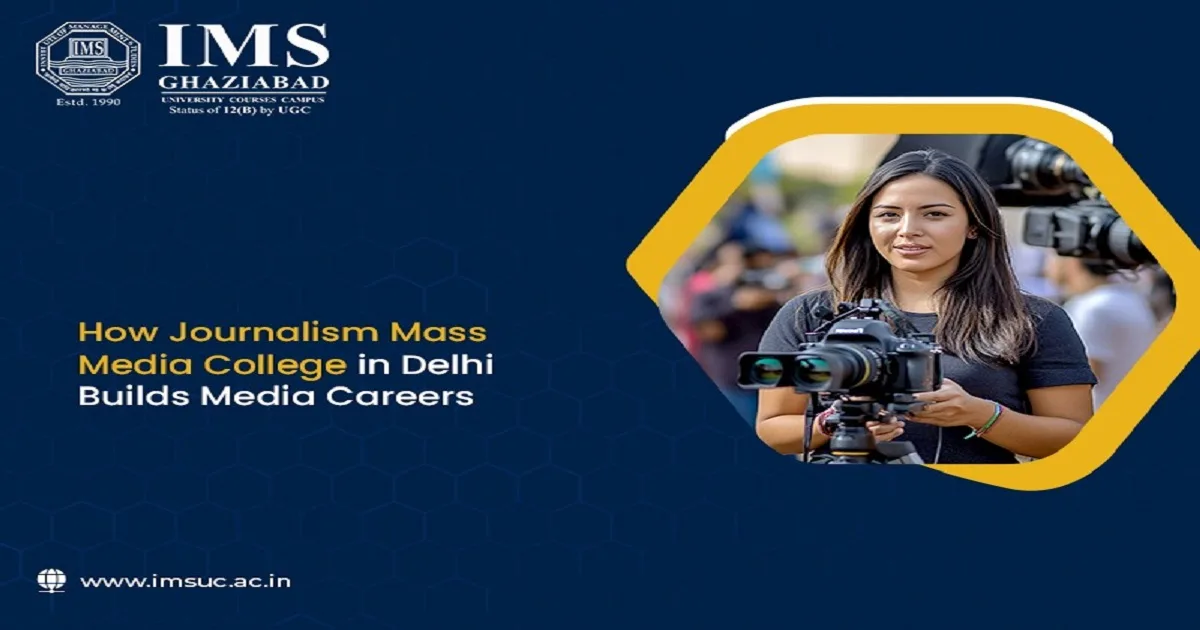
Delhi has long been the nerve centre of India's media and communication industry, home to leading news networks, publishing houses, and digital content studios. For students who dream of working in newsrooms, production houses, or digital media agencies, choosing the right institute shapes everything that follows. A well-regarded Journalism Mass Media College In Delhi does more than teach theory — it builds the practical skills, industry exposure, and professional confidence that media careers demand.
Why the Right Institute Matters
Media education today goes far beyond writing news reports. Students are expected to understand video production, digital storytelling, social media strategy, and audience analytics, alongside traditional reporting and editing skills. A good college blends classroom learning with hands-on studio work, internships, and guest sessions from working journalists, giving students a realistic picture of how modern newsrooms and content teams actually operate.
Skills Developed Through a Structured Media Program
- Reporting and writing across print, broadcast, and digital formats
- Video and audio production, including editing and post-production tools
- Public relations and corporate communication fundamentals
- Digital media management, covering social platforms and content strategy
- Media law and ethics, essential for responsible journalism
These skills are typically developed through live projects, campus newsletters, radio or video projects, and internships with media houses, which help students build a portfolio before they graduate.
Beyond Journalism: A Growing Range of Academic Paths
Interestingly, many institutes in Delhi NCR that offer strong media programs are also recognised as the Best Management College in Delhi NCR, giving students the option to pair communication skills with business education through dual specialisations or minor courses. This is particularly useful for those interested in corporate communication, brand management, or media entrepreneurship, where business acumen adds real value to a media career.
At the same time, some campuses have diversified into science-based programs as well. A student researching options may come across a BSc Hons Microbiology program on the same campus, reflecting how many institutes are expanding beyond their original focus to offer multidisciplinary education under one roof. While unrelated to media on the surface, this diversification often means better infrastructure, libraries, and campus facilities that benefit all students, including those in journalism and mass communication.
What to Look for Before Enrolling
- Industry-experienced faculty with real newsroom or agency backgrounds
- Access to modern studios, editing labs, and equipment
- Strong placement records with media houses, PR agencies, and digital companies
- Opportunities for internships during the course, not just after
- A curriculum that is updated regularly to reflect digital-first media trends
Conclusion
Choosing a media education path is as much about the college's overall academic environment as it is about the journalism curriculum itself. Institutes such as IMS Ghaziabad (University Courses Campus) reflect this broader approach, offering media and communication programs alongside management and science courses, so students benefit from a well-rounded campus experience while building focused, career-ready skills for the media industry.