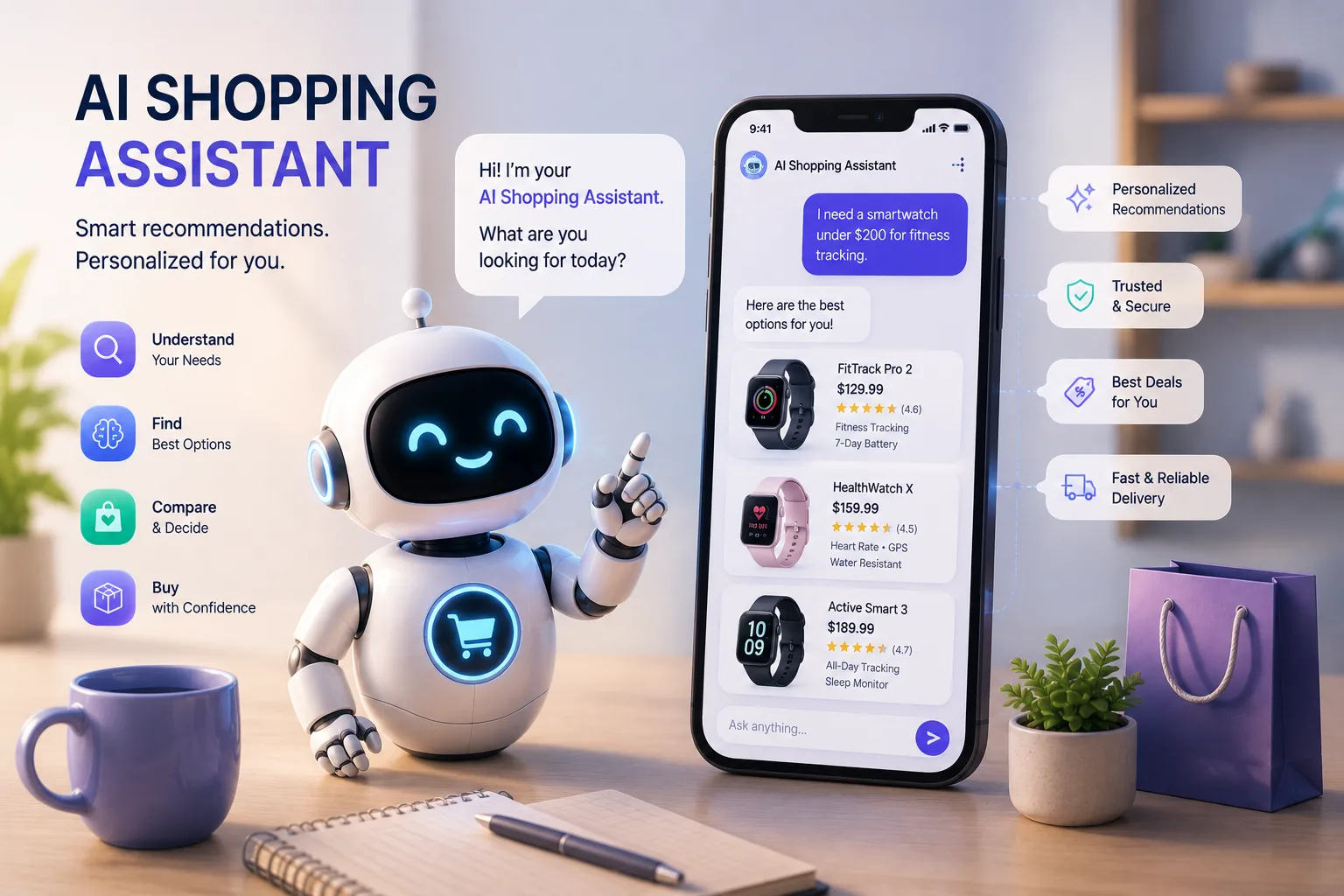
Shopping online has never offered more choices, but that also means finding the right product can take time. Customers often compare dozens of options, read reviews, and switch between websites before making a purchase. AI shopping agents are changing this process by doing much of the research for shoppers and recommending products that best match their needs.
Instead of simply displaying search results, AI shopping agents understand what a shopper is looking for, analyze available products, and explain why certain options are the best fit. This makes shopping faster, more personalized, and more informed.
What Is an AI Shopping Agent?
An AI shopping agent is an intelligent assistant that helps people discover, compare, and choose products. It can understand natural language, process large amounts of product information, and provide recommendations based on a shopper's preferences.
For example, rather than searching for "running shoes," someone can ask:
"I need lightweight running shoes under $150 for marathon training."
The AI understands the request and recommends products that meet those specific requirements instead of showing thousands of general search results.
Step 1: Understanding What the Shopper Wants
The recommendation process starts by understanding the shopper's intent.
AI shopping agents look beyond keywords. They identify what the customer is trying to achieve, whether that's finding a budget-friendly laptop, a durable suitcase, or a gift for a child.
They consider details such as:
- Budget
- Preferred features
- Intended use
- Brand preferences
- Size, color, or style
- Delivery requirements
The more specific the request, the more accurate the recommendations become.
Step 2: Gathering Product Information
Once the AI understands the request, it collects information from multiple trusted sources.
This may include product pages, specifications, pricing, availability, customer reviews, ratings, and structured product data.
Instead of relying on a single detail, the AI builds a complete picture of each product before deciding whether it matches the shopper's needs.
Step 3: Comparing Products
AI shopping agents don't recommend the first product they find. They compare similar products to determine which ones best satisfy the shopper's requirements.
The comparison may include:
- Features and specifications
- Price and overall value
- Customer ratings
- Review sentiment
- Product quality
- Compatibility
- Shipping options
- Return policies
This comparison helps narrow thousands of products down to a few strong recommendations.
Step 4: Ranking the Best Matches
After comparing products, the AI ranks them based on relevance.
A shopper looking for the cheapest option may receive different recommendations than someone who wants premium quality or long-term durability.
Rather than creating one list for everyone, AI tailors recommendations to each shopper's priorities.
Step 5: Explaining the Recommendation
One of the biggest advantages of AI shopping agents is transparency.
Instead of simply suggesting a product, many AI assistants explain why they chose it.
For example, they may say a laptop is recommended because it offers excellent battery life, strong customer reviews, and enough performance for everyday work while staying within the shopper's budget.
These explanations help shoppers make decisions with greater confidence.
Why Product Data Matters
AI can only recommend products it understands.
If a product page has missing specifications, vague descriptions, outdated information, or incomplete attributes, the AI has less information to evaluate. Even a high-quality product may be overlooked if its data isn't detailed enough.
On the other hand, product pages with complete and accurate information are easier for AI to interpret and compare, improving their chances of being recommended.
What Makes a Product More Likely to Be Recommended?
AI shopping agents generally favor products with high-quality, trustworthy information. Important elements include:
- Clear product titles
- Detailed descriptions
- Complete specifications
- Accurate product attributes
- High-quality images
- Genuine customer reviews
- Transparent pricing
- Shipping and return details
- Structured product data
The goal is to remove uncertainty so the AI can confidently determine whether a product meets a shopper's request.
What This Means for Ecommerce Brands
As AI shopping assistants become part of the buying journey, ecommerce businesses need to think beyond traditional SEO.
It's no longer enough to rank well in search results. Brands also need product content that AI systems can easily understand, evaluate, and compare.
This means investing in accurate product information, keeping product data up to date, and ensuring every product page answers the questions shoppers are likely to ask.
So, is your e-commerce content ready for AI shopping agents?
The Future of Product Recommendations
AI shopping agents are moving online shopping from keyword-based search to intelligent recommendations. Instead of asking customers to do all the research, AI analyzes products, compares options, and presents the most relevant choices in seconds.
For shoppers, this means less time searching and more confidence when buying. For businesses, it means product quality alone isn't enough—clear, complete, and structured product information is becoming just as important.
Final Thoughts
AI shopping agents recommend products by understanding customer intent, analyzing detailed product information, comparing available options, and explaining their recommendations in a way shoppers can trust.
As Agentic Commerce continues to grow, brands should focus on Agentic Commerce Optimization (ACO) to make their product content AI-ready. Well-structured product data, complete descriptions, and accurate specifications help AI shopping agents understand products more effectively, increasing the likelihood of being recommended when customers are ready to buy.