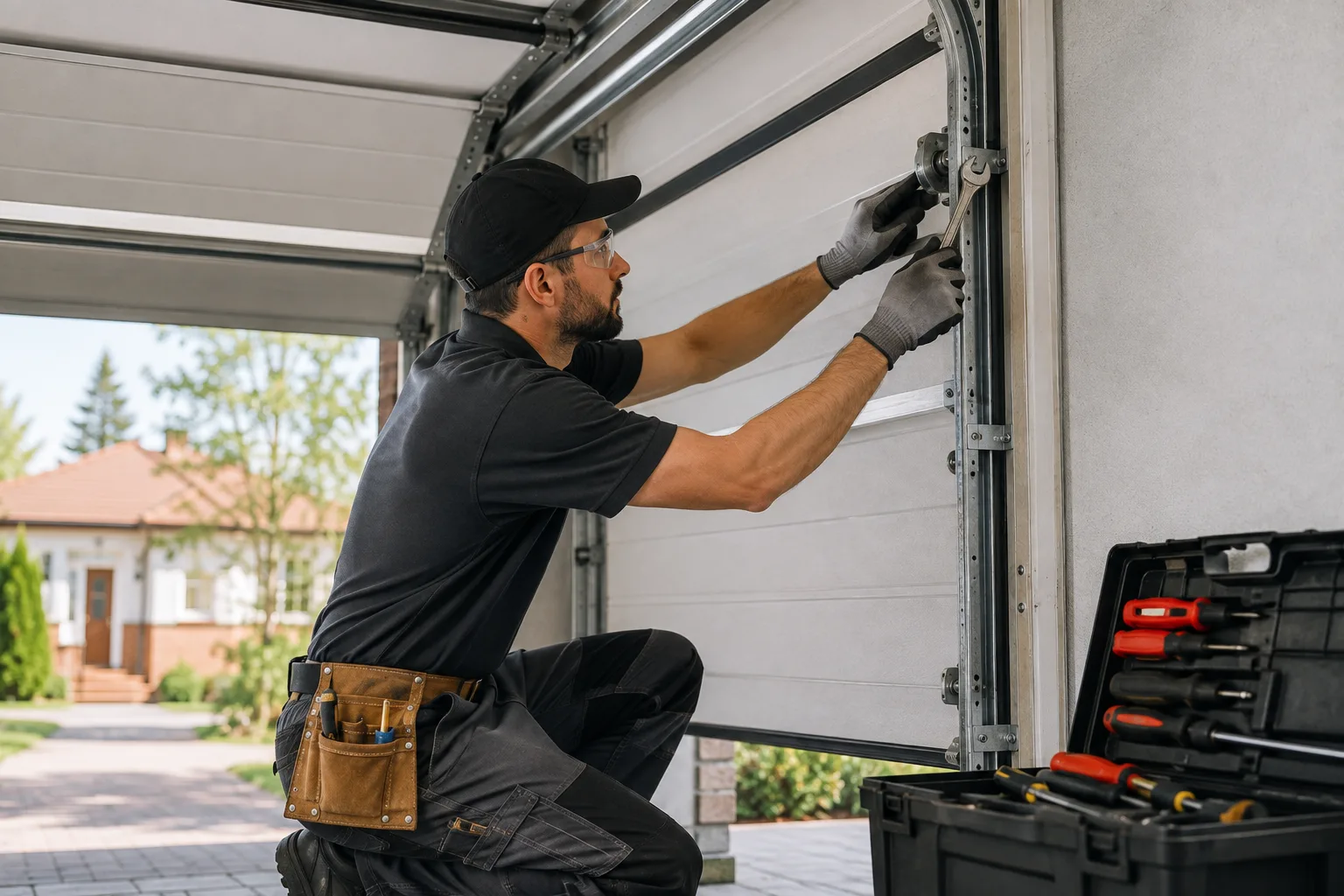
A garage door that suddenly becomes noisy, crooked, slow, or difficult to operate is giving you useful information. The mistake is assuming that every problem has the same cause. A door that refuses to open may have an opener issue, a spring problem, a cable concern, or another mechanical fault. A door that closes halfway and reverses can point to a different set of possibilities.
For homeowners and businesses looking for garage door repair in Calgary, Alberta, the first useful step is to describe exactly what the door is doing. The sound, movement, position, and timing of the failure can help a technician understand where to begin. You do not need to diagnose the component yourself. In fact, attempting to adjust springs, cables, or other tensioned parts without the proper equipment can create unnecessary risk.
Start With the Symptom, Not the Part
When a garage door stops working properly, people often search for the name of a component they think has failed. That can lead to an overly narrow approach.
Instead, describe the symptom.
Does the door refuse to move at all? Does it open a few inches and stop? Is one side lower than the other? Does the opener run while the door remains stationary? Does the door make a grinding sound? Does it reverse before reaching the floor?
These details are more useful than guessing whether a particular spring, cable, roller, or opener component is responsible.
A garage door is a connected mechanical system. One problem can affect another part of the system, and the visible symptom does not always identify the original cause.
When the Door Will Not Open
A completely non-moving door can be frustrating, particularly when a vehicle is inside the garage or access to the building depends on that opening.
Before assuming a major mechanical failure, check the simple things that can safely be observed. Make sure the remote or wall control is responding and that there is no obvious obstruction affecting the door's path.
If the opener activates but the door itself does not move, the problem may be mechanical rather than electronic. A broken spring or cable issue can prevent the door from operating normally.
If the door feels unusually heavy or cannot be lifted normally, do not keep forcing it. A heavy overhead door can place additional strain on other components, and tensioned parts should be handled by a qualified technician.
The useful information to provide during a repair request is what happened immediately before the failure. Did the door stop suddenly? Was there a loud sound? Had it been getting noisier or slower over several days?
That timeline can help narrow the inspection.
A Loud Bang Can Be an Important Clue
Some garage door failures announce themselves with a sudden loud bang.
A broken spring is one possible reason. Springs are part of the mechanism that helps counterbalance the weight of the door, so a spring failure can change how the door feels and operates.
After a spring failure, the door may become extremely heavy or stop functioning normally. A visible gap in a spring can also be a warning sign.
This is not a component to experiment with.
Garage door springs can hold significant tension. Removing, adjusting, or replacing them requires appropriate tools and knowledge. If you suspect a broken spring, keep people away from the mechanism and arrange a professional inspection rather than attempting to disassemble it.
The same principle applies to cables and other components that are under load.
What an Uneven Door Can Tell You
A garage door should generally travel in a controlled, coordinated manner. If one side appears lower than the other, or the door becomes crooked while moving, stop treating the problem as a minor noise issue.
An uneven door can be associated with cable, roller, track, or other mechanical problems. The exact cause cannot be confirmed simply by looking at the door from a distance.
What matters is the change in movement.
If the door has suddenly become crooked, repeatedly binds in one area, or appears to be coming out of its normal path, avoid repeated attempts to operate it. Continuing to cycle a mechanically compromised door can potentially worsen the condition.
A technician can inspect the tracks, rollers, cables, hardware, and balance of the system to determine what needs attention.
When the Door Is Noisy but Still Works
Noise is easy to ignore because the door may continue operating.
That can be a mistake when the noise represents a new change.
Grinding, scraping, rattling, popping, or unusual vibration can indicate that something in the system needs inspection. The cause could range from worn moving components to hardware or alignment concerns.
The important distinction is between normal operating sound and a sound that is new, increasing, or accompanied by a change in movement.
For example, a homeowner might notice that the door has become progressively louder over several weeks. The door still opens, so there is no obvious emergency. However, that gradual change is worth reporting before a small maintenance or repair issue becomes a larger operating problem.
This is one reason regular observation is valuable even when the door appears functional.
If the Door Closes and Then Reverses
A door that begins closing and then reverses can be especially confusing because the opener may appear to be functioning normally.
There can be several possible explanations, including an obstruction, sensor-related issue, travel settings, or mechanical resistance. The safest first step is to check for obvious obstacles around the door's path without interfering with the mechanical system.
If the problem continues, avoid repeatedly forcing the cycle.
A technician can determine whether the issue is related to the opener, safety system, or mechanical operation.
This type of symptom also shows why simply replacing a remote, sensor, or opener component without diagnosis can be a poor approach. The visible behavior may have more than one possible cause.
Do Not Ignore the Tracks and Rollers
Tracks and rollers guide the door through its opening and closing movement. When something changes in this area, the door may shake, scrape, bind, or move unevenly.
A homeowner can visually observe whether a track appears obviously damaged or whether something is blocking the door's path. However, attempting to bend tracks back into position or force rollers into place can create additional problems.
If a door has come off its normal track path, stop operating it and arrange an inspection.
The same applies when a roller appears damaged or displaced. A technician can assess the condition of the track, rollers, brackets, and related hardware together instead of treating one visible part as the entire problem.
What About a Door That Works Intermittently?
Intermittent problems are often harder to diagnose than complete failures.
A door may work perfectly in the morning but struggle later. The opener may respond sometimes but not at other times. The door may occasionally reverse or hesitate.
Because the problem is inconsistent, it can be tempting to wait until the failure becomes permanent.
Instead, document the pattern.
Note when the problem occurs, what the door was doing, whether it makes a particular sound, and whether the issue happens with the remote, wall control, or both. This information can be useful during a service visit.
Intermittent operation can involve controls, sensors, mechanical resistance, or other system components, so the pattern matters.
Commercial Doors Need Faster Attention When Access Matters
The consequences of a garage or overhead door failure can be greater in a commercial environment.
A business may depend on an overhead door for vehicle access, deliveries, equipment movement, inventory handling, or employee access. If the door becomes unreliable, the problem can affect more than convenience.
Commercial property owners should therefore pay attention to changes before the door becomes completely unusable.
If an overhead door begins operating more slowly, makes unusual sounds, becomes difficult to close, or repeatedly stops during its cycle, arranging an inspection can help determine whether the problem requires repair or whether a larger equipment issue is developing.
For businesses that use automated entry systems or loading equipment, the door may also be part of a wider access workflow. A repair assessment should take that surrounding setup into account.
What to Do Before the Technician Arrives
A little preparation can make a repair appointment more productive.
First, describe the symptom accurately. Avoid saying only that the door is "broken." Explain what happens when you press the control.
For example:
- The opener runs, but the door does not move.
- The door opens halfway and stops.
- One side rises before the other.
- The door makes a loud noise during opening.
- The door closes and immediately reverses.
- The door has become progressively louder.
- The remote works intermittently.
- The door is stuck in the open or closed position.
Second, tell the technician whether the problem appeared suddenly or developed gradually.
Third, mention any recent event that may be relevant, such as unusual noise, impact, visible damage, or a previous repair.
Most importantly, do not dismantle tensioned components simply to determine what has failed.
Repair Does Not Always Mean Replacing One Part
Once the system is inspected, the appropriate repair may involve more than the component that first caught your attention.
For example, if a door has developed uneven movement, the technician may need to look at several connected components before determining the cause. If an opener is struggling, the mechanical condition of the door may also need to be considered.
This broader approach matters because replacing one component without addressing the underlying problem can leave the same symptom unresolved.
The goal of a good repair is to restore appropriate operation while understanding why the problem occurred.
When Repair May Lead to a Replacement Conversation
Not every door problem should automatically result in replacement.
However, a repair inspection can reveal when the existing system has become difficult to maintain or no longer suits the property.
Repeated failures, widespread wear, significant damage, or changes in how the building is used can all justify discussing replacement as an alternative.
The decision should be based on the condition and suitability of the complete system rather than one isolated repair.
Property owners who want to understand that decision in more detail can also review the earlier guide on garage door repair Calgary, which examines the signs that replacement may deserve consideration.
Choosing a Local Repair Provider
Once a repair is needed, the service provider matters because garage doors contain mechanical components that should be inspected and handled appropriately.
For Calgary property owners, DDR Door Ltd. provides door-related services including overhead door repair and installation, garage door supply, door installation, automated entry systems, dock leveler repair, and pallet racking.
That broader service range can be particularly relevant to commercial customers whose overhead doors operate alongside loading and access equipment.
When contacting a local provider, the most useful approach is to describe the actual symptom rather than trying to prescribe the repair. A clear description gives the technician a better starting point for assessing the system.
FAQ
What is the most common reason a garage door stops working?
There is no single cause for every failure. Problems can involve springs, cables, tracks, rollers, openers, controls, sensors, hardware, or other components. The symptom and inspection are more useful than assuming one component is responsible.
Can I repair a broken garage door spring myself?
Spring repairs should be handled by a qualified professional. Springs can store significant tension, and incorrect handling can result in serious injury or additional damage.
Should I keep using a garage door that is making unusual noises?
If the noise is new or accompanied by uneven movement, vibration, hesitation, or other changes, it is better to have the system inspected rather than repeatedly operating it to see whether the problem disappears.
Why does my garage door close and then open again?
Possible causes can include sensor issues, obstructions, travel settings, or mechanical resistance. Check for obvious obstacles and then arrange professional service if the behavior continues.
How can I explain my garage door problem to a technician?
Describe what the door does, when the problem occurs, whether it appeared suddenly or gradually, and any unusual sounds or visible changes. This is generally more useful than guessing which component has failed.
The Symptom Is the Starting Point
Garage door repair becomes easier to approach when the problem is described accurately.
A loud bang, uneven movement, stuck door, reversing cycle, intermittent opener, or damaged track can each point toward different areas of the system. Property owners do not need to diagnose the exact component themselves. Their job is to notice the change, avoid unsafe adjustments, and provide the technician with useful information.
For homeowners, this approach can help prevent a frustrating problem from becoming a larger one. For commercial customers, early attention can be even more valuable when an overhead door is part of everyday operations.
When a garage door stops behaving normally, the best next step is usually not to guess which replacement part to buy. Start with the symptom, stop unsafe operation when necessary, and have the complete system assessed so the repair addresses the actual problem.