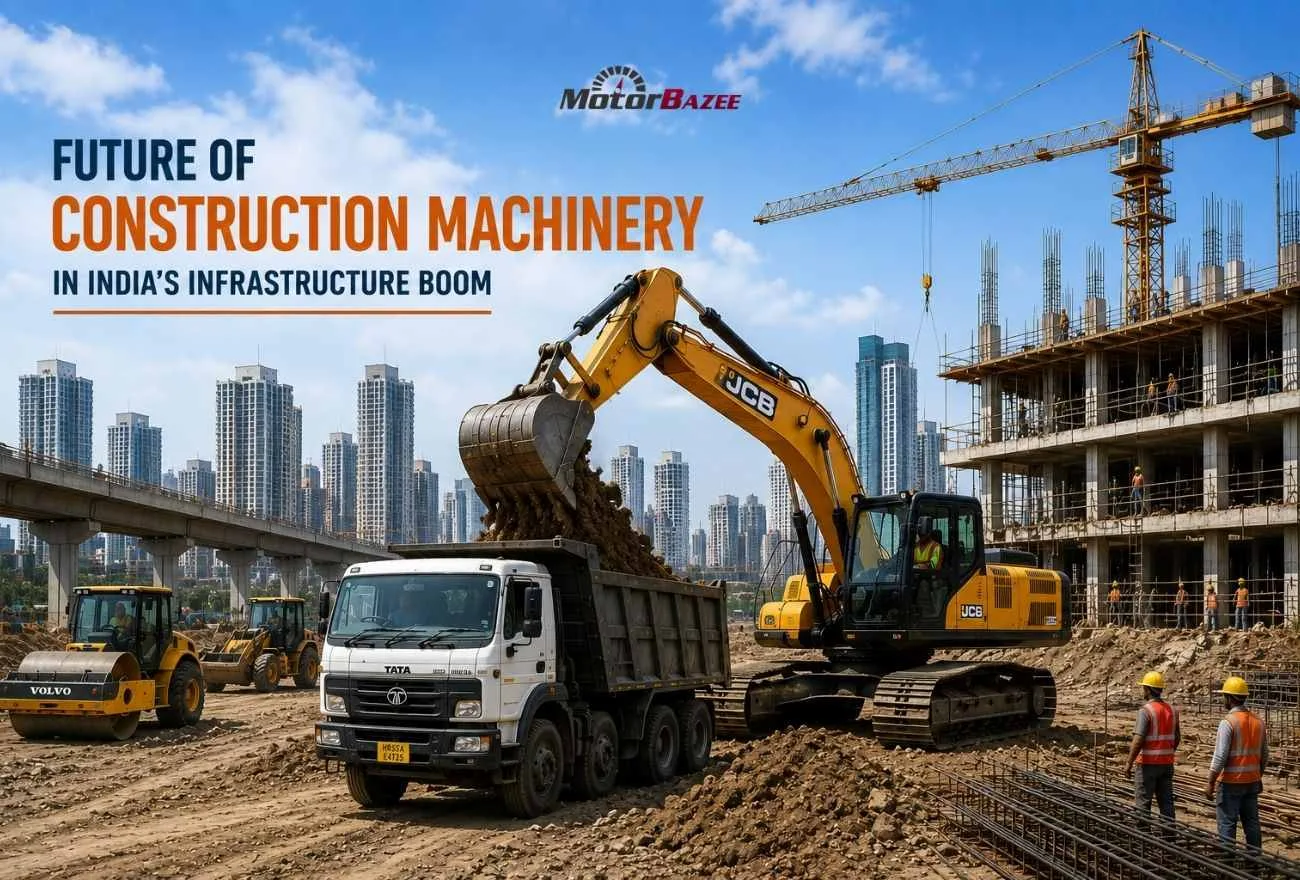
India is witnessing one of the biggest infrastructure development phases in its history. From expressways and metro rail projects to smart cities, industrial corridors, and renewable energy parks, large-scale construction is transforming the country. Behind every successful infrastructure project is a fleet of powerful construction machinery that helps complete work faster, safer, and more efficiently.
As demand for infrastructure continues to rise, the future of construction equipment in India looks stronger than ever. Machines like excavators, backhoe loaders, wheel loaders, motor graders, bulldozers, cranes, and concrete equipment are becoming more advanced with smart technology, fuel efficiency, and improved productivity.
Visit Us: Future of Construction Machinery in India's Infrastructure Boom
India is witnessing one of the most significant infrastructure development phases in its history. Across the country, new expressways, metro rail networks, smart cities, industrial corridors, airports, ports, renewable energy parks, and logistics hubs are reshaping the nation's landscape. These ambitious projects are not only improving connectivity and economic growth but are also creating millions of employment opportunities. At the heart of this transformation is one crucial factor—modern construction machinery.
Construction equipment has become the backbone of infrastructure development. From excavators and bulldozers to cranes, loaders, road rollers, and concrete mixers, these machines help complete complex projects with greater speed, accuracy, and safety. As India's infrastructure ambitions continue to grow, the demand for advanced construction equipment is reaching new heights.
The Rising Demand for Infrastructure
The Indian government has launched several large-scale initiatives to improve transportation, urban development, and industrial growth. Massive investments in highways, metro systems, railway modernization, housing projects, and renewable energy facilities have accelerated construction activities across the country.
With multiple projects running simultaneously, contractors require reliable and high-performance machinery that can handle heavy workloads while maintaining efficiency. Modern equipment significantly reduces manual labor, shortens project timelines, and improves overall productivity.
Why Construction Machinery Matters
Construction machinery plays a vital role in every stage of an infrastructure project. Heavy equipment is used for land excavation, foundation work, material transportation, road construction, lifting heavy structures, and site preparation.
Some of the key benefits of modern construction equipment include:
- Faster project completion.
- Improved worker safety.
- Higher operational efficiency.
- Reduced labor dependency.
- Greater precision and accuracy.
- Lower long-term operating costs.
By automating labor-intensive tasks, construction companies can complete projects within deadlines while maintaining quality standards.
Technological Advancements in Construction Equipment
The construction machinery industry has evolved rapidly with the adoption of advanced technologies. Modern machines are equipped with GPS tracking, telematics, automation systems, fuel-efficient engines, and real-time monitoring capabilities.
These innovations help contractors monitor equipment performance, reduce fuel consumption, schedule preventive maintenance, and minimize unexpected breakdowns. Smart machinery also improves productivity by providing accurate operational data that helps optimize construction processes.
Electric and hybrid construction equipment is also gaining popularity as companies focus on reducing carbon emissions and meeting sustainability goals.
Supporting India's Smart Infrastructure Vision
India's vision of becoming a global economic powerhouse depends heavily on world-class infrastructure. Construction machinery enables developers to execute large-scale projects efficiently, whether it is building metro rail systems in urban centers or developing renewable energy parks in remote regions.
Infrastructure projects such as highways, bridges, tunnels, airports, ports, and industrial parks require specialized equipment capable of handling challenging terrain and demanding construction conditions.
Without advanced machinery, completing these mega projects within planned timelines would be extremely difficult.
Safety and Efficiency on Construction Sites
Modern construction equipment is designed with advanced safety features that protect operators and workers. Features such as rear-view cameras, stability control systems, emergency shutdown functions, operator cabins, and automated controls reduce workplace accidents and improve operational safety.
Efficient machinery also minimizes downtime and increases overall site productivity. Proper maintenance and operator training further enhance equipment performance and extend machine lifespan.
The Future of Construction Machinery in India
India's infrastructure sector is expected to expand significantly over the coming years. Continued government investment, rapid urbanization, industrial expansion, and increasing private sector participation will drive demand for advanced construction equipment.
Manufacturers are focusing on developing fuel-efficient, environmentally friendly, and technologically advanced machines that meet the evolving needs of the construction industry. Artificial intelligence, automation, machine learning, and remote equipment monitoring are expected to become standard features in future construction machinery.
As India builds smarter cities, stronger transportation networks, and sustainable infrastructure, construction equipment will continue to play a critical role in turning ambitious plans into reality.
Conclusion
India's infrastructure revolution is creating new opportunities for economic growth and national development. Behind every successful highway, metro rail project, airport, bridge, and industrial corridor is a fleet of powerful construction machinery working tirelessly to transform ideas into reality.
Modern construction equipment not only improves productivity and efficiency but also enhances safety, reduces project costs, and supports sustainable construction practices. As infrastructure investments continue to rise, advanced machinery will remain one of the key drivers of India's progress, helping build a stronger, smarter, and more connected future.
Top 10 FAQs
1. Why is construction machinery important?
Construction machinery improves speed, efficiency, and safety while reducing manual labor.
2. Which construction machine is used most frequently?
Excavators are among the most commonly used machines for digging and earthmoving.
3. What are the major infrastructure projects in India?
Expressways, metro rail, smart cities, airports, industrial corridors, and renewable energy parks.
4. How does modern machinery improve productivity?
It automates heavy tasks, reduces downtime, and speeds up project completion.
5. What technologies are used in modern construction equipment?
GPS, telematics, automation, AI, fuel-efficient engines, and remote monitoring systems.
6. Is construction machinery environmentally friendly?
Many new machines use fuel-efficient engines, electric power, and low-emission technologies.
7. What is telematics in construction equipment?
Telematics helps track machine location, performance, fuel usage, and maintenance needs.
8. How does construction equipment improve worker safety?
It includes safety features like cameras, stability controls, enclosed cabins, and emergency systems.
9. Which industries use construction machinery?
Construction, mining, infrastructure, road building, railways, ports, and renewable energy sectors.
10. What is the future of construction machinery in India?
The future includes AI-powered, automated, electric, and smart connected machines for faster and sustainable infrastructure development.