Hair loss is a journey that affects millions of men worldwide. For some, it begins with a slight recession around the temples. For others, thinning starts at the crown and gradually spreads across the scalp. While the experience varies from person to person, male pattern baldness often follows a predictable pattern that can be measured using the Norwood Scale.
The Norwood Scale is the most widely accepted system for classifying male hair loss. It helps specialists identify the stage of baldness, monitor progression, and recommend suitable treatment options. Understanding where you fall on the scale can make it easier to choose the right strategy for preserving and restoring your hair.
This guide explores every stage of the Norwood Scale, from Norwood 1 to Norwood 7, and highlights the treatments that may help at each level of hair loss.
Understanding the Norwood Scale
The Norwood scale of baldness is a classification system used to measure the progression of male pattern hair loss. Developed specifically for androgenetic alopecia, the scale provides a clear framework for assessing how hair loss changes over time.
The scale begins with minimal or no visible hair loss and progresses through increasingly advanced stages of baldness. Each stage reflects a different pattern of hairline recession, crown thinning, or overall loss of density.
For men experiencing Norwood scale hair loss, understanding the scale is an important first step towards finding effective treatment. A professional assessment can determine the current stage and help create a personalised restoration plan.
Norwood 1: Maintaining a Healthy Hairline
Norwood 1 represents little or no noticeable hair loss. The hairline remains intact, and there are no significant signs of recession or thinning.
At this stage, treatment is usually not required. However, men with a strong family history of baldness may benefit from monitoring changes over time. Early awareness allows subtle signs of hair loss to be detected before they become more obvious.
Maintaining a healthy lifestyle, eating a balanced diet, and caring for the scalp can help support long-term hair health.
Norwood 2: The First Signs of Hairline Recession
Norwood 2 is characterised by mild recession around the temples. The changes are often subtle and may resemble a mature hairline rather than significant hair loss.
This stage is frequently the first visible step on the balding Norwood scale. Some men remain at this stage for many years, while others experience continued progression.
For men concerned about future hair loss, an early consultation can help establish a baseline and identify potential preventative treatment options. Acting early often provides the greatest opportunity to preserve existing hair.
Norwood 3: Early Clinical Hair Loss
Norwood 3 is generally recognised as the first stage of clinically significant hair loss. The recession becomes more pronounced, creating a deeper M-shaped hairline.
Many men begin seeking treatment at this stage because the changes become more noticeable. Since a large number of follicles remain active, treatment outcomes are often more favourable than in later stages.
Medical therapies and non-surgical treatments are commonly recommended for men experiencing Norwood scale hair loss at this level. The goal is often to slow progression and maintain density.
Norwood 3 Vertex: Crown Hair Loss Begins
Norwood 3 Vertex differs from standard Norwood 3 because thinning develops at the crown. Some men experience crown hair loss before noticeable frontal recession, while others experience both simultaneously.
Crown thinning can be difficult to detect without photographs or professional examination. This is why regular monitoring is important, particularly for individuals with a family history of hair loss.
Early treatment can help protect active follicles and improve the chances of maintaining coverage in the crown area.
Norwood 4: Moderate Hair Loss
At Norwood 4, both the frontal hairline and crown show more significant thinning. However, a band of hair usually remains between these two regions.
Hair loss becomes increasingly visible at this stage, prompting many men to seek professional advice. Fortunately, a variety of treatment options remain available.
Specialists often use the baldness Norwood scale to determine the extent of follicle miniaturisation and recommend appropriate therapies. Early intervention during this stage may help preserve existing hair and reduce further progression.
Norwood 5: Advanced Hairline and Crown Loss
Norwood 5 involves a narrowing of the hair bridge separating the front and crown areas. Hair loss becomes more extensive, and the affected regions begin to merge.
At this stage, treatment plans often require a more comprehensive approach. Medical therapies may still help maintain existing hair, while restoration procedures may also be considered.
A professional assessment of the Norwood scale of baldness provides valuable information about follicle health and future hair loss risk, helping specialists design realistic treatment strategies.
Norwood 6: Extensive Baldness Across the Scalp
Norwood 6 occurs when the bridge of hair separating the frontal and crown regions disappears. The bald areas merge into one larger zone across the top of the scalp.
Although hair loss is advanced, treatment options still exist. The focus often shifts towards restoration and improving overall appearance rather than simply preventing progression.
Careful planning is essential because donor hair resources may become increasingly important at this stage.
Norwood 7: The Most Advanced Stage
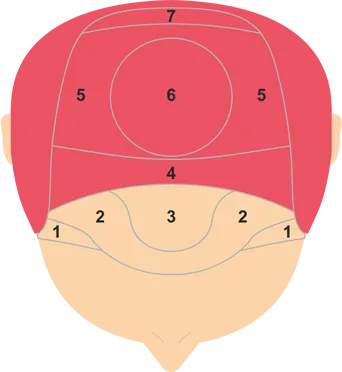
Norwood 7 represents the most severe form of male pattern baldness. Hair remains primarily around the sides and back of the scalp, while most of the top area is affected by extensive loss.
The final stage of the balding norwood scale demonstrates the full progression of untreated male pattern baldness. While restoration can still be possible for some individuals, treatment goals must be realistic and tailored to available donor hair.
Professional guidance is particularly valuable at this stage to ensure appropriate expectations and treatment planning.
Medical Treatments That Work
Medical treatments remain one of the most effective options for slowing hair loss progression. These therapies are generally most beneficial during the earlier Norwood stages when follicles remain active.
The primary aim is to preserve existing hair, strengthen weakened follicles, and support healthier growth. Results vary depending on individual factors, but consistent treatment often helps delay further progression.
Men experiencing Norwood scale hair loss should seek professional advice before starting treatment to ensure the chosen approach matches their stage of hair loss.
Platelet-Rich Plasma Therapy
Platelet-rich plasma therapy, commonly known as PRP, has become increasingly popular in modern hair restoration.
The treatment involves collecting a small blood sample, concentrating the platelets, and injecting the resulting growth factors into areas of thinning hair. These growth factors may stimulate follicle activity and support healthier hair growth.
PRP is frequently used as part of a broader treatment plan and may be particularly helpful for men in the earlier stages of the Norwood scale.
Hair Transplantation for Lasting Results
Hair transplantation remains one of the most effective long-term restoration options for suitable candidates.
Modern techniques allow surgeons to relocate healthy follicles from donor areas to thinning or bald regions with natural-looking results. Advances in surgical precision have significantly improved outcomes over the past decade.
Hair transplantation can be effective for men at various stages of the Norwood scale of baldness, although planning must consider future progression to maintain a natural appearance over time.
Scalp Health and Hair Growth
Healthy follicles depend on a healthy scalp. Conditions such as inflammation, excessive oil production, and poor scalp hygiene may negatively affect hair growth.
Modern restoration programmes often include scalp assessments to identify issues that could interfere with treatment success. Improving scalp health can support stronger follicles and better overall outcomes.
A healthy scalp environment creates a stronger foundation for both medical and surgical hair restoration strategies.
Lifestyle Habits That Support Hair Preservation
Although genetics is the primary cause of male pattern baldness, lifestyle habits can influence overall hair quality and scalp health.
A nutritious diet, regular exercise, adequate sleep, and stress management all contribute to general well-being and may help support healthier hair. Avoiding smoking and maintaining good scalp care habits may also benefit follicle function.
These habits work best when combined with professional treatment rather than being viewed as standalone solutions.
Why Professional Assessment Is Essential
Hair loss affects every individual differently. Two men at the same Norwood stage may have different patterns of thinning, follicle health, and future progression.
A professional assessment provides a detailed understanding of the condition and helps identify the most effective treatment options. Specialists evaluate hair density, donor hair availability, scalp health, and long-term goals before recommending a plan.
Companies such as Want Hair Ltd recognise the importance of personalised care and evidence-based treatment strategies when helping men navigate the challenges of hair loss.
Conclusion
The Norwood scale of baldness remains the most trusted system for understanding male pattern hair loss. From Norwood 1 to Norwood 7, each stage reflects a different level of progression and requires a tailored approach to treatment.
Whether you are experiencing the early signs shown on the balding Norwood scale, noticing more advanced thinning on the baldness Norwood scale, or researching solutions for ongoing Norwood scale hair loss, early action can make a significant difference. Modern medical therapies, PRP treatments, scalp care strategies, and hair transplantation procedures provide effective options for many men. With professional guidance and a personalised treatment plan, it is possible to manage hair loss successfully and achieve meaningful improvements in appearance and confidence.