Candles no longer serve only as a source of light. Today they are used to add a touch of relaxation, contribute to the decor of a space and to create an atmosphere that evokes the principles of aromatherapy. Among the components of scented candles, the most significant factor is, without a doubt, the oil used in their creation. When it comes to producing candles, the selection of appropriate fragrance oils can make a notable difference to their perceived aroma and the level of satisfaction among customers.
Whether you produce candles as a pastime or on a larger scale, a thorough knowledge of how to utilize fragrance oils will enable you to obtain satisfactory results. This guide aims to cover all aspects of the utilization of fragrance oils for candle making, starting with the choice of raw material up to how to ensure long-lasting scent.
What are the fragrance oils?
Fragrance oils are specific aromatic mixtures, developed in order to bestow a consistent and pleasant smell. Unlike natural essential oils, obtained by direct extraction from plants, fragrance oils can be a combination of natural extracts and chemical aromas, thus allowing for a significantly wider spectrum of smells. Fragrance oils are most commonly used in: scented candles, wax melts, reed diffusers, soaps, lotions, air fresheners, room sprays and home fragrances. Their stability and the wide variety of available aromas makes them the material of choice for candlemakers.
Why are fragrance oils commonly used for candle making?
Many candlemakers prefer fragrance oils due to their assured performance and enormous choice of smells. Well-made fragrance oils blend seamlessly with candle waxes and sustain their characteristic odor throughout the candle’s lifetime. Their key advantages are: wide variety of available odors; consistent scent quality; significant hot and cold throw; suitability for different types of waxes and stable performance during the candlemaking process. All of these qualities contribute to making fragrance oils for candles the right choice, for beginners and experienced makers alike.
How to select fragrance oils for candle making
Not every fragrance oil is manufactured for candles. In choosing oils for your next creations, make sure to consider the following points:
1. Wax Compatibility:
Different waxes perform in various ways. Whether it’s soy, paraffin, coconut, beeswax, or any other type of wax, they all have their own fragrance retention capacity. Make sure you use fragrance oils that have been tested for your chosen type of wax.
2. Flash Point:
The flash point represents the temperature at which the oil starts to release aromas. It does not, in itself, define whether the candle will be safe, but it helps during the wax mixing stage.
3.Scent Intensity:
Some fragrance oils produce a stronger scentthrow more naturally than others. Fruity, floral, woody, spicy, oriental andfresh perfumes all behavedifferently depending on thewax and fragrance oil combination.
4. Quality:
High-quality oils generally offer greater consistency, more even performance, and more nuanced smell.
Popular categories of candle fragrance oils
Depending on the ambience you want to achieve, a particular aroma will work best. The most popular types of fragrance oils for candles are:
- Floral (rose, lavender, jasmine)
- Fruity (apple, berry, mango)
- Citrus (lemon, orange, bergamot)
- Woody (sandalwood, cedarwood, oud)
- Fresh (cotton, ocean breeze)
- Gourmand (chocolate, coffee, vanilla)
- Seasonal (pumpkin, cinnamon, pine)
These fragrant oils continue to be a staple for candle making year-round, no matter what the décor or occasion is.
Tips for Creating the Perfect Candle
Using fragrance oils for candle making isn’t complicated. For the best results, remember to:
- Precisely measure fragrance oil by weight.
- Use a digital scale for accurate measurements.
- Add the fragrance oil at the specified wax temperature.
- Mix thoroughly to ensure even distribution.
- Allow candles to cure before lighting them.
- Experiment with the concentration of fragrance oil to achieve the desired scent throw.
- Store unused fragrance oils in tightly sealed containers in a cool, dark place.
A little experimenting with small batches will help prevent wasting raw materials during larger production runs and maintain consistency in your finished candles.
The Importance of Fragrance Load
Fragrance load indicates how much fragrance oil is added to the wax.
Every type of candle wax has a recommended maximum fragrance capacity. Adding more fragrance oil than recommended does not guarantee a stronger scent throw. In fact, it may compromise the candle's burn quality and overall performance.
For the best results:
- Follow the wax manufacturer's recommended fragrance load.
- Perform test burns to determine the optimal fragrance percentage.
- Adjust the fragrance level only after testing small batches.
Where to Find Quality Fragrance Oils
The quality of a scented candle depends greatly on the fragrance oil used.
Reputable fragrance oil suppliers provide complete product information and offer high-quality, consistent, batch-tested oils suitable for a variety of applications, including candle making.
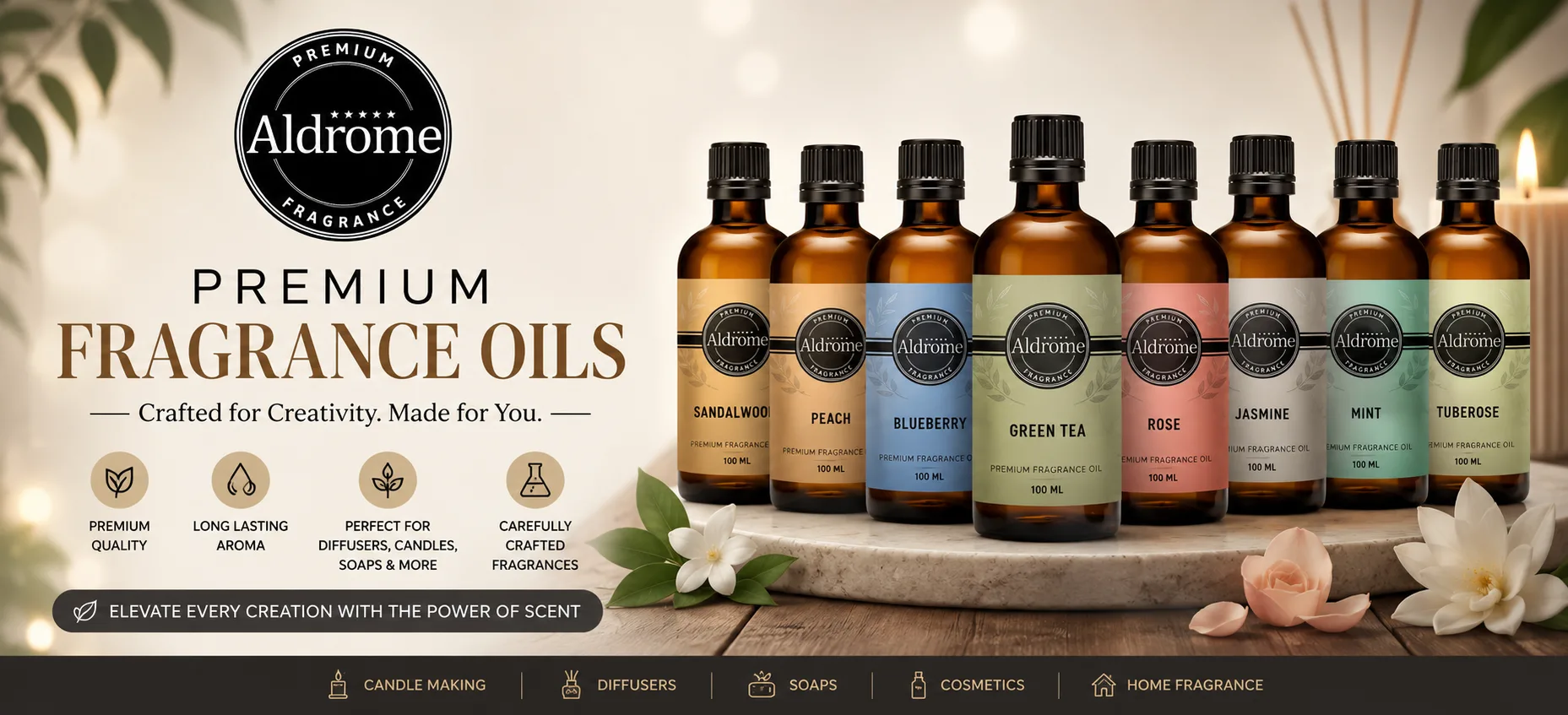
Brands such as Aldrome offer a wide range of fragrance oils developed for creative projects, making it easier for both hobbyists and professional candle makers to experiment with different scent profiles and choose the most suitable option for their candle-making needs.