Introduction
You cook rice every day. But is your rice working for your health every day?
Most Indian families eat white rice that has been milled and polished — a process that strips away 75 to 90% of the grain's natural vitamins and minerals. What's left is mostly starch: good for energy, but nutritionally incomplete. Fortified rice is designed to fix exactly this problem — and the best part is, you won't even notice the difference on your plate.
🔗 Browse the full range of fortified rice at Panchamrutha — fortified rice suppliers in Hubli
What Happens to Rice During Milling?
When rice is milled and polished, the outer bran layer and germ are removed to make the white rice we're all familiar with. These layers contain most of the grain's B vitamins, Vitamin E, iron, zinc, and fibre. After polishing, what remains is predominantly simple carbohydrate — energy calories, with very little nutritional value beyond that.
This is what nutrition experts call 'hidden hunger': people eat enough food in quantity, but not enough micronutrients in quality. In India, this shows up as widespread anaemia, stunted growth, poor immunity, and low cognitive development — particularly in women and children.
What Fortified Rice Adds Back
Fortified rice blends tiny Fortified Rice Kernels (FRK) into regular milled rice — at a ratio of 1 FRK per 100 grains. These FRK grains are made from rice flour enriched with key micronutrients, shaped to look identical to regular rice grains, and they cook exactly the same way.
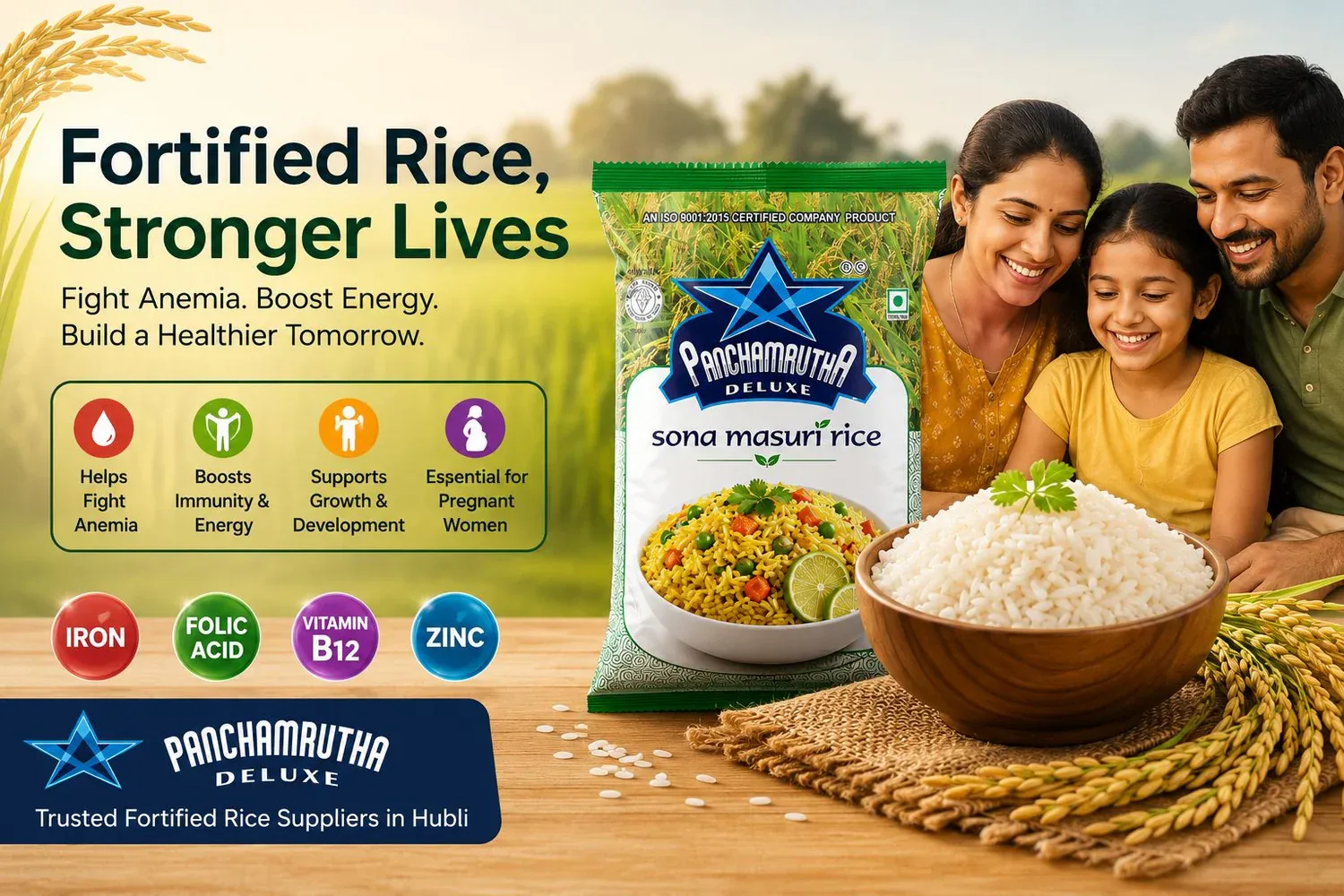
As per FSSAI standards, every kilogram of fortified rice must contain: Iron (28–42.5 mg), Folic Acid / Vitamin B9 (75–125 mcg), and Vitamin B12 (0.75–1.25 mcg). Panchamrutha's fortified rice goes a step further, with 9 vitamins and minerals per kilogram — including Zinc, Vitamin A, and the full B-complex range.
Who Benefits Most?
Fortified rice is beneficial for everyone, but certain groups gain the most from it. Women of reproductive age are among the most anaemia-affected populations in India — 57% according to NFHS-5 data. Folic acid in fortified rice is critical for preventing neural tube defects during pregnancy. Vitamin B12 supports the neurological development of both mother and baby.
Children between 6 months and 5 years have the highest nutritional needs relative to their body size. Iron supports their cognitive development and immune function during these critical growth years. Vegetarians who don't consume meat or dairy regularly are also at higher risk of B12 deficiency — fortified rice is one of the easiest ways to address this gap.
🔗 For families managing anaemia: read our Kannada guide on rice and blood health → rakta heenatege akki upayogagalu
Does It Cook Differently?
No — and this is one of the biggest misconceptions about fortified rice. It looks the same, it smells the same, it tastes the same, and it cooks the same way. The only recommendation is to rinse gently rather than washing aggressively, as heavy washing can reduce the nutrient content slightly. One gentle rinse is sufficient.
Is There a Price Difference?
At Panchamrutha, fortified rice is available at the same competitive price as regular premium rice — starting from Rs. 18 per serving. The nutritional upgrade costs you nothing extra. When you consider the alternative — treating iron deficiency or anaemia-related health problems — the value becomes very clear.
🔗 Is brown rice a better choice for diabetes management?
The Simple Switch
Switching to fortified rice requires no change in your cooking habits, no change in your recipes, and no change in your budget. It is genuinely one of the easiest health upgrades a family can make. If you haven't already, it's worth making that switch today.