
A Turning Point in Minnesota’s Job Scene
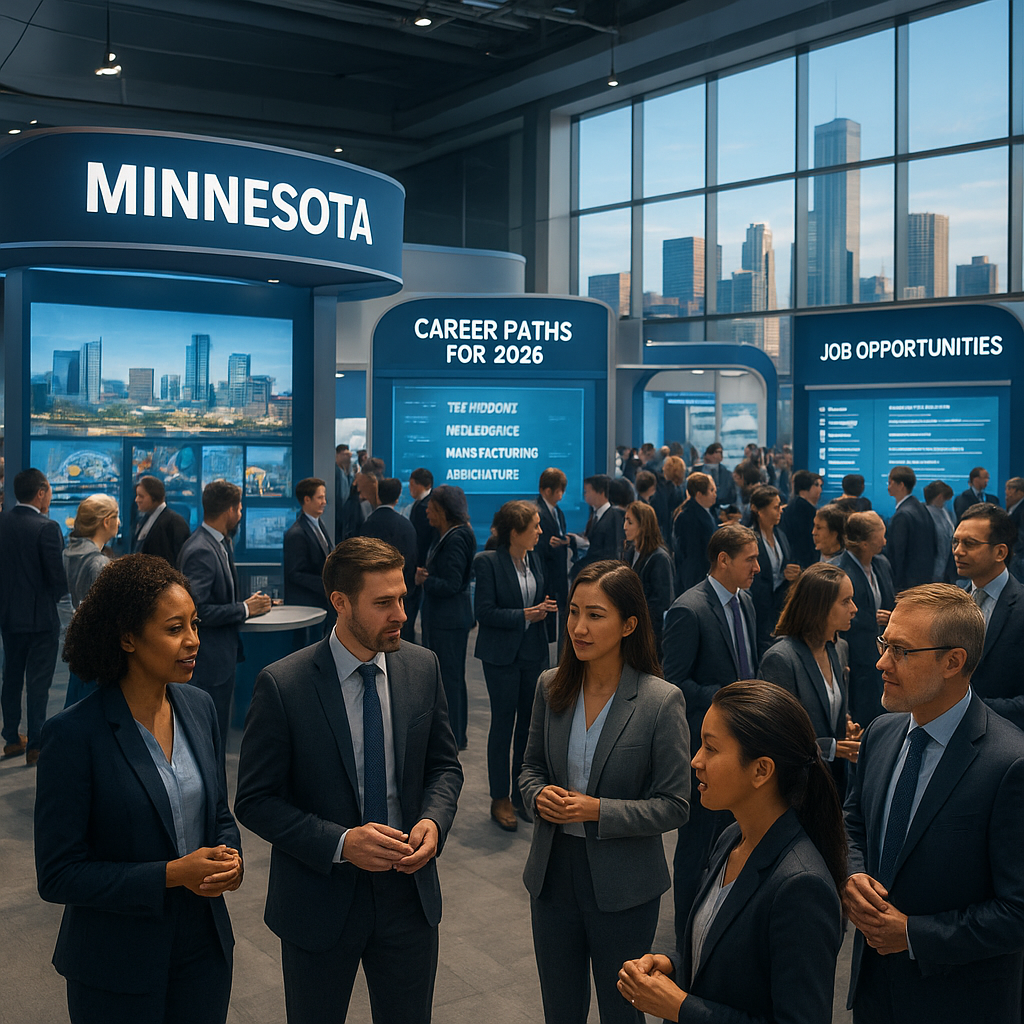
On a crisp May morning in 2026, the Minneapolis Convention Center buzzed with an intensity seldom seen outside of major tech summits or political conventions. Over 10,000 job seekers and hundreds of employers gathered for the Great Minnesota Career Expo, a pivotal event designed to accelerate hiring and forge career connections amid one of the most competitive labor markets in recent memory. The scene was a blend of hope, urgency, and cautious optimism, as candidates from fresh graduates to seasoned professionals navigated aisles of booths, each promising opportunities in healthcare, manufacturing, tech, and emerging green industries.
This year’s expo isn’t just another job fair; it represents a strategic response to Minnesota’s unique 2026 employment landscape. The state’s unemployment rate has dipped below 2.8%, according to the Minnesota Department of Employment and Economic Development (DEED), reflecting near full employment but also a critical shortage of skilled workers in key sectors. Employers are vying for talent with unprecedented intensity, and traditional hiring methods have proven inadequate to meet demand. The expo emerged as a solution — a hub where speed, efficiency, and direct engagement converge to streamline hiring and empower candidates.
“We’re witnessing a transformational shift in how Minnesota connects talent with opportunity. The Great Minnesota Career Expo is designed to bridge gaps rapidly and create meaningful career pathways that reflect today's realities,” said DEED Commissioner Lisa Hanson during the opening ceremony.
From Surplus to Scarcity: The Context Behind 2026’s Job Market
To understand the significance of the Great Minnesota Career Expo, it’s essential to trace the labor market dynamics that brought us here. Over the past decade, Minnesota experienced a steady decline in unemployment, from 4.1% in 2016 to under 3% in 2026, driven by a robust economy and diverse industry growth. However, this success bred an unintended consequence: a scarcity of qualified candidates, particularly in STEM fields, healthcare, advanced manufacturing, and sustainable energy sectors.
Several factors converged to create this tight labor market. First, demographic shifts, including an aging workforce and slower population growth, limited the pool of available workers. Second, rapid technological advancements raised the bar for required skills, leaving many job seekers unprepared without continuous retraining. Third, the post-pandemic era accelerated remote work and flexible schedules, reshaping candidate expectations and employer offerings.
Compounding these issues, Minnesota’s regional disparities meant some rural areas lagged in workforce development, while urban centers faced intense competition for talent. Employers struggled with lengthy recruitment cycles, costly turnover, and mismatches between job requirements and candidate skills.
“The mismatch between skills and open positions has been the most pressing challenge. Employers need talent yesterday, but traditional hiring pipelines often take months,” explained Dr. Marcus Lee, labor economist at the University of Minnesota.
Data-Driven Insights: How the Expo Tackles Hiring Challenges
The Great Minnesota Career Expo leverages data and technology to fast-track hiring, making the process more efficient and effective for both employers and candidates. Organizers partnered with DEED and local workforce agencies to identify sectors with the highest demand and tailor the event accordingly. The 2026 expo featured over 300 employers spanning 20 industries, representing a significant increase from 180 participants in 2022.
Key statistics from the 2026 event include:
- Over 10,000 job seekers registered, a 25% increase from 2024.
- On-the-spot interviews accounted for 45% of initial candidate-employer interactions.
- More than 2,500 hires reported within 30 days post-expo, according to follow-up surveys.
- 70% of participating companies were small to medium enterprises, highlighting broad local engagement.
Central to the expo’s success is its integration of AI-powered matchmaking platforms that analyze candidate profiles and employer needs to suggest optimal connections before and during the event. This reduces time wasted on unsuitable meetings and enhances the quality of interactions. Additionally, the expo offers on-site skills assessments, resume workshops, and career coaching, helping candidates refine their presentation and better align with employer expectations.
Comparing Minnesota’s approach to national trends, the expo embodies a shift from passive job postings to active talent engagement, a strategy gaining traction as the US labor market tightens. Industry reports suggest that such events improve hiring speed by up to 40%, a critical advantage in 2026’s competitive environment.
2026 Innovations: What’s New at This Year’s Expo
Building on previous years, the 2026 Great Minnesota Career Expo introduced several innovations to meet evolving market demands. One notable development was the expanded focus on sustainable and green jobs, reflecting Minnesota’s commitment to climate goals and clean energy transition. Employers from renewable energy firms, electric vehicle manufacturers, and environmental nonprofits showcased over 1,000 openings, many requiring specialized technical skills.
Another advancement was the incorporation of virtual reality (VR) experiences, enabling candidates to preview workplaces and job tasks remotely. This immersive technology helped bridge geographical gaps and provided realistic insights into job roles, improving candidate confidence and fit.
The expo also prioritized inclusivity, featuring dedicated zones for veterans, people with disabilities, and underrepresented minorities. Partnerships with local community organizations ensured outreach and support, including transportation subsidies and childcare solutions, removing common barriers to participation.
Furthermore, a pilot program introduced a “Career Passport” system, where attendees collected digital badges by attending workshops, networking sessions, and completing skill evaluations. Employers viewed these as indicators of candidate engagement and readiness, adding a gamified layer to the hiring process.
- Expanded employer participation: 300+ companies across diverse sectors
- Green job focus: 1,000+ openings in sustainable industries
- Virtual reality job previews for immersive candidate experience
- Specialized zones supporting diversity and accessibility
- Career Passport digital engagement system to track participation
Expert Perspectives: Industry Voices on Expo’s Impact
Leading industry experts and hiring managers widely acknowledge the Great Minnesota Career Expo as a vital tool in addressing the state’s hiring challenges. Sarah Nguyen, Talent Acquisition Director at MedTech Solutions, praised the expo’s efficiency: “We conducted over 150 interviews onsite and hired 45 candidates within a month. The quality of applicants was exceptional, and the streamlined process saved us months of recruiting effort.”
Labor market analysts emphasize the expo’s role in reducing friction in the hiring pipeline. According to Dr. Lee, “Events like this reduce time-to-hire and improve employment outcomes, especially when paired with skills development resources.”
From the candidate perspective, testimonials highlight the expo’s accessibility and personalized approach. Jamal Carter, a recent attendee who secured a cybersecurity role, shared, “The workshops helped me polish my resume and interview skills. I connected directly with hiring managers and got a job offer within two weeks.”
These endorsements underscore a broader trend: successful hiring in 2026 requires agility, technology integration, and a human-centric approach. The expo exemplifies this blend, setting a standard for future workforce initiatives.
Looking Ahead: The Future of Career Connections in Minnesota
As Minnesota’s labor market continues evolving, the Great Minnesota Career Expo offers a blueprint for sustainable hiring success. Organizers plan to expand virtual components, enabling broader statewide participation and ongoing candidate-employer engagement year-round. Additionally, efforts to deepen collaboration with educational institutions aim to better align curricula with employer needs, addressing skill gaps proactively.
Key takeaways for job seekers and employers include:
- Embrace continuous learning and adapt skills to sector demands, particularly in tech and green industries.
- Utilize data-driven tools and platforms to enhance matchmaking and reduce hiring delays.
- Prioritize inclusivity and remove barriers to access for diverse talent pools.
- Engage in community partnerships to build robust pipelines of qualified candidates.
- Leverage immersive technologies to improve candidate understanding and fit.
In a marketplace defined by speed and precision, the Great Minnesota Career Expo’s model suggests that strategic, technology-enabled events can transform hiring from a bottleneck into a competitive advantage. For those navigating Minnesota’s 2026 job market, the expo is more than an event; it is a vital career accelerator.
For further insight on this transformative approach, readers can explore How Minnesota’s Career Expo Is Transforming Hiring in 2026’s Fierce Job Market and How Minnesota’s Career Expo Is Accelerating Hiring in a Cutthroat Job Market for detailed analyses and success stories.