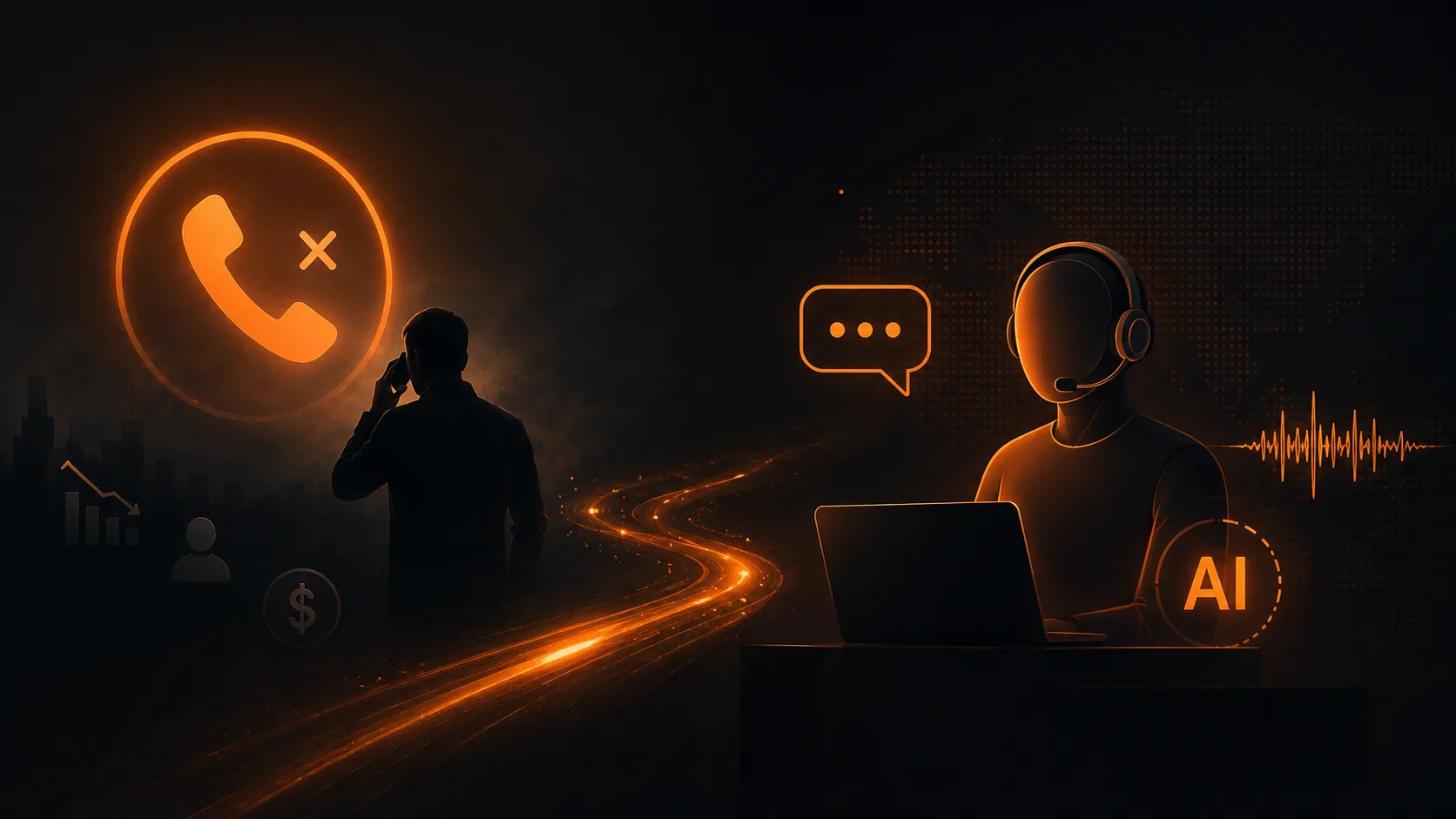
A customer calls your business.
Nobody answers.
Maybe your team is busy helping another customer. Maybe it's after business hours. Maybe the receptionist stepped away for just a few minutes.
The customer waits.
Then hangs up.
That moment usually disappears without anyone thinking about it.
But what if every unanswered call is actually a story about lost revenue?
Businesses Track Clicks Better Than Conversations
Companies spend thousands of dollars improving websites, running Google Ads, optimizing landing pages, and increasing conversion rates.
They know exactly how many people clicked an ad.
They know how long visitors stayed on a page.
They know which button people clicked.
Yet many businesses still don't know why people called, how many callers hung up, or how many potential customers never reached a real person.
The phone remains one of the least analyzed parts of the customer journey.
Customers Still Prefer to Call
When someone has a simple question, they might send an email.
When they're ready to make a decision, they often pick up the phone.
They want immediate answers.
They want reassurance.
They want to know if someone is available.
A delayed response can send them straight to a competitor.
This is why businesses are paying more attention to AI voice agents that can answer calls instantly, handle routine conversations, and make sure customers don't feel ignored.
The Real Cost Isn't the Missed Call
Most businesses think the problem is the call they didn't answer.
The bigger problem is everything that follows.
A missed appointment.
A lost sales opportunity.
An unhappy existing customer.
A lead that chooses another provider.
One unanswered phone call can quietly affect revenue, reputation, and customer trust.
Human Teams Can't Be Available All the Time
Even excellent customer service teams have limits.
People take breaks.
Offices close.
Call volumes spike unexpectedly.
Hiring more staff isn't always practical, especially for growing businesses.
This is where AI call automation is becoming valuable.
Instead of replacing employees, it handles repetitive conversations, answers common questions, qualifies leads, collects information, and transfers important calls to the right person when needed.
The goal isn't fewer people.
The goal is making every customer feel heard.
Fast Responses Build Trust
Customers rarely remember how many employees a company has.
They remember how quickly someone helped them.
A fast response creates confidence.
A slow response creates doubt.
Businesses that reduce response time often improve customer satisfaction without changing their products or pricing.
That's why many organizations are investing in voice AI and AI customer service solutions that support their existing teams rather than replace them.
Technology Should Know When to Step Aside
Not every conversation belongs to AI.
Billing disputes.
Sensitive complaints.
Complex negotiations.
These situations still need human judgment.
The best AI phone agent doesn't try to solve everything.
It understands when a real person should take over.
That balance creates a better customer experience while allowing employees to focus on conversations where they add the most value.
The Businesses That Respond First Often Win
Competition today isn't only about offering better products.
It's about being easier to reach.
Customers reward businesses that make communication simple.
Whether someone calls at 10 AM or 10 PM, they expect a response that feels helpful, not frustrating.
Companies that combine skilled employees with intelligent call center automation are finding new ways to stay available without dramatically increasing operational costs.
Final Thoughts
Every unanswered call represents more than a missed conversation.
It represents a customer looking for help.
Businesses that understand this are rethinking how they manage phone conversations and customer interactions.
Platforms such as SigmaMind AI are part of this shift, helping businesses use AI voice agents to answer routine calls, qualify leads, automate repetitive conversations, and seamlessly transfer customers to human representatives when personal attention is needed.
In the end, technology isn't replacing good customer service.
It's making sure customers don't have to wonder if anyone is listening.