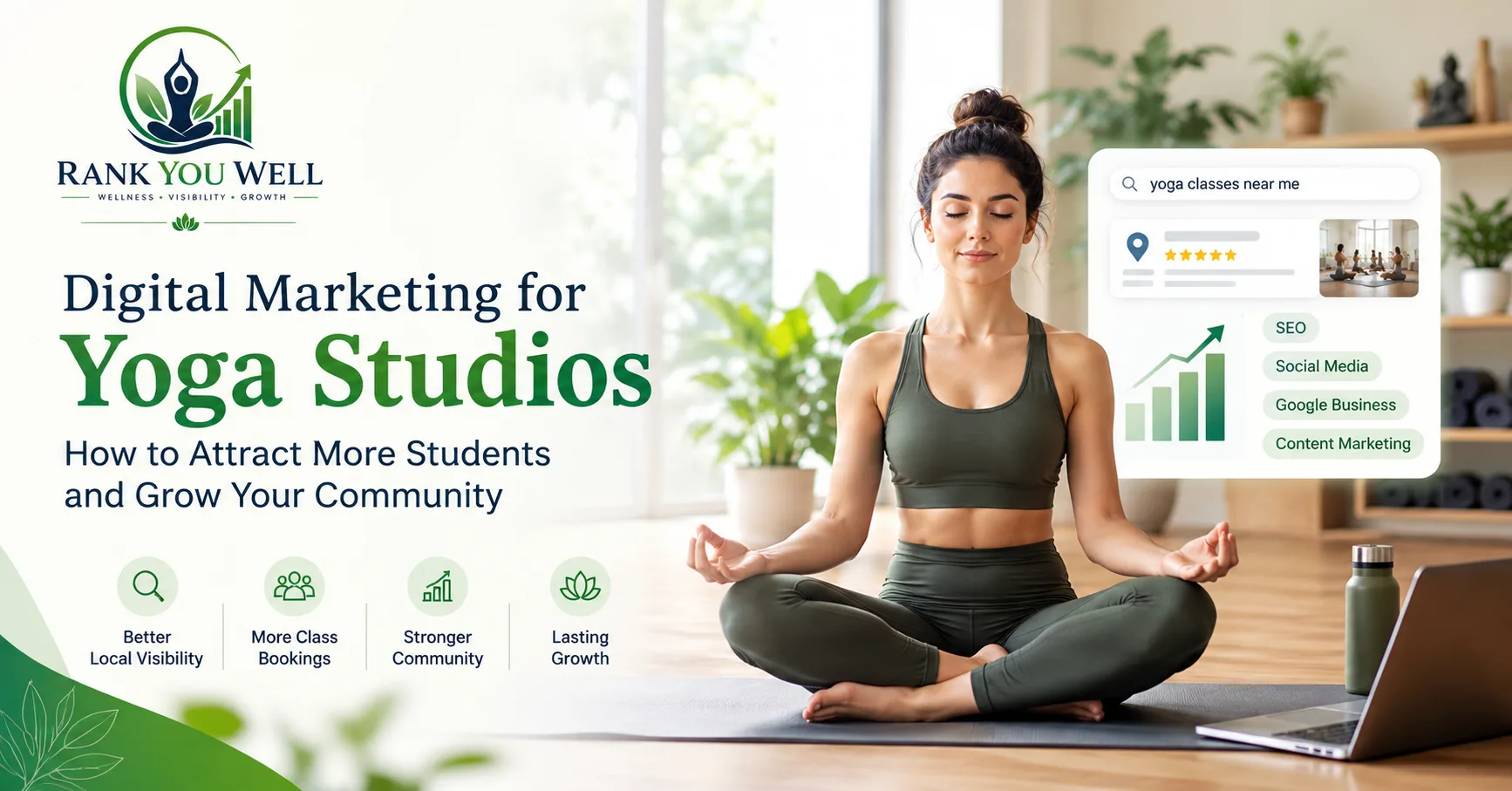
Running a yoga studio involves much more than teaching classes. Studio owners must manage schedules, maintain a welcoming environment, retain existing students, and consistently attract new people. Even a studio with excellent instructors and a supportive community can struggle to grow if potential students cannot find it online.
This is where digital marketing for yoga studios becomes essential. A thoughtful marketing strategy helps studios reach people searching for local classes, communicate what makes their teaching approach different, and turn online interest into actual bookings.
However, successful yoga marketing is not simply about posting regularly on social media or running advertisements. It requires a combination of search engine optimization, engaging content, an effective website, local visibility, and consistent communication with students.
By understanding how these channels work together, yoga studio owners can build a stronger online presence without losing sight of what matters most: creating a meaningful experience for their community.
Why Digital Marketing Matters for Yoga Studios
Many people begin their search for yoga classes online. They may look for beginner-friendly sessions, restorative yoga, prenatal yoga, or a studio near their home or workplace.
If a studio does not appear in relevant search results or provide clear information about its classes, potential students may choose another option.
A well-planned digital marketing strategy helps studios address three important challenges.
Visibility: Make it easier for local audiences to discover the studio through search engines, maps, and social media.
Trust: Show potential students what to expect through instructor profiles, class descriptions, genuine reviews, and useful educational content.
Bookings: Help interested visitors take the next step through straightforward schedules, pricing information, introductory offers, and online registration.
The goal is not to attract the largest possible audience. It is to connect with people whose interests, schedules, and needs align with the studio's offerings.
1. Improve Local Visibility With SEO for Yoga Studios
Local SEO is one of the most valuable long-term investments a yoga studio can make.
When someone searches for "yoga classes near me" or "beginner yoga in Austin," search engines aim to provide relevant results based on factors such as relevance, distance, and prominence for local searches.
A strong SEO strategy helps a studio communicate its location, services, class formats, and expertise clearly.
Optimize Your Google Business Profile
For eligible studios with a physical location or qualifying in-person service, a complete Google Business Profile can support local discovery.
Keep essential information accurate, including the studio name, address, phone number, opening hours, website, and class-related details. Add genuine photographs of the space, instructors, and facilities where appropriate.
Encourage students to leave honest reviews without offering incentives that violate platform policies. Respond professionally to feedback and never disclose private student information.
Create Dedicated Pages for Different Yoga Classes
A studio offering several styles should explain each one clearly.
For example, separate pages for beginner yoga, restorative yoga, prenatal yoga, and power yoga can help visitors understand which classes suit their interests.
Each page should describe the format, intended audience, instructor qualifications where relevant, schedule, and booking process.
This is an important part of SEO for yoga studio websites because it aligns useful content with the different searches potential students make.
Avoid creating multiple nearly identical pages simply to target variations of the same keyword. Every page should offer meaningful information.
2. Build a Website That Converts Visitors Into Students
A yoga studio website should do more than introduce the business. It should make joining a class feel straightforward.
Visitors should be able to answer a few basic questions quickly:
- Which classes are available?
- Are there sessions suitable for beginners?
- Who teaches the classes?
- How much do memberships or individual sessions cost?
- Where is the studio located?
- How can I book my first class?
A clear class schedule, transparent pricing, instructor biographies, and an easy-to-use booking system can reduce uncertainty.
Mobile usability is especially important because people frequently research local businesses on their phones. Ensure that buttons are easy to tap, schedules are readable, and booking forms work properly on smaller screens.
Studios can also offer an introductory class or trial package if it fits their business model. Explain any restrictions clearly so new students know what to expect before registering.
A website that answers questions and removes booking friction can make other marketing efforts more effective.
3. Use Social Media to Build a Yoga Community
Social media offers yoga studios an opportunity to communicate their personality, teaching philosophy, and community atmosphere.
Instead of publishing only class advertisements, create content that helps people understand what practicing at the studio feels like.
Useful content ideas include:
- Short demonstrations of beginner-friendly poses, with appropriate safety guidance.
- Introductions to instructors and their teaching styles.
- Explanations of different yoga practices.
- Studio tours and class preparation tips.
- Answers to common questions from first-time students.
- Class updates, workshops, and community events.
Short-form videos can introduce instructors and demonstrate the atmosphere of a class. Carousels can explain concepts in manageable steps, while Stories can share timely schedule updates.
Consistency matters more than publishing large quantities of repetitive content. A realistic schedule that the team can maintain is generally more useful than an ambitious plan that quickly becomes unsustainable.
Social media should also direct interested people toward a clear next step, such as viewing the schedule, exploring an introductory offer, or booking a class.
4. Invest in Content Marketing to Answer Student Questions
Many potential students have questions before they feel comfortable attending a class.
They may wonder whether yoga is suitable for beginners, what to bring to their first session, or how different styles compare.
Publishing helpful articles can address these concerns while creating additional opportunities for search visibility.
Consider topics such as:
- What to Expect at Your First Yoga Class
- Hatha Yoga vs. Vinyasa Yoga: Understanding the Differences
- How to Choose a Yoga Class as a Beginner
- What to Bring to a Yoga Studio
- How to Build a Consistent Yoga Practice
Each article should provide a clear answer rather than serving primarily as an advertisement.
For example, an article about choosing a beginner yoga class can explain differences in pace, class structure, and instructor guidance. It can then link naturally to the studio's beginner-friendly classes.
This approach creates a useful relationship between educational content and service pages. It also gives potential students a reason to return to the website before making a booking decision.
5. Use Paid Advertising to Promote Classes and Workshops
Search advertising and social media advertising can help studios reach potential students more quickly than organic marketing alone.
However, paid campaigns work best when they promote a specific, relevant offer to an appropriate audience.
A local search campaign might focus on people actively looking for yoga classes in the studio's service area. A social campaign could introduce a beginner package or promote an upcoming workshop.
Before launching an advertisement, define the objective. Is the campaign intended to generate trial-class bookings, fill a workshop, increase membership enquiries, or promote a new class schedule?
Create a dedicated landing page that matches the advertisement and clearly explains the offer. Track completed bookings and qualified enquiries rather than evaluating performance solely by clicks or impressions.
Start with a manageable budget, review results regularly, and adjust campaigns based on actual conversion data. Paid advertising should complement the studio's broader marketing strategy rather than replace its website, local SEO, or student relationships.
6. Improve Student Retention Through Email Marketing
Attracting a new student is only one part of sustainable studio growth. Encouraging existing students to continue attending can also contribute to more predictable revenue and a stronger community.
Email marketing provides a direct way to share useful updates with people who have chosen to receive them.
A studio might send a welcome email explaining the booking process, a monthly schedule of upcoming classes, or information about workshops and membership options.
Educational newsletters can also share instructor insights, seasonal practice ideas, and answers to common student questions.
Keep messages relevant, obtain appropriate consent, and make it easy for recipients to unsubscribe. Avoid sending excessive promotional emails or using misleading subject lines.
Personalized communication should rely on appropriate information and respect student privacy. The aim is to maintain a helpful relationship, not to pressure people into attending more classes than they want.
7. When Should a Yoga Studio Work With a Marketing Agency?
Some studio owners have the time and experience to manage their marketing internally. Others may need specialist support as the business grows.
A yoga marketing agency can help coordinate activities such as keyword research, local SEO, website improvements, content creation, advertising, and performance reporting.
Before choosing an agency, look for a clear understanding of the yoga business model, realistic expectations, transparent reporting, and a strategy that reflects the studio's actual goals.
Ask how success will be measured, what work will be completed, and how the agency plans to connect marketing activity with class bookings and student acquisition.
Studios exploring SEO services for yoga industry businesses should also ask about technical optimization, local search, content strategy, and the quality of the agency's reporting.
The right support should make marketing more understandable and measurable, not leave the studio dependent on unexplained reports or promises of guaranteed rankings.
How to Measure the Success of Yoga Studio Digital Marketing
Effective yoga studio digital marketing should be evaluated through outcomes that matter to the business.
Useful metrics include:
- Organic search clicks and impressions.
- Visits to class and membership pages.
- Google Business Profile interactions, where available.
- Introductory offer registrations and completed bookings.
- Cost per acquired student from paid campaigns.
- Email engagement and repeat bookings.
- Student retention and membership renewals.
Google Search Console can help identify search queries and pages generating organic visibility. Website analytics and booking-system reports can help connect visits with enquiries and completed registrations.
Use consistent tracking methods and review performance over time. A campaign that generates many clicks but few relevant bookings may need a different audience, offer, landing page, or budget.
The most useful measurement framework connects marketing activity to the studio's business objectives.
Conclusion
Growing a yoga studio online requires a balanced approach. Local SEO helps people discover nearby classes, an effective website makes booking easier, social media communicates the studio's personality, and useful content answers questions before a student's first visit. Paid advertising and email marketing can strengthen these efforts when used thoughtfully.
The most effective digital marketing for yoga studios begins with understanding the people the studio wants to serve. Rather than chasing every platform or marketing trend, owners should focus on accurate information, consistent communication, accessible booking, and a clear way to measure results.
For studios looking to develop a more structured approach, Rank You Well provides a relevant starting point for exploring digital marketing strategies designed for wellness businesses.