
A battery installation project that seems perfect from the beginning the battery size matches the requirement, the inverter capacity looks right, and every component appears ready for smooth operation. A few months later, unexpected issues start showing up. The cables become warm, power efficiency drops, or the system struggles during heavy loads.
At first glance, many people blame the battery or the equipment. Yet the actual issue can sometimes come from a much smaller decision, the wire material used in the system.
As battery systems continue to expand across electric vehicles, renewable energy storage, industrial equipment, and backup power systems in 2026, selecting the right wire material matters more than ever before. A cable is not just a connection between two points. It influences performance, reliability, safety, and long term efficiency.
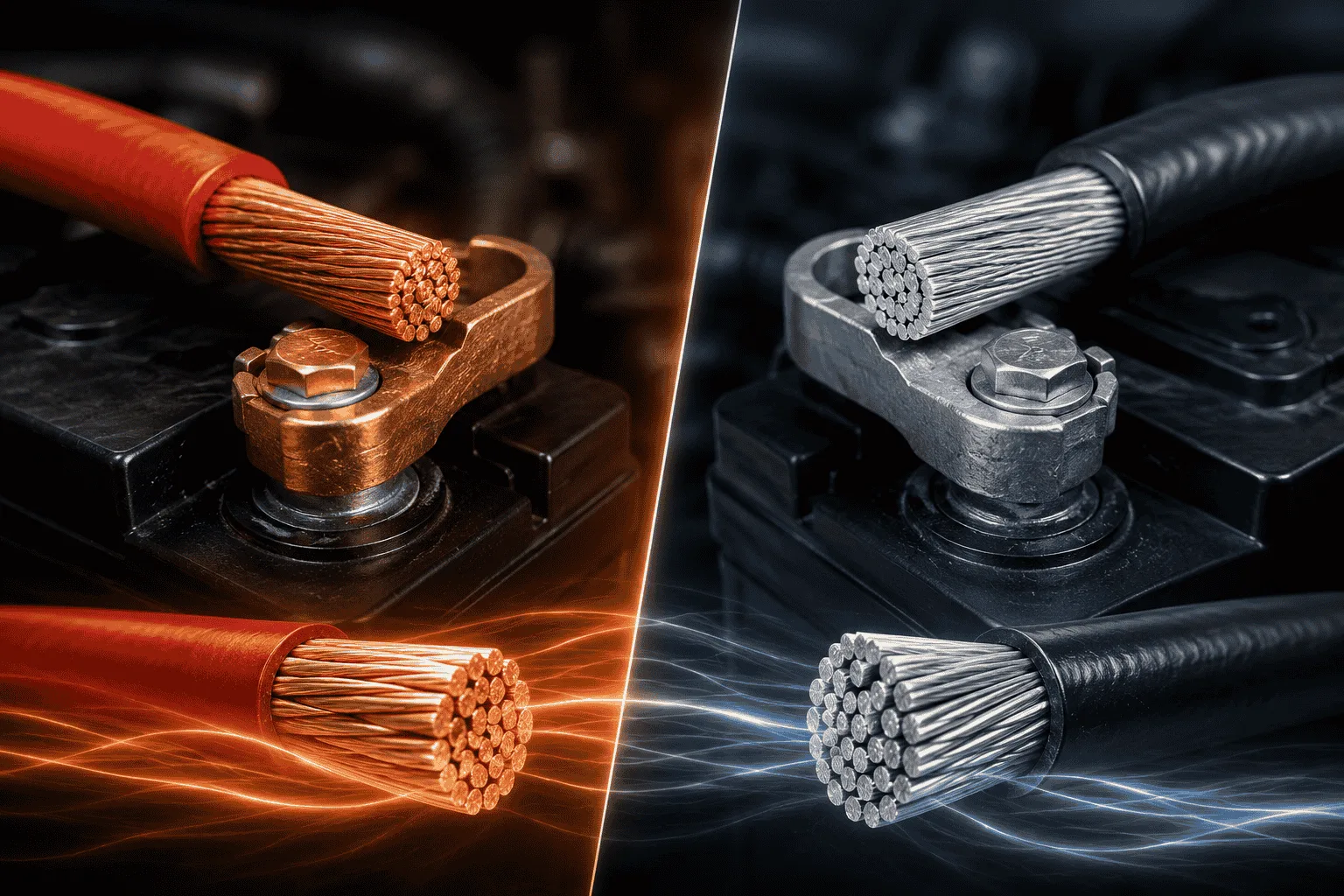
This is where the discussion around copper vs. aluminium battery wire becomes a key discussion. Both materials have their own strengths. Copper is known for excellent conductivity and durability, while aluminium attracts attention because of its lower weight and cost benefits it brings with it.
So which one performs better when real world conditions come into the picture? The answer depends on understanding how each material behaves beyond simple pricing.
Understanding What Makes Battery Wire Perform Better
Before comparing materials directly, it helps to understand what makes a battery wire effective in the first place.
Many people think cable thickness alone determines performance. In reality, several factors work together. These include
• Electrical conductivity, with different,
• Resistance levels
• Current carrying capacity, and
• Flexibility
• and heat tolerance capacity
• With long term durability
When discussing copper vs. aluminium wire for battery applications, these properties create the foundation of performance.
A cable with lower resistance transfers energy more efficiently and effectively, a wire with better heat handling supports demanding applications for longer periods. Flexibility matters during installation while strength becomes important in environments with vibration or movement, both of them are useful in different environments for different operational needs.
This is why battery wire comparison involves much more than looking at wire size or purchase cost.
Another important factor involves the electrical wiring materials themselves. Different materials behave differently when current passes through them. Even if two wires look similar from the outside, their internal properties can affect system performance significantly.
Now that the basics are clear, the next question naturally appears.
How different are copper and aluminium when electricity actually flows through them?
Looking Closer At Conductivity And Power Flow
Conductivity determines how easily electrical current travels through a conductor. Better conductivity means lower resistance and less energy loss.
When comparing copper vs aluminium wire conductivity and efficiency, the difference becomes very noticeable.
According to International Annealed Copper Standard values:
• Copper provides approximately 100% IACS conductivity
• Aluminium provides approximately 61% IACS conductivity
This proves that copper transfers electrical energy more efficiently than aluminium, resistance values also support this difference.
At 20°C
• Copper resistivity is approximately 1.68 × 10⁻⁸ Ω·m, while
• Aluminum resistivity is approximately 2.82 × 10⁻⁸ Ω·m
Since aluminium has higher resistance, it requires a larger conductor size to achieve similar performance.
Industry standards indicate that aluminium conductors often need approximately 1.6 times larger cross sectional area than copper for similar current carrying performance.
Why does this matter?
Think about a battery system powering an inverter, where current continuously moves between batteries and its connected equipment, higher resistance creates additional heat and energy loss.
This is especially important while evaluating battery cable voltage drop, copper vs. aluminium performance.
Even small resistance differences become noticeable during heavy load conditions.
Power loss follows Joule's law:
P = I²R
As resistance increases, heat generation rises rapidly.
This explains why wire resistance and ampacity become important discussions in battery applications.
Higher resistance not only affects efficiency. It also affects system temperature and long term reliability.
What Happens During Real World Applications
Technical numbers are useful, but practical situations often explain performance better.
Imagine an inverter installation inside a home backup system. During normal operation, everything may work fine. During heavy load periods, appliances start drawing more current.
Now consider two scenarios.
One uses copper cables. Another uses aluminium cables of the same size.
Because aluminium offers higher resistance, the voltage drop can become more noticeable.
This is why the voltage drop in battery cables deserves attention.
Excessive voltage drop may create or lead to failures such as
• Reduced delivered power, or
• Lower efficiency, with
• Heating issues, and do not forget about
• Performance loss during peak loads
The impact becomes more visible in:
• Inverter battery wiring
• UPS systems
• Solar battery banks
• EV battery systems
• Industrial battery setups
When evaluating the best battery wire for an inverter, copper or aluminium, conductivity usually becomes one of the first deciding factors.
For shorter installations with moderate loads, aluminium may perform acceptably.
For demanding environments carrying higher current continuously, copper often becomes a preferred choice.
Looking Beyond Performance Into Cost And Weight
Performance is important, but cost and installation factors also influence buying decisions.
This explains why aluminium remains widely used in many applications.
The main aluminium battery wire benefits include lower weight and lower material cost.
Aluminium weighs significantly less than copper.
Engineering data shows that aluminium weighs approximately 30% of copper for a similar conductor volume.
For large installations, this weight difference becomes useful.
Lighter wires can:
• Reduce structural load
• Simplify transportation
• Lower installation effort in some projects
• Reduce initial material costs
These advantages explain why aluminium frequently appears in long distance electrical systems.
However, lower cost alone does not automatically make it the right choice.
There are trade offs.
Because aluminium requires larger conductor sizes, installation space requirements can increase. Connections also need proper attention because the expansion and contraction characteristics differ from copper.
This becomes important during battery cable copper vs. aluminium discussions.
Lower upfront costs sometimes come with additional installation considerations.
Performance Under Heavy Loads And Long Term Usage
Battery systems rarely operate for only a few days or weeks.
Most installations run continuously for years.
This raises an important question.
How does the cable behave after long periods of operation?
Heavy load environments expose wires to
• Heat cycles
• Mechanical stress
• Vibration
• Moisture exposure
• Expansion and contraction
Copper generally performs well under repeated thermal cycles because of its strength and conductivity characteristics.
This is one reason behind several copper battery cable advantages.
Copper typically provides:
• Better conductivity
• Higher tensile strength
• Improved flexibility
• Compact conductor sizing
• Stable long term performance
Meanwhile, aluminium offers advantages where weight reduction becomes critical.
The discussion around heavy duty battery cable copper vs. aluminium often comes down to balancing these requirements.
For example
Automotive battery systems experience vibration constantly. Industrial battery banks may run continuously and marine environments involve moisture exposure.
Large solar storage systems operate under varying temperatures.
Different applications create different priorities a cable suitable for one setup may not be ideal for another.
So Which One Actually Performs Better
After comparing conductivity, cost, weight, and long term behavior, the final question becomes easier to answer.
The answer depends on what performance means for the application.
If performance focuses on:
• Maximum conductivity
• Reduced voltage drop
• Compact sizing
• Long term reliability
• Heavy current handling
Copper generally becomes the stronger option.
If performance focuses on:
• Weight reduction
• Lower material cost
• Large scale installations
• Budget considerations
Aluminium can become a practical solution.
When making a copper vs aluminum battery cable performance comparison, there is rarely one universal answer.
Similarly, the discussion around aluminium battery cable vs copper changes depending on operating conditions.
For residential backup systems, many users prefer copper because of its efficiency and easier installation.
For industrial projects where cost optimisation and weight reduction matter, aluminium can provide value.
For EV systems and demanding applications, conductivity and heat performance often become stronger priorities.
The discussion is not simply about which is better, copper or aluminium battery wire.
It is about understanding what the system actually needs.
Key Takeaways You Can Use
• Match wire material with system requirements, not only price.
• Consider long term efficiency along with initial cost.
• Evaluate voltage drop in battery cables before installation.
• Review ampacity ratings carefully.
• Use copper where conductivity and compact size matter.
• Consider aluminium where weight reduction becomes important.
• Think about installation conditions and future operating loads.
The Real Decision Goes Beyond Material
Choosing between copper vs aluminum battery wire is rarely a simple cost discussion.
The wire inside a battery system quietly influences performance every day. It affects efficiency, heat generation, power delivery, and long term reliability.
As battery technologies continue evolving across industries, wiring decisions will become even more important.
The next time you evaluate a cable selection, ask yourself one question.
Are you selecting a wire for immediate savings, or are you choosing a solution designed for years of reliable performance and consistent results?