A good washroom says a lot about your building. Visitors notice it. Staff notice it too. Clean lines, firm doors and neat finishes build trust. Poor ones do the opposite. The cubicle is the heart of the room. It must be tough, private and easy to clean. It must also look good. Yet there is a lot to choose from. Materials, fittings and finishes all play a part. This guide explains each one in plain words, so you can choose with confidence.
Why the Right Choice Matters
Washrooms take a lot of abuse. Schools, offices, gyms and shopping centres see thousands of visits each week. Doors slam. Hands push and pull. Water splashes everywhere. Cleaners use strong products every day.
Weak parts fail fast. Cheap panels swell. Cheap locks snap. Then you pay for repairs, and the room looks tired. A smart choice at the start saves money later.
The best commercial bathroom cubicles match the way the space is used. A quiet office needs a different product from a busy school. A gym with damp air needs different panels from a dry showroom. Think about footfall, moisture and cleaning before you pick anything. Then look at the materials, the fittings and the finish. Each one affects how long the cubicles last.
Understanding Cubicle Materials
The panel material is the biggest choice you will make. It sets the price, the strength and the lifespan. Here are the main options.
Melamine-faced chipboard (MFC) is the budget choice. It suits dry, low-traffic areas like small offices. It looks neat and costs little. However, it dislikes water. Damp edges can swell, so keep it away from wet rooms.
High-pressure laminate (HPL) is a step up. It has a hard, sealed surface. It resists scratches, knocks and moisture. Many schools and public buildings use it. It comes in a wide range of colours too. For most sites, it is a fine middle ground.
Solid grade laminate (SGL) is made of dense layers pressed together. The panel is the same all the way through. It does not soak up water, so it will not rot. Pools, gyms and leisure centres often choose it. It also shrugs off graffiti and heavy wear.
Stainless steel is the toughest of all. It is very clean and very strong. Hospitals and food sites like it. Airports and stations also rely on it. It costs more, but it can last for decades.
Phenolic and GRP panels are also worth a look. They handle wet, harsh places well. They are light, strong and simple to wipe down.
Ask yourself three questions. How wet is the room? How busy is it? How long do you need the cubicles to last? Your answers will point to the right panel.
Choosing Fittings and Hardware
Panels get the praise. Fittings do the work. A cubicle is only as good as its hinges, locks and brackets.
Hinges take the most strain. Look for heavy-duty hinges with a self-closing action. They keep doors tidy and stop them swinging open. Poor hinges sag over time. Then doors rub, jam and look untidy.
Locks matter for privacy. A good lock is easy to use and hard to break. Many sites choose locks with an indicator. A small red or green window shows if the cubicle is free. This cuts down on awkward moments. It also helps people who struggle with small marks.
Coat hooks, bump stops and door handles add comfort. They are small items, but users notice them. A coat hook keeps bags off the floor. A bump stop protects the wall from the door.
The material of the fittings is just as important. Nylon is light and quiet. Aluminium is strong and stays rust-free. Stainless steel is the best for wet places. Match the fittings to the panels so both age at the same pace. A tough panel with weak hinges is a waste of money.
Finishes That Shape the Look
Finishes turn a plain room into a smart one. They also affect how easy the room is to clean.
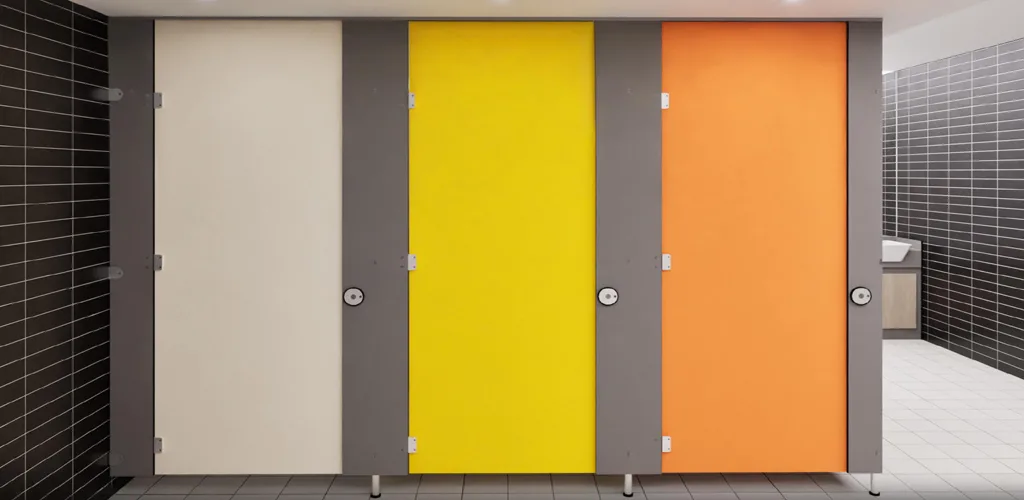
Colour sets the mood. Soft greys and whites feel calm and fresh. Bold blues and greens suit schools and leisure sites. Dark tones feel modern, but they can show marks more. Think about your brand colours too. A matching palette makes the whole building feel planned.
Texture is the next step. Smooth gloss looks sharp and wipes clean. Matt and woodgrain finishes feel warmer. They also hide fingerprints better. Woodgrain suits hotels, offices and restaurants.
Panel size changes the feel of the room. Floor-to-ceiling designs give full privacy. They remove the gaps at the top and bottom. Guests feel more at ease. Standard designs with a gap are cheaper and let air flow. They also make cleaning the floor simple.
Lighting and flooring should work with the finish. A bright room feels clean. A dark room can feel small. Test a sample in the real space before you order. Colours look different under different lights.
Hygiene and Easy Cleaning
Cleanliness is the first thing people judge. Your cubicles must help your cleaners, not slow them down.
Choose smooth, sealed surfaces. Dirt has nowhere to hide. A quick wipe is enough. Avoid rough edges and open joints. They trap grime and germs.
Raised legs are a clever feature. They lift the panels off the floor. Mops can pass underneath. Water cannot pool and damage the base. This simple detail adds years to the life of a cubicle.
Think about the fixings too. Hidden or capped screws look neater. They also give germs fewer places to settle. Antibacterial coatings are available on some ranges. They add a layer of care for sites with a high risk.
Good hygiene is also about airflow. A well-vented room stays fresher. Damp air breeds mould. Pair your cubicles with proper ventilation for the best results.
Accessibility and Regulations
Every public building must serve all users. This is not optional. In the UK, rules and standards guide the layout of accessible toilets. Approved Document M and BS 8300 are two key references.
An accessible cubicle needs more space. It needs room for a wheelchair to turn. It needs outward-opening doors, grab rails and low-level fittings. Door locks should be easy to use with one hand. Contrast also helps people with poor sight. A dark door against a light wall is easier to see.
Do not leave this to the last minute. Plan accessible layouts early. It is far cheaper to get it right on paper than to fix it after the build. A good supplier can check your plans and advise on the rules.
Fire safety and building rules may also apply. Ask for product data and test details. Reliable makers share this freely.
Planning the Layout and Installation
A fine product can still fail if the layout is poor. Take time to plan the room.
Start with the numbers. How many people use the space at peak times? How many cubicles do you need? Allow for queues, doors and walking space. Cramped rooms feel unpleasant and wear out fast.
Measure the room with care. Walls are rarely perfectly square. Pipes and ducts get in the way. Good installers allow for these quirks. Made-to-measure cubicles fit awkward spaces better than standard sets.
Check the fixing points too. Walls and floors must be strong enough. Some cubicles fix to the floor. Others hang from the ceiling. Each type has its own needs. A site survey avoids surprises.
Finally, think about the timeline. Order early. Allow time for delivery and fitting. A clear plan keeps the project calm and on budget.
Why Work with Washroom Cubicles Direct Ltd
Buying direct has real benefits. You deal with the maker. There is no long chain of middlemen. Prices stay fair, and advice stays clear.
Washroom Cubicles Direct Ltd offers a wide range of panels, fittings and finishes. The team can help you compare options and plan the layout. They can also advise on accessibility and care. That support saves time, and it helps you avoid costly errors.
Whether you need commercial toilet cubicles for a school or commercial washroom cubicles for an office block, expert help makes the process simple. Ask for samples. Ask for a quote. Ask every question you have. A good supplier will welcome them.
Conclusion
Great washrooms are no accident. They come from smart choices. Start with the right material for the space. Add strong fittings that suit it. Finish with colours and textures that match your brand. Keep cleaning and access in mind throughout.
Do the thinking early, and the result will last. Your cubicles will stay smart, safe and easy to care for. Staff will be pleased. Visitors will notice the care.
Take your time and ask for expert advice. With the right partner, your next washroom project can be simple, smooth and built to last.