Straightening your teeth as an adult is no longer something to feel self-conscious about. More people in the UK than ever are choosing orthodontic treatment in their thirties, forties and beyond. The biggest worry, however, is usually the same: will people notice my braces? This is exactly why clear braces for adults have become such a popular choice. In this guide, we explain how visible they really are, what the treatment involves and what you can expect from start to finish.
What Are Clear Braces for Adults?
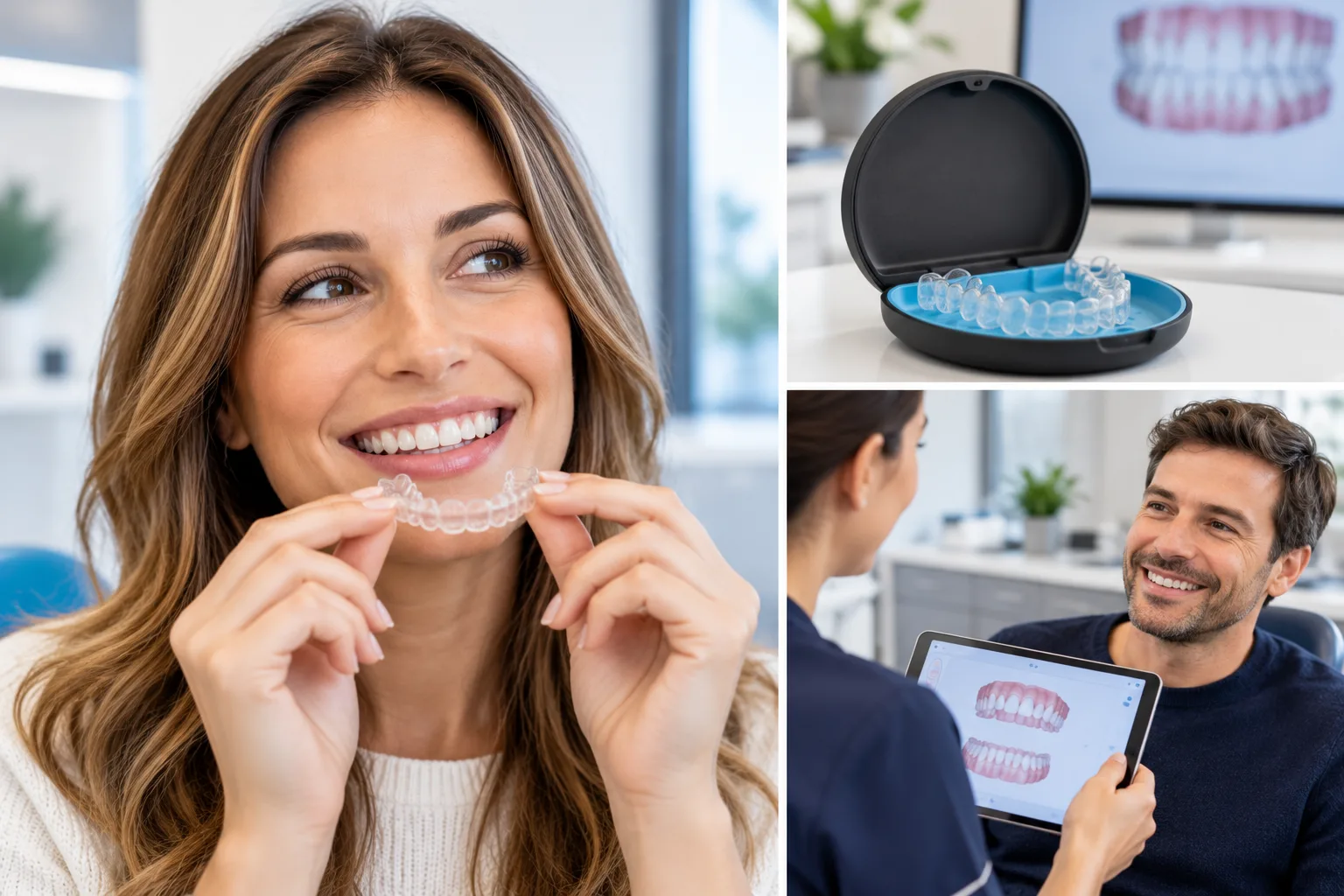
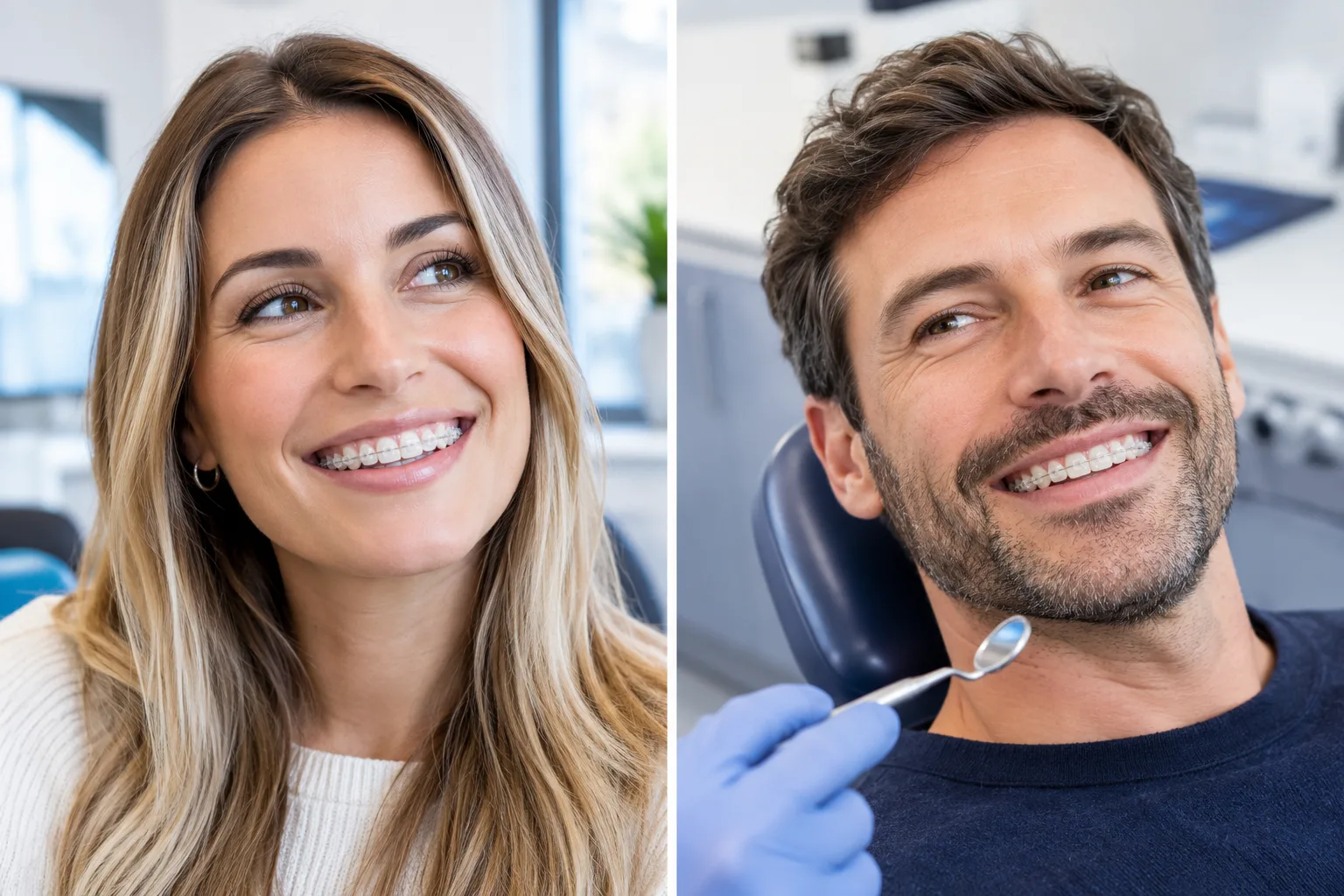
Clear braces are a discreet way to straighten teeth without the look of traditional metal fixed braces. The term usually covers two main options:
- Ceramic braces: fixed braces with tooth-coloured or translucent brackets that blend in with the natural shade of your teeth.
- Clear aligners: a series of virtually invisible, removable plastic trays that gradually move your teeth into position.
Both approaches can correct common concerns such as crowding, gaps, overbites and uneven teeth. Many adults choose clear braces because they want effective treatment while keeping a professional, natural appearance.
How Visible Are Clear Braces?
The honest answer is that clear braces are far less noticeable than metal braces, but they are not completely invisible. Here is how they tend to look in everyday life.
At Work and in Social Situations
In meetings, interviews or evenings out, most people will not spot your clear braces unless they are standing quite close. Ceramic brackets are designed to match your tooth colour, and clear aligners sit snugly over the teeth, so they are easy to forget about during conversation.
In Photos and on Video Calls
With so much of working life now taking place on screen, many adults worry about how braces will look on camera. The good news is that clear braces generally blend in well in photographs and on video calls. Aligners may leave a slight shine on the teeth, and ceramic brackets can be seen up close, but they rarely stand out in group photos or online meetings.
While Eating and Drinking
This is where clear braces can be a little more noticeable. With fixed ceramic braces, brackets may show when you open your mouth to eat. With removable aligners, you take them out for meals, which means nothing is on show, though you will need to clean your teeth before putting them back in.
Benefits of Clear Braces for Adults
There are good reasons why so many people choose this option:
- Discreet appearance: you can smile confidently throughout treatment.
- Comfort: smooth brackets or aligners are often gentler on the lips and cheeks than metal wires and brackets.
- Effective results: clear braces can correct many of the same alignment problems as traditional braces.
- Professional image: ideal if you work face to face with clients or colleagues.
- Confidence boost: a straighter smile can make a real difference to how you feel day to day.
What to Expect During Treatment
Your First Consultation
Every journey begins with an assessment. Your orthodontist will examine your teeth and bite, take scans or X-rays where needed, and talk through your goals. They will recommend the most suitable type of clear braces and explain the likely timescale and cost. It is worth choosing a clinician who is registered with the General Dental Council (GDC) and has specialist orthodontic training.
How Long Does Treatment Take?
Treatment time varies from person to person. Mild cases may take around six to twelve months, while more complex cases can take eighteen to twenty-four months or longer. Regular check-ups are needed so your orthodontist can monitor progress and make adjustments.
Adjusting to Your Braces
It is normal to feel some pressure or mild soreness for the first few days and after adjustments. Over-the-counter pain relief and soft foods usually help. Aligners can also cause a slight lisp at first, which typically settles within a week or two.
Looking After Your Teeth
Good oral hygiene matters even more during treatment:
- Brush twice a day and clean between your teeth daily.
- Avoid sticky or very hard foods if you have fixed ceramic braces.
- Limit tea, coffee and red wine, which can stain elastic bands or aligners.
- Wear aligners for the number of hours your orthodontist recommends, usually 20 to 22 hours a day.
- Keep up with your regular dental hygiene appointments.
Retainers After Treatment
Once your braces come off, you will need to wear retainers to keep your teeth in their new position. Without them, teeth can gradually drift back. Your orthodontist will explain how often and for how long you should wear them.
How Much Do Clear Braces Cost in the UK?
Prices depend on the type of treatment, the complexity of your case and the clinic you choose. As a general guide, private clear braces for adults in the UK often range from around £1,500 to £5,000 or more. NHS orthodontic treatment is mainly available for under-18s, and adults are usually only eligible in exceptional cases with a clear clinical need, so most adults opt for private care.
Many clinics offer interest-free payment plans, which spread the cost over monthly instalments. Always ask for a clear written quote that includes retainers and any follow-up appointments.
Is It Ever Too Late for Clear Braces?
Not at all. As long as your teeth and gums are healthy, there is no upper age limit for orthodontic treatment. Adults of every age successfully use clear braces to improve both the look and the function of their smile.
Final Thoughts
Clear braces for adults offer a practical balance between effective tooth straightening and a discreet appearance. While they are not entirely invisible, they are significantly less noticeable than traditional metal braces, and most people will barely notice them in daily life. If you are considering treatment, book a consultation with a qualified orthodontist, talk through your options and choose the approach that suits your lifestyle and budget.
Frequently Asked Questions (FAQs)
1. Are clear braces for adults really invisible?
They are not completely invisible, but they are much more discreet than metal braces. Ceramic brackets blend with your tooth colour, and clear aligners are very hard to spot from a normal conversational distance.
2. How much do clear braces cost in the UK?
Private treatment typically costs between £1,500 and £5,000 or more, depending on the type of braces and how complex your case is. Many UK clinics offer monthly payment plans.
3. Can adults get clear braces on the NHS?
NHS orthodontic care is generally limited to children and teenagers. Adults are only treated in exceptional circumstances where there is a significant clinical need, so most adults pay privately.
4. How long do clear braces take to straighten teeth?
Most adults wear them for between six and twenty-four months. Your orthodontist will give you a more accurate estimate after your initial assessment.
5. Do clear braces hurt?
You may feel mild pressure or soreness for a few days after fitting or adjustments. This usually settles quickly and can be managed with over-the-counter pain relief.
6. Will clear braces stain?
Ceramic brackets are stain-resistant, but the elastic bands and aligners can discolour if you regularly drink tea, coffee or red wine. Good cleaning habits help prevent staining.
7. Can I eat normally with clear braces?
With removable aligners, you take them out to eat and drink anything other than water. With fixed ceramic braces, you should avoid very hard or sticky foods that could damage the brackets.
8. Do I need to wear a retainer after treatment?
Yes. Retainers help keep your teeth in their new position and prevent them from moving back. Your orthodontist will advise you on how long to wear them.
9. How do I find a good orthodontist in the UK?
Check that your orthodontist is registered with the General Dental Council and is listed as a specialist in orthodontics. Reading patient reviews and asking to see before-and-after results can also help.
10. Am I too old for clear braces?
No. There is no age limit, provided your teeth and gums are healthy enough for treatment.