Skin cancer is one of the most common types of cancer worldwide. It happens when skin cells grow abnormally due to damage, mainly caused by ultraviolet (UV) radiation. Understanding the causes of skin cancer can help people take preventive steps and protect their skin health.
In this blog, we will discuss the major causes, risk factors, warning signs, and simple prevention tips for skin cancer in an easy-to-understand way.
What Is Skin Cancer?
Skin cancer occurs when damaged skin cells begin to grow uncontrollably. It usually develops in areas exposed to sunlight, but it can also appear on other parts of the body.
Common Types of Skin Cancer
- Basal Cell Carcinoma (BCC)
- Squamous Cell Carcinoma (SCC)
- Melanoma
Among these, melanoma is considered the most serious type because it can spread quickly if not detected early.
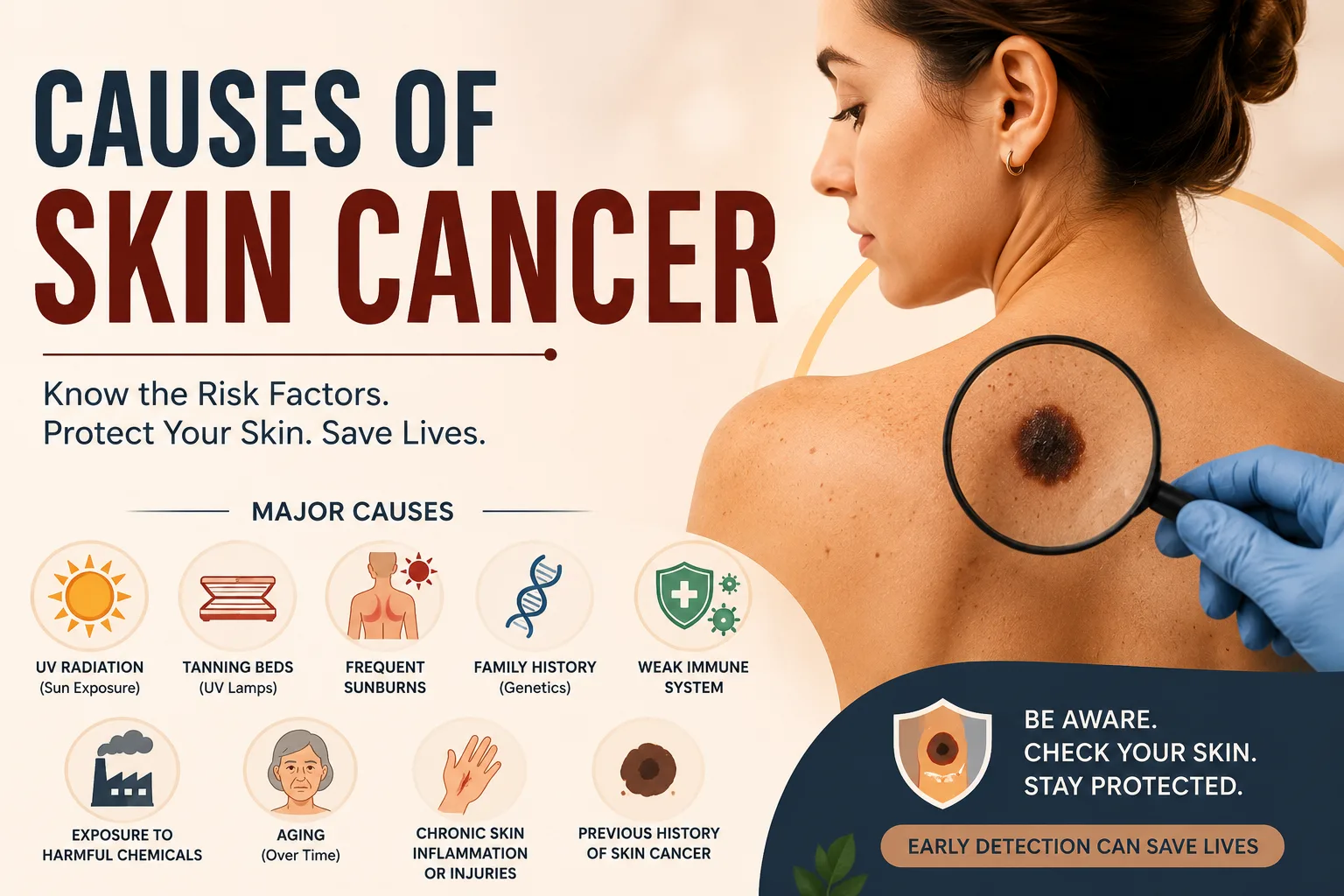
Main Causes of Skin Cancer
There is no single reason for skin cancer. Multiple factors can increase the risk over time.
1. Excessive Exposure to UV Radiation
One of the leading causes of skin cancer is prolonged exposure to ultraviolet (UV) rays from the sun.
UV rays damage the DNA in skin cells, which may lead to abnormal cell growth.
Sources of UV Radiation
- Sunlight
- Tanning beds
- UV lamps
People who spend long hours outdoors without protection are at higher risk.
2. Frequent Sunburns
Repeated sunburns, especially during childhood, can significantly increase the risk of developing skin cancer later in life.
Severe sunburn damages skin cells deeply and weakens the skin’s natural protection.
3. Fair Skin Tone
People with:
- Fair skin
- Light-colored eyes
- Blonde or red hair
Generally have less melanin in the skin. Melanin helps protect the skin from UV damage.
This makes fair-skinned individuals more vulnerable to sun-related skin damage.
4. Family History of Skin Cancer
Genetics can also play a role in skin cancer risk.
If close family members have had skin cancer, especially melanoma, the chances may increase due to inherited genetic factors.
5. Weak Immune System
A weakened immune system makes it harder for the body to repair damaged skin cells.
People at higher risk include:
- Organ transplant patients
- Individuals with immune disorders
- People undergoing certain medical treatments
6. Use of Tanning Beds
Artificial tanning devices expose the skin to concentrated UV radiation.
Regular tanning bed use may increase the risk of:
- Premature aging
- Skin damage
Skin cancer
7. Exposure to Harmful Chemicals
Certain chemicals may contribute to skin cancer risk over time.
Examples include:
- Arsenic
- Industrial chemicals
- Coal tar
- Radiation exposure
- Long-term exposure without protection can damage skin cells.
8. Aging
As people age, skin damage accumulates over the years.
Older adults are more likely to develop skin cancer because of long-term sun exposure and reduced skin repair ability.
9. Previous History of Skin Cancer
People who have had skin cancer before are at greater risk of developing it again.
Regular skin check-ups become extremely important in such cases.
10. Chronic Skin Inflammation or Injuries
Long-term skin wounds, scars, burns, or inflammatory skin conditions may increase the risk of abnormal skin cell growth.
Common Warning Signs of Skin Cancer
Early detection is important for successful treatment.
Watch for These Symptoms
- New or unusual moles
- Changes in size, color, or shape of a mole
- Sores that do not heal
- Itchy or bleeding spots
- Rough or scaly patches
- Dark-colored lesions
If any skin change looks unusual, consult a dermatologist immediately.
How to Reduce the Risk of Skin Cancer.
While not all cases can be prevented, healthy habits can reduce the risk significantly.
Protect Your Skin from Sun Exposure
- Use sunscreen regularly
- Wear sunglasses and protective clothing
- Avoid direct sunlight during peak hours
- Use hats and umbrellas outdoors
Check your skin monthly for:
- New growths
- Color changes
- Unusual spots
- Early detection can save lives.
- Eat a Healthy Diet
A diet rich in:
- Fruits
- Vegetables
- Antioxidants
- Water may help support healthy skin.
Stay Hydrated
Proper hydration supports overall skin health and repair.
When Should You See a Doctor?
Consult a healthcare professional if you notice:
- Rapidly changing moles
- Persistent skin irritation
- Bleeding skin lesions
- Unusual skin growths
Early medical evaluation is important for proper diagnosis and treatment.
Final Thoughts
Understanding the causes of skin cancer is the first step toward prevention and early detection. Excessive UV exposure, sunburns, tanning beds, genetics, and weakened immunity are some of the major risk factors.
Protecting your skin through healthy habits, regular check-ups, and sun safety can help reduce the risk of skin cancer and support long-term skin health.
If you notice any unusual skin changes, consult a qualified dermatologist for proper guidance and timely care.
FAQs
Q 1. What is the main cause of skin cancer?
The main cause of skin cancer is excessive exposure to ultraviolet (UV) radiation from the sun or tanning beds. UV rays can damage skin cells and increase the risk of abnormal cell growth.
Q2. Can skin cancer develop without sun exposure?
Yes, although UV exposure is the most common cause, skin cancer can also develop due to genetics, weakened immunity, chemical exposure, or other medical conditions.
Q3. Does tanning increase the risk of skin cancer?
Yes. Both sun tanning and tanning beds expose the skin to harmful UV radiation, which may increase the risk of skin cancer and premature skin aging.
4. Who is at higher risk of skin cancer?
People at higher risk include:
- Individuals with fair skin
- People with frequent sunburns
- Those with a family history of skin cancer
- Older adults
- People with weakened immune systems
5. Can skin cancer affect young people?
Yes. Although skin cancer is more common in older adults, younger people can also develop it, especially if they experience repeated sunburns or excessive UV exposure.