
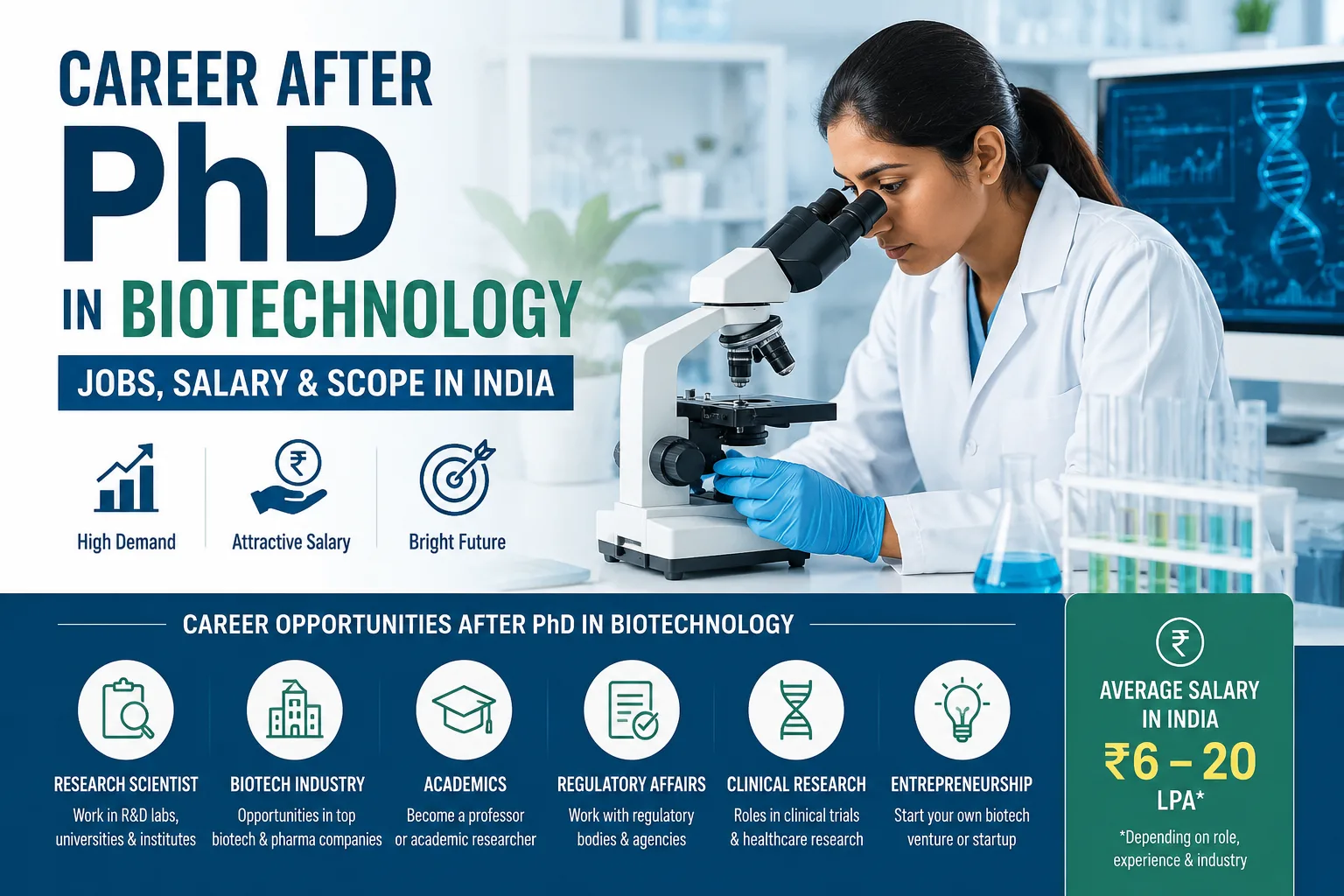
India’s biotech industry is shifting from conventional lab research to biopharma, genomics, bioinformatics, AI-powered drug discovery, personalised medicine and next-generation biomanufacturing. This expansion is creating wider PhD biotechnology careers across research organisations, universities, pharmaceutical companies, clinical research, regulatory affairs and start-ups.
India’s bioeconomy was valued at US$165.7 billion in 2024 and is expected to reach US$300 billion by 2030. This indicates a strong long-term demand for highly trained researchers and specialists. But for doctoral graduates, knowing that opportunities exist is only part of the story of choosing the right path. This guide looks at the leading jobs after PhD biotechnology, expected salary ranges in India, government and private-sector options, opportunities abroad, and the skills that can improve long-term career growth. It also compares academic and industry pathways.
Is a PhD in Biotechnology Worth It in 2026?
India’s Growing Bioeconomy
India’s bioeconomy reached US$165.7 billion in 2024 and is targeting US$300 billion by 2030. IBEF records 11,855 biotech start-ups in 2025, far above older 4,000-plus estimates. Growth is increasing demand for research skills.
Why PhD Holders Earn a Premium Over MSc/BTech
An MSc or BTech can open laboratory, production and quality roles. A PhD adds research, experimental design and grant-writing experience. This can create opportunities in roles such as senior scientist, principal investigator, faculty and specialist, but higher pay isn’t guaranteed.
Research vs Industry: Both Paths Are Expanding
Research institutes create evidence; industry translates discoveries into products, trials and scale-up. The right career after PhD in biotechnology depends on your preference.
Top Career Options After PhD in Biotechnology
Academic & Research Careers
Research Scientist / Principal InvestigatorResearch scientists design studies; senior scientists and principal investigators lead laboratories, grants and teams.
Assistant Professor / AcademicianAcademicians combine teaching and research. NET, SET or APSET requirements and PhD exemptions vary by UGC and institutional rules.
Postdoctoral Fellowship: India & AbroadA postdoctoral fellowship deepens expertise, publications and collaborations before later roles.
Industry & Corporate Careers
R&D Scientist in BiopharmaBiopharma jobs cover discovery, vaccines and biosimilars. Employers include Biocon, Serum Institute, Syngene, Dr. Reddy’s, Cipla, Bharat Biotech, Panacea Biotec, Novozymes, GSK and Novartis.
Bioinformatics / Computational BiologyBioinformatics scientists use programming, statistics and AI to study genomic data for biomarkers, drug targets and personalised medicine.
Regulatory Affairs & Clinical ResearchRegulatory managers handle submissions; clinical research managers coordinate trials; medical science liaisons connect evidence with clinicians. CROs, Thyrocare, Metropolis and pharma companies recruit.
Biomanufacturing & Bioprocess RolesBioprocess leads scale products for manufacturing. Related careers include quality assurance or control head, validation specialist and GMP operations leader.
Emerging & High-Growth Careers
AI in Biotech, Synthetic Biology & Gene EditingRoles use machine learning, CRISPR gene editing, synthetic biology, NGS, 3D bioprinting and diagnostics.
Patent Analyst / IP & Scientific WritingPatent analysts assess novelty and claims. Other non-bench jobs after PhD biotechnology include IP associate, scientific or medical writer, biotech product manager, science policy analyst and biostatistician.
Entrepreneurship & Start-ups
Biotech Startup Ecosystem in IndiaFounders can build diagnostics, agribiotech, biomaterials or contract-research ventures. A PhD adds credibility, but success needs validation, finance and regulation.
PhD Biotechnology Salary in India (2026)
According to Glassdoor’s May 2026 data, research scientists can earn close to ₹10.5 LPA on average, with a ₹6.55–19.5 LPA typical range. As per AmbitionBox, the salary range can span ₹3.5–21 LPA for bioinformatics scientists and ₹6.8–32 LPA for regulatory managers. These are just estimates, so it is recommended to check the right sources from time to time.
Salary by Experience Level
Freshers vs Mid-Career vs SeniorSpecialised PhD-entry roles may offer ₹8–12 LPA, though smaller laboratories may pay less. Mid-career professionals can earn anything near ₹15–20 LPA, while experienced specialists can earn upwards of ₹30 LPA.
Salary by Sector
Biopharma and data-focused roles in the private sector often pay more. Government and academic careers may offer more stability and greater freedom to focus on research.
Factors That Boost Your Salary
Scarce skills, patents, GMP knowledge and leadership improve pay. Bengaluru, Hyderabad and Pune are hubs; AI and bioinformatics can add a premium.
Salary Comparison Table by Role
RoleSectorIndicative RangeOutlookResearch ScientistR&D₹6.5–19.5 LPAStrongBioinformatics ScientistData/biotech₹3.5–21 LPAVery strongClinical Research ManagerCRO/pharma₹3–21 LPAStrongRegulatory ManagerPharma₹6.8–32 LPAStrongMedical Science LiaisonPharma₹4–21.2 LPAStrongPatent Research AnalystIP₹2.2–8.1 LPAModerateSenior Clinical Research ManagerClinical₹8.4–29.6 LPAStrongThe ranges combine Glassdoor’s 2026 research-scientist data with AmbitionBox’s 2025 role-level estimates. Salary portals report wide variations by employer, experience and sample size.
Government Jobs & Research Fellowships After PhD Biotechnology
CSIR, ICMR, DRDO, DBT & ICAR Opportunities
PhD biotechnology jobs in India include scientist, research associate and policy roles at CSIR, ICMR, DRDO, DBT, ICAR, NIPER, IISc and national laboratories. Apply through portals.
Faculty Roles & UGC Norms
Universities recruit assistant professors and investigators. Check UGC rules and each advertisement; a PhD does not remove every NET or SET condition.
How to Apply
Track DBT-BET, CSIR-UGC NET, postdoctoral calls and scientist vacancies. DBT and CSIR list ₹37,000 monthly for JRF and ₹42,000 for SRF, subject to rules.
Scope of PhD Biotechnology Abroad
Top Countries & Salary Ranges
The USA, UK, Germany and Canada offer research and biopharma careers. Earnings in the life sciences can vary widely by country, role and experience. In the United States, medical scientists earned from US$61,860 to more than US$168,210 in 2024. In the UK, biotechnologists tend to make between £27,000 and £57,000 a year, while in Germany, experienced biochemistry workers can earn around €4,357 to €6,938 a month. In Canada, biological scientists make approximately C$25.71 to C$66.67 an hour.
Postdoc-to-Industry Transition Overseas
A postdoc builds up networks and specialist experience. Industry transition requires teamwork, regulatory awareness and measurable results. Compare the visa rules, employment contract and living costs in any country before accepting a job abroad.
Skills That Make PhD Biotech Graduates Employable in 2026
Technical Skills
Employers always want to see individuals who understand lab work and digital technologies. Bioinformatics, data analytics, AI, machine learning, NGS, CRISPR, cell culture, bioprocessing, GMP and synthetic biology may gain you more positions in business and education.
Transferable Skills
It's not enough to know how to do something technically. They also want to hire people who can speak easily, write grants, handle projects, get along with others, and explain difficult ideas in simple terms.
How to Choose the Right Career Path After Your PhD
Match Specialisation to Industry Demand
Fit your thesis to what people want: computational biology works well with genomics; microbial biotechnology helps with biomanufacturing; cancer biology is linked to drug discovery; and plant biotechnology helps with agricultural R&D.What are the trade-offs between academic and business? Freedom in academia and grant pressure.
Academia vs Industry: Key Trade-offs
Academia offers more freedom, but you may need to compete for research funding. Industry offers faster commercial impact but product deadlines. Review MIT-WPU’s PhD in Biotechnology programme, PhD admissions page and entrance-exam guide. MIT-WPU requires an eligible master’s degree with 55%; valid NET, GATE and similar qualifiers may receive PET exemption. Full-time scholars may receive a stipend under university norms.
Is PhD Biotechnology a Good Career Choice?
The PhD biotechnology scope is broad, but the degree works best with relevant skills, visible research and career planning. PhD biotechnology careers can lead to science, industry, policy or entrepreneurship. Explore the programme, download the brochure and speak with an advisor.
FAQs on PhD Biotechnology Careers
What is the scope after a PhD in biotechnology in India?
Graduates can enter R&D, academia, bioinformatics, clinical research, regulation, manufacturing, IP, writing, policy or start-ups.
What is the salary of a PhD biotechnology graduate in India?
The PhD biotechnology salary in India varies widely. For freshers, the roles can go up to Rs. 8-12 LPA and for experienced ones, it can go up to Rs. 15-30 LPA and above.
Which jobs are best after a PhD in biotechnology?
Research scientist, computational biologist, regulatory manager, clinical research manager and bioprocess lead are strong options.
Can I get a government job after a PhD in biotechnology?
Yes. CSIR, ICMR, DRDO, DBT, ICAR and other institutions recruit scientists, associates and project staff.
Is a PhD in biotechnology worth it in 2026?
It can be worthwhile for research, specialist and leadership careers when supported by a clear skills plan.
What are the highest-paying biotechnology careers?
Senior R&D, regulatory affairs, medical affairs, clinical development, computational biology and product leadership can pay well.
Can PhD biotechnology graduates work abroad?
Yes. Careers abroad in biotechnology include postdoctoral, academic and biopharma roles, subject to visas and employer requirements.