How to Choose the Right Cap Moulds in India?
Choosing the right Cap Moulds starts with a clear understanding of your cap design, material and production needs. Manufacturers in India often plan new products or review existing tooling, and a precise specification makes every supplier conversation more productive. Therefore, gather your drawings, samples and output expectations first. Then explore your requirements with Shivam Engitech.
A cap may look simple, yet it must seal the container, open smoothly and keep its shape across thousands of production cycles. Consequently, the mould behind it plays a major role in your product quality, your cycle time and your running costs. Many buyers focus only on the quoted price, but that approach can hide important details about cooling, ejection and maintenance. Instead, compare each proposal against the same written requirements, so you can see the real differences between suppliers.
This guide walks you through the key steps. First, you will learn how cap moulds work and where closures fit in different industries. Next, you will see which details to share with your supplier before you request quotes. Finally, you will learn how to review cooling, ejection, maintenance and sample trials, so your purchasing decision matches your production needs.
Understanding Cap Moulds and How They Work
Cap moulds are precision tools that shape plastic caps and closures. In injection moulding, the machine pushes molten plastic into the mould cavity, and the plastic cools into the final component. Consequently, the quality of the mould directly affects the quality of every cap you produce. Closures also serve many industries, and each application places different demands on the cap. Therefore, the points below explain how the process works and where design choices matter most.
1. What Cap Moulds Do in Injection MouldingFirst, the mould receives molten resin through a runner and gate system. Next, the plastic fills each cavity and takes the shape of the closure. Finally, the part cools and ejects from the mould so the cycle can repeat. Because this cycle runs thousands of times a day, small design details matter greatly. Moreover, the finished cap must fit its container and perform its intended function. For that reason, begin your selection with the complete packaging requirement, not with the mould alone.
2. Beverage and Food PackagingBeverage bottles and food containers need caps that seal reliably and open easily. In addition, many of these caps include tamper-evident bands or specific thread profiles. Your supplier should review these features against your container neck finish before work begins. As a result, the cap fits the container well and protects the product inside.
3. Personal Care and Household ProductsPersonal care and household packaging often uses hinged, flip-top or screw-on closures. Likewise, these designs can need different mould arrangements, depending on how the part forms and releases. Therefore, tell your supplier exactly how the closure will work in everyday use, so the mould design matches the real application.
4. Why Thread Geometry MattersA threaded cap cannot simply pull straight out of the mould. Instead, the release method must suit the thread geometry, or the ejection step can damage the part. For this reason, discuss thread design early with your tooling partner, and confirm the release method in writing.
Key Factors to Check Before Buying Cap Moulds in India
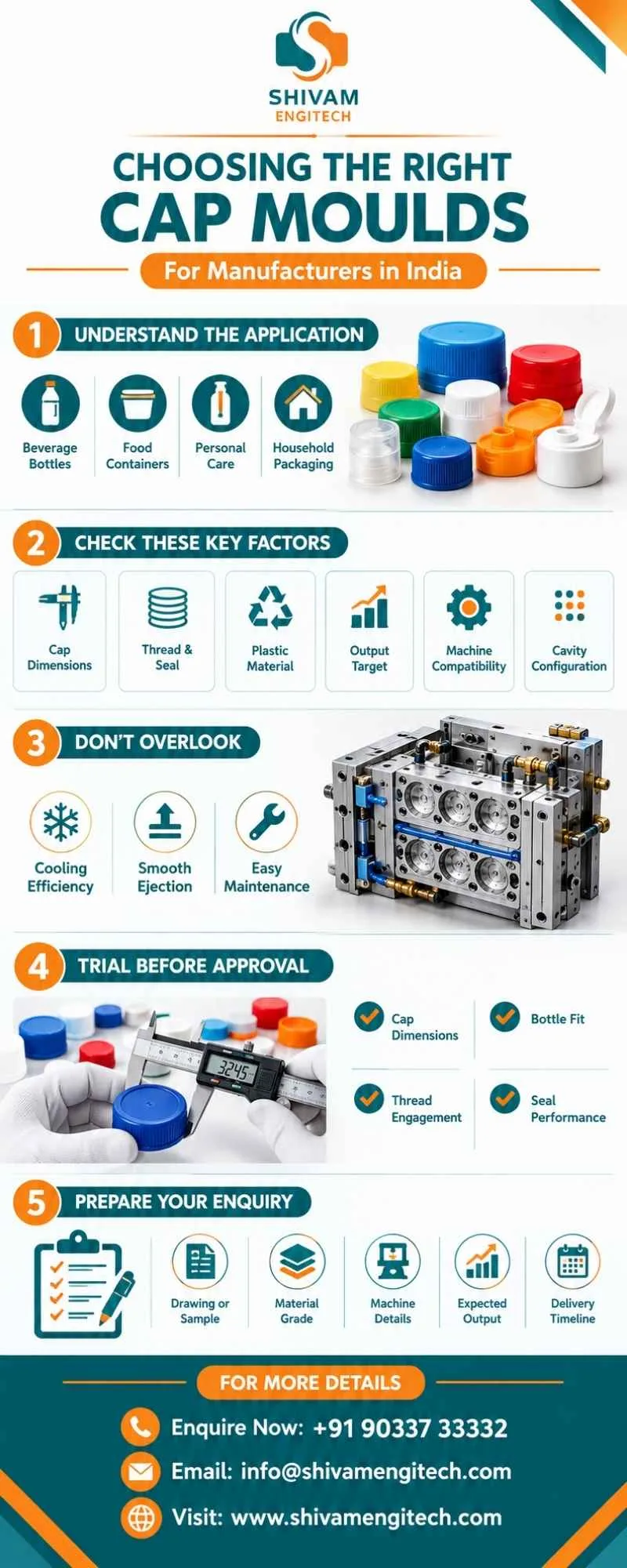
When you compare Cap Moulds in India, prepare a written specification before you request quotes. This simple step helps every supplier quote against the same requirements. As a result, your team can compare proposals fairly and spot the details that still need confirmation. The four points below cover the details your supplier needs most.
1. Define the Cap Design and FeaturesStart with the physical details of the closure. Provide the diameter, height, wall thickness and approved drawing. In addition, identify the thread profile, sealing arrangement and any tamper-evident or hinged elements. A drawing shows the intended design, while a physical sample shows how the cap performs in real use. Consequently, sharing both gives your supplier the clearest picture.
2. Confirm Material and Production TargetsNext, describe how you plan to produce the cap. Share the intended plastic resin and grade so the supplier can assess it. Then state your expected daily or monthly output and your available operating hours. Resin choice influences cooling behaviour, shrinkage and cycle time. Similarly, output targets influence the number of cavities and the build of the mould. For these reasons, state both clearly from the start.
3. Check Machine CompatibilityAsk the supplier to confirm that the proposed mould suits your machine and installation requirements. Moreover, share your machine details early, so the supplier can match the mould size and layout to your setup. As a result, you avoid surprises during installation and trials.
4. Plan the Cavity ConfigurationDiscuss the number of cavities alongside your production demand and machine capability. More cavities can raise output, but they also increase mould size and complexity. Therefore, balance demand against what your machine can handle comfortably. In addition, ask the supplier to explain how the proposed layout affects filling, cooling and part consistency.
Review Cooling, Ejection and Maintenance of Cap Moulds
Cooling and part removal deserve close attention during selection. Although these features sit inside the mould and stay out of sight, they influence your daily production more than most buyers expect. Therefore, review them for your actual cap design and planned operating conditions. The four points below show what to ask your supplier.
1. Cooling and Cycle TimeEffective cooling supports shorter production cycles. In contrast, uneven cooling can lead to inconsistent parts. Ask your supplier how the cooling arrangement suits your cap’s wall thickness and material. As a result, you can judge whether the proposed design supports your output target.
2. Ejection and Smooth Part ReleaseAn appropriate ejection arrangement helps closures release smoothly. Additionally, it reduces the risk of marks or distortion on the finished cap. Ask the supplier to explain how the ejection method suits your specific design. This step matters most when the cap has threads or other features that grip the mould.
3. Cleaning and Routine MaintenanceYour production team will service the mould regularly, so ask practical questions during the enquiry stage. For example, ask how your team should clean and inspect the mould, and which maintenance tasks the supplier recommends. Moreover, clear answers now help your team plan regular servicing and reduce unplanned downtime later.
4. Replaceable Components and Spare PartsAsk which components are replaceable and how available the spare parts are. In addition, request a clear list of parts that wear first during regular production. By including these questions early, you can assess ongoing support alongside the initial purchase price.
Conclusion: Move Forward with the Right Cap Moulds
Choosing the right Cap Moulds comes down to preparation, clear communication and careful review. First, define your cap design, material and production targets. Next, confirm that the mould suits your machine and cavity layout. Then, review cooling, ejection and maintenance, because these features shape your daily output. Finally, agree on sample trials and acceptance criteria before you place an order.
A useful enquiry includes your product drawing or sample, material grade, machine details, expected output and delivery expectations. When you share this information upfront, suppliers can quote against the same requirements, and your team can compare proposals with confidence. As a result, the project moves forward with fewer surprises and fewer delays.
Ready to start your next cap manufacturing project in India? Connect with Shivam Engitech to discuss your requirements. Together, review the proposed scope, trial process and support arrangements, so your purchasing decision reflects your production needs.
For More Details, 👇
📞 Enquire Now: +91 90337 33332
📧 Email: [email protected]
🌐 Visit: https://shivamengitech.com/cap-moulds-india/