
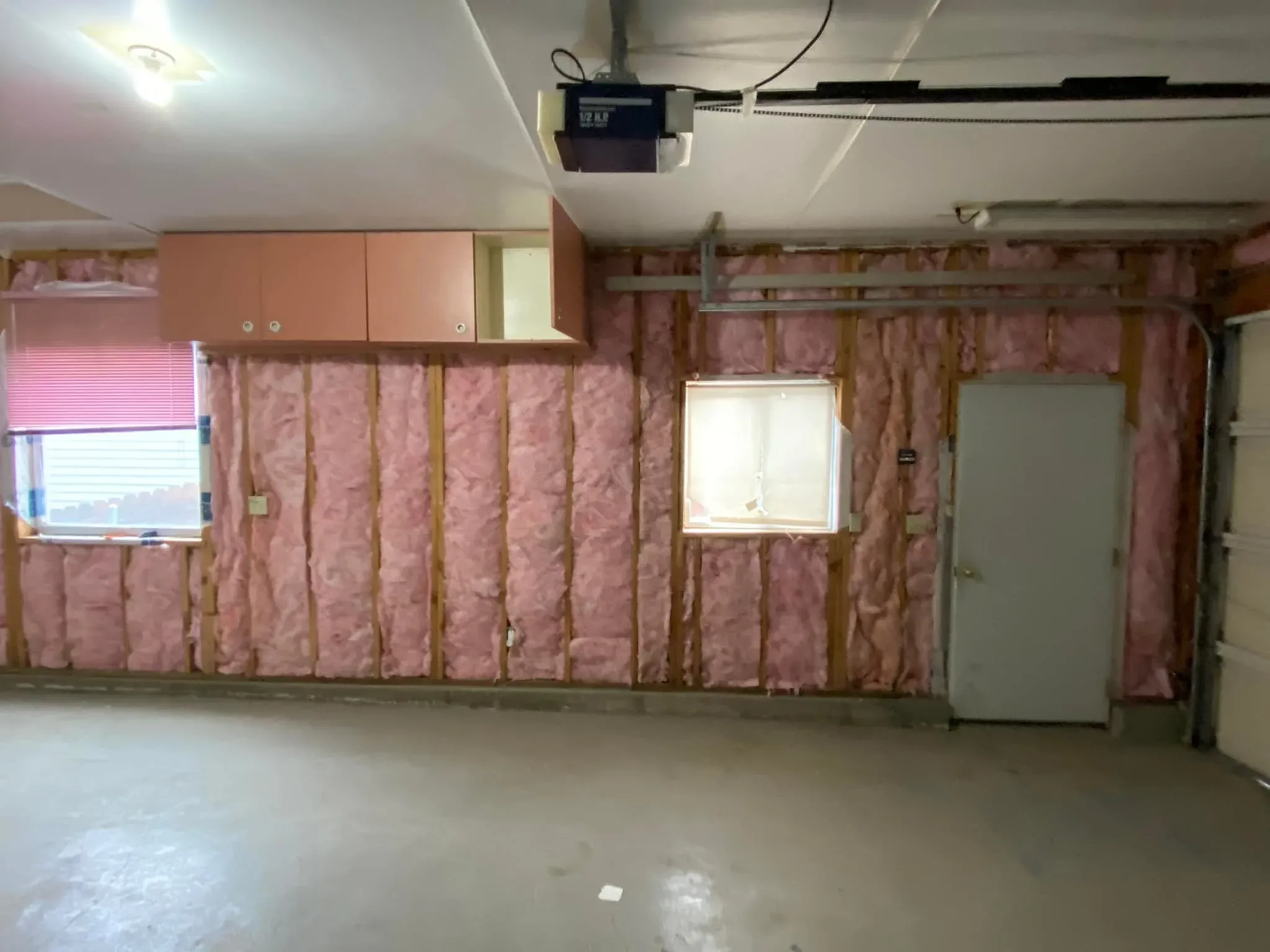
Yes, fiberglass insulation can grow mold if it traps moisture and organic debris like dust or skin cells. While the glass fibers themselves do not provide food for fungi, the material acts as a high-efficiency filter that captures particles mold loves to eat.
You need to understand that whether fiberglass insulation can grow mold is a question of the environment rather than just material composition. In the Teton Valley, managing moisture is the most effective way to keep your home healthy. This article explains how moisture cycles in Victor affect your insulation and what steps builders should take to prevent growth.
The science of how mold develops on fiberglass surfaces
You might think that because glass is inorganic, your insulation is safe from biological growth. However, the structure of fiberglass batts creates millions of tiny pockets that trap air. These same pockets trap household dust, pet dander, and pollen over time.
When moisture enters the wall cavity, it settles on these organic particles. Since mold only needs water, food, and the right temperature to thrive, your insulation becomes an accidental nursery. You will often see this as black mold on insulation or dark streaks near electrical outlets where air leaks occur.
Regional climate factors affecting Victor, Idaho homes
The climate in Victor is characterized by extreme temperature swings, where warm indoor air carries moisture from showers, cooking, and breathing, while the outside air remains well below freezing.
When that warm air moves through your walls, it hits a point where it cools down and turns into liquid water. This is called the dew point. If this happens inside your insulation, the batts stay damp for months. This constant dampness is why fiberglass insulation and mold problems are so common in high-altitude mountain regions.
:max_bytes(150000):strip_icc()/fiberglass-vs-rigid-foam-insulation-3860844-02-958f3f7f1c594df9adf512ff8f03cbee.jpg)
Common causes of fiberglass insulation and mold issues
There are several reasons why moisture builds up in your walls. Most issues stem from how the house was originally built or how it has settled over time. Identifying these causes early helps you avoid expensive repairs later.
- Air bypasses: Unsealed gaps around wires and pipes allow humid air to flow freely into the insulation.
- Vapor barrier errors: Placing the plastic on the wrong side of the wall traps moisture against the cold wood.
- Roof leaks: Even a small drip can saturate large sections of batts.
- High indoor humidity: Failing to use bath fans keeps indoor humidity too high for a mountain climate.
Can mold grow on fiberglass insulation in crawlspaces?
Crawlspaces in Victor are notorious for moisture problems because of the high water table and spring snowmelt. Beyond wall cavities, if your fiberglass batts are hanging from the floor joists, they often absorb ground moisture. This leads to black mold insulation that can eventually rot your floor structure if left unchecked.
Builders should ensure a heavy-duty vapor barrier covers 100% of the crawlspace floor. Without this protection, the insulation behaves like a sponge. Once the batts become heavy with water and organic silt, the possibility of fiberglass insulation becoming moldy becomes a reality for every homeowner in the area.
Comparing insulation performance and moisture resistance
Material TypeFood Source for MoldMoisture RetentionAir Sealing AbilityFiberglass BattsNo (but traps dust)HighLowMineral WoolNoLowLowClosed-Cell Spray FoamNoNoneHighCelluloseYes (unless treated)HighMedium
The role of dust and organic debris
As mentioned, the glass itself isn't the food. But as a home ages, the "wind washing" effect pulls outside air through the insulation. This air carries fine silt and organic matter. Over five or ten years, your pink or yellow insulation can become quite dirty, providing all the nutrients a mold colony needs to expand.
Understanding the dew point in mountain climates
In Victor, the dew point often occurs right in the middle of your wall. This means liquid water is forming where you cannot see it. This is why the potential for mold growth on fiberglass insulation is a major concern for builders. If the wall cannot dry out, the mold will continue to spread until it reaches the drywall.
Practical steps for builders to prevent growth
You need to focus on airtightness rather than just R-value to keep homes healthy. When you install fiberglass, every gap in the thermal envelope must be sealed with foam or caulk. This stops the air that carries spores and moisture into the wall.
The importance of proper air sealing
Air sealing is different from insulation. While fiberglass slows down heat transfer, it does almost nothing to stop air movement. You must seal the top plates, bottom plates, and all penetrations before the batts go in. This simple step reduces the risk of mold on fiberglass insulation by nearly 80% in most new constructions.
Using smart vapor retarders
Traditional poly vapor barriers can sometimes trap moisture inside the wall if the house gets too warm in the summer. Smart vapor retarders are a better choice for Victor. These materials change their permeability based on humidity, allowing the wall to dry out in either direction.
Bonus Tip: Always use an unfaced batt if you are applying a separate, continuous smart vapor retarder. This creates a much tighter seal than the paper flaps on standard batts.
Things to consider when choosing insulation strategies
When you are planning a build or a renovation in the Teton Valley, you have to look at the big picture. One material might be cheaper, but it could cost you more in health risks or energy bills later.
- Climate zone requirements: Victor is in a cold climate zone that requires specific vapor management techniques.
- Air infiltration rates: Lower air leakage means less chance for condensation to form inside your walls.
- Material drainage: Consider how well the insulation sheds water if a leak occurs during construction.
- Installation quality: Gaps as small as half an inch can reduce the effective R-value by 25% and create cold spots.
How market data reflects the need for better insulation
Recent industry studies show that roughly 40% of a home's heating and cooling energy is lost through air leaks. These leaks are the same pathways that allow moisture to enter and cause mold on fiberglass insulation. Furthermore, nearly 1 in 4 homes in cold climates show some sign of moisture-related degradation in their wall cavities within the first decade.
These facts show that the question of whether fiberglass insulation can grow mold is not just a theoretical worry. It is a common reality that affects property values and indoor air quality. Improving your insulation strategy is an investment in the longevity of the building.
Strategic ways to manage Teton Valley humidity
The local climate is unique because the air is often very dry, but you create a lot of moisture inside your home. If your house is built tightly, that moisture has nowhere to go but into the walls. This is why proper ventilation is a requirement, not an option.
Builders should prioritize mechanical ventilation. Using an Energy Recovery Ventilator (ERV) helps swap stale, moist indoor air for fresh outdoor air without losing all your heat. This keeps the internal surfaces of your walls dry enough to prevent growth from starting.
Bonus Tip: In high-moisture areas like bathrooms, consider using mineral wool instead of fiberglass. It handles dampness better and doesn't sag when wet.
Detecting and addressing contaminated insulation
If you notice a musty smell or see dark discoloration, you need to investigate immediately. Surface cleaning rarely works on porous materials. Usually, the best course of action is to remove the affected batts and dispose of them properly.
Before you replace the material, you must find the source of the water. Simply putting new fiberglass back into a leaky wall will result in the same problem within a few months. Use a moisture meter to ensure the wood studs are dry before you re-insulate.
Summary of moisture protection for insulation
Managing mold in fiberglass requires a combination of air sealing, moisture control, and proper installation. You must ensure that the insulation stays dry by preventing warm air from leaking into cold wall cavities. If you find contaminated material, removal is generally safer than trying to clean it.
You should view insulation as part of a system. When fiberglass stays dry and clean, it lasts for decades. The problem only arises when the building envelope fails to protect the material from the elements. By focusing on a tight building envelope and proper ventilation, you can ensure your home stays efficient and healthy for years to come. Evaluate your current attic and crawlspace conditions to see if an upgrade is necessary for your long-term goals.

Consulting with local insulation specialists for better results
If you are worried about the air quality in your home or notice suspicious spots on your batts, getting a professional opinion is the best next step. Experts who understand the specific challenges of Idaho winters can identify whether your issues are caused by a roof leak or a ventilation failure.
For those in the Victor area, High Country Solutions provides expert guidance on insulation upgrades and moisture management. You can reach them at (307) 248-9063 or via email at [email protected] to discuss your project. They offer a free quote to help you determine the most effective way to keep your home warm and mold-free. Their office is conveniently located for local builders, and more details can be found at their Map location. They can help you determine if your current setup is at risk and provide solutions that fit the Teton Valley climate.
Frequently Asked Questions about Insulation and Mold
Does fiberglass itself serve as food for mold?
No, the glass fibers are inorganic and do not support mold growth. However, fiberglass acts as a filter that traps organic dust and pollen, which mold can eat if moisture is present.
What does mold usually look like on insulation batts?
It often appears as black or dark gray spotting, or sometimes as fuzzy white patches. In many cases, it looks like dirty streaks following the path of air leaks.
Can you clean mold off fiberglass insulation?
It is generally not recommended because fiberglass is highly porous. Cleaning agents cannot reach all the spores deep inside the fibers, so replacement is the most effective solution.
Why is mold more common in Victor homes during winter?
The large temperature difference between the heated interior and the freezing exterior creates a high risk for condensation inside the walls if vapor barriers are not perfectly sealed.
How do you know if your insulation has a moisture problem?
Look for sagging batts, a damp or musty odor in the attic or crawlspace, and water stains on the drywall or floor joists surrounding the insulation.