A student who completes a clinical research course soon notices a pattern in the map of trial sites: they cluster in big cities, near large hospitals and medical colleges. Yet a large part of the population lives in villages and small towns, far from those centres. People there get the same illnesses as everyone else, sometimes more of them, but they rarely get the chance to join a study. Decentralized trials, which move some activities out of the hospital, are often suggested as a fix. This article looks at whether that hope is realistic.
Why Rural Patients Are Rarely Included
The first barrier is plain distance. A trial that needs a visit every two weeks can mean a long bus ride, a lost day of work and a family member who must come along. For a daily-wage earner or a small farmer, that cost may be heavier than any benefit the study can promise. Many simply never hear about the study, because information about trials travels through specialists and city hospitals.
Other barriers sit alongside it. Rural patients often have less access to specialist care, so a diagnosis may come late or not at all, and without a confirmed diagnosis nobody can screen them for a trial. Language and literacy also play a part. Consent forms written in formal English or in technical regional language can leave a participant unsure of what they are agreeing to. The result is research evidence that reflects city life more than the whole country. Diet, work, infections, water supply and access to care all differ in rural areas, and these differences can affect how a treatment performs.
What Decentralized Methods Offer
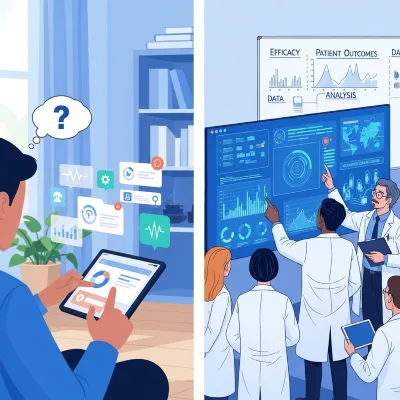
The idea behind decentralization is to bring the study to the participant, instead of the participant to the study. Routine tasks such as measuring blood pressure, collecting a blood sample, filling in a symptom diary or answering questions from the doctor can often be done near home, while only the few steps needing special equipment stay at the main site.
For someone in a village, this could turn a monthly trip of several hours into a short walk to a nearby health centre and an occasional visit to the hospital. That change alone can decide whether a person is willing to enrol and whether they stay to the end.
Building Blocks for Rural Settings
Several practical pieces make this work in a rural setting, and each one needs trained people who understand both the research rules and local conditions, which is shaping the kind of clinical research jobs that appear around hybrid studies. The main pieces are described below.
Local Collection Points and Health Workers
Primary health centres, small clinics and diagnostic laboratories can serve as nearby collection points, provided they are trained on the protocol and linked to the main site. Community health workers who already know the families can help identify possible participants, remind them of visits and notice early problems. Their role needs clear boundaries, since medical judgements stay with the investigator, but their local trust is hard to replace.
Telehealth and Consent in Familiar Language
Video or phone consultations can replace some check-ups, allowing the investigator to review symptoms without a journey. Consent also improves when information is given in the participant's own language, with simple wording, pictures or audio-video material, and enough time for questions. Indian rules already ask for audio-visual recording of the consent process in certain cases, and an electronic system can support this when it is designed with care.
Home Delivery of Study Medicine
Where the protocol allows, study medicine can be delivered to a home or a local centre. This needs secure packaging, a record of every shipment and proof that the right person received it. For medicines that must be kept cool, long roads and summer heat in many regions make the task harder, so sponsors often limit home delivery to products that are stable at ordinary temperatures.
Mobile Units
In places where no suitable local centre exists, a vehicle fitted for basic checks and sample collection can visit villages on a fixed schedule. This approach is costlier, though it brings the study directly to people who have no other option.
Obstacles on the Ground
Technology is the first problem. Many rural areas have patchy mobile coverage, and not every household has a smartphone. A study that depends on apps, video calls or wearable devices may exclude the very people it is meant to reach. Digital confidence is also uneven, and instructions that seem simple to a student can confuse an older farmer.
Quality control is another worry. Spreading study activities over many small locations means more places where mistakes can occur. Local staff must be trained to the same standard as site staff, equipment must be calibrated and records must be complete. Monitors then need a practical way to check all of this without visiting every village.
There are regulatory and cost questions too. Rules for trials in India were written mainly with hospital sites in mind, and guidance on remote methods is still developing, so sponsors often discuss each element with the regulator and ethics committee. Setting up local points, training staff and arranging transport cost money, and the benefit shows only if enough participants are reached.
Protecting Participants
Reaching people who have had little contact with research brings extra responsibility. Participants in rural areas may be more likely to trust a doctor without question, or to feel that refusing is impolite, so consent must be truly voluntary. Payments for travel and lost earnings should cover real costs without becoming an inducement that clouds judgement. Ethics committees pay close attention to these points, and they should.
Privacy needs care as well. In small communities, a visit from a study nurse can reveal that a neighbour has a particular illness; teams should plan visits and data handling to keep personal health details confidential, in line with the Digital Personal Data Protection Act, 2023.
Closing Thoughts
The honest answer is a qualified yes. Decentralized methods can lower the cost and effort of taking part and can widen the reach of studies, but they do not work by themselves. Success depends on trained local staff, reliable supply, careful consent and a design that does not rely on technology the community lacks. Hybrid models, with the main site as a hub and local points as spokes, look the most realistic.
For anyone preparing to work in this area, a clinical research course in India that covers informed consent, ethics, community engagement and trial operations can build the understanding needed to design studies that fit rural conditions instead of overlooking them.
Can Decentralized Trials Improve Access to Clinical Research in Rural Areas?