
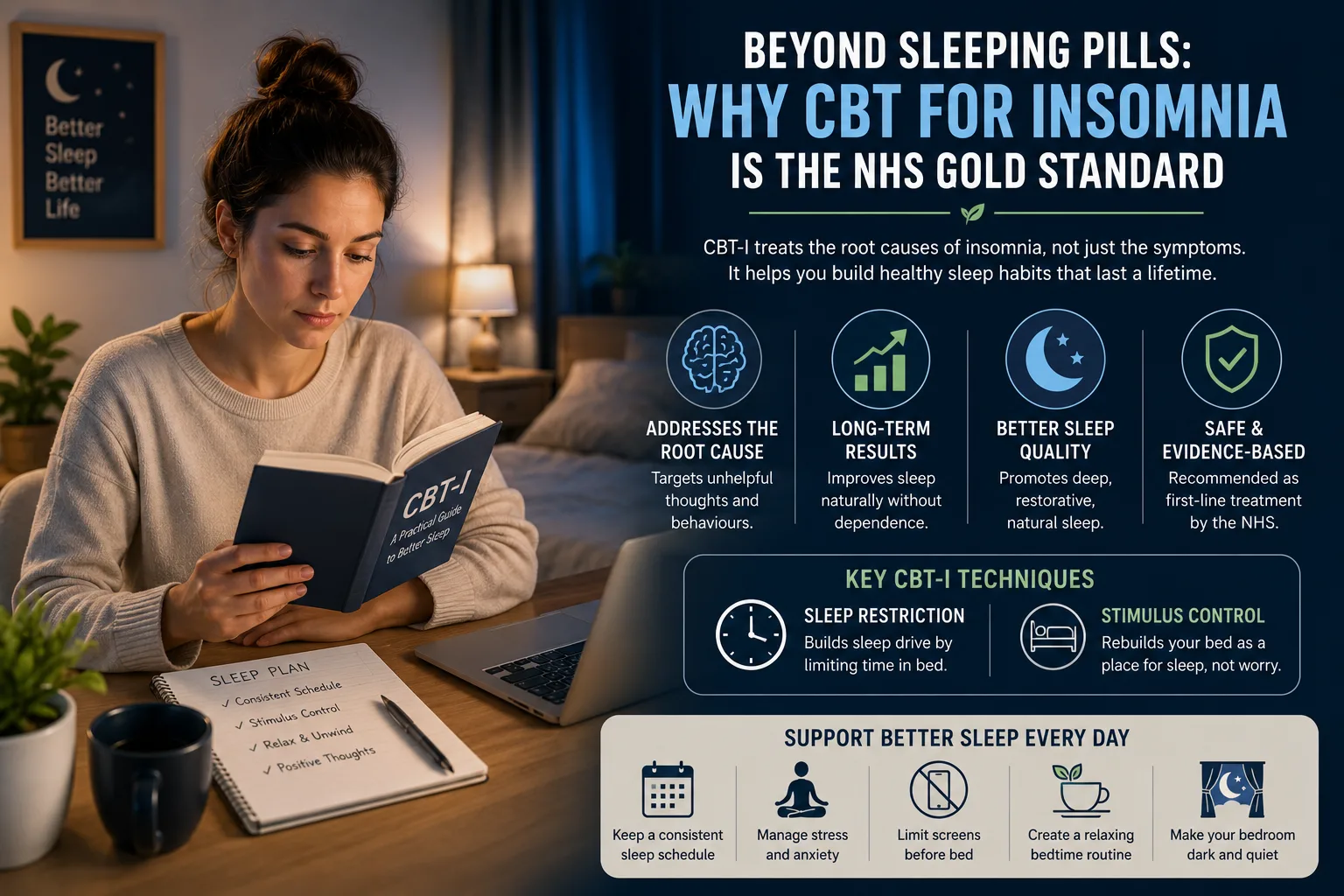
For decades, the standard response to chronic sleeplessness was a prescription for sleeping pills. If you have ever suffered through the agonising frustration of tossing and turning, a small white tablet can feel like a lifeline. However, as medical science has evolved, our understanding of sleep problems UK has shifted dramatically. The relationship between sleep and hormones is also increasingly recognised as an important part of understanding how disrupted sleep affects the body.
Today, leading health authorities no longer view medication as a sustainable solution for chronic insomnia. Instead, they advocate for targeted, evidence-based psychological therapy that addresses the root causes of sleeplessness. If you are trapped in the cycle of poor sleep, understanding why modern medicine has changed its approach—and why Cognitive Behavioural Therapy for Insomnia (CBT-I) is a key evidence-based sleep disorder treatment—could be the key to finally getting your life back.
The Problem with Relying on Sleeping Tablets: Sleep and Hormones
To understand why the medical landscape has changed, we must look at the limitations and risks associated with hypnotic medications, commonly known as Z-drugs such as zopiclone, or benzodiazepines.
Sleep disruption can also affect biological processes involving cortisol, melatonin and other hormones involved in the sleep-wake cycle. This connection between sleep and hormones helps explain why persistent insomnia can have effects that extend beyond simply feeling tired the next day.
Tolerance, Dependence, and the Rebound Effect
Sleeping pills are generally only recommended for short-term use—usually two to four weeks. This is because the brain can develop tolerance, meaning that the same dose may become less effective over time.
Furthermore, these medications carry a risk of psychological and physical dependence. When you try to stop taking them, you may experience a "rebound effect", where insomnia symptoms temporarily return or become more noticeable after stopping the medicine. This is one reason why people should discuss stopping or reducing sleeping medication with a healthcare professional rather than doing so suddenly.
Masking the Problem, Not Solving It
Sleeping tablets can promote sedation, but they do not necessarily address the behavioural, psychological, or circadian factors contributing to chronic insomnia. Some medicines can also alter aspects of normal sleep architecture.
Most importantly, medication does not directly address underlying anxiety, unhelpful sleep habits, conditioned wakefulness, or circadian rhythm disruptions that may be contributing to persistent insomnia.
What is CBT for Insomnia?
Cognitive Behavioural Therapy for Insomnia (CBT-I) is a structured, evidence-based programme that treats insomnia by targeting the thoughts and behaviours that maintain it. Unlike medication, CBT-I focuses on changing the patterns that can keep insomnia going over time.
According to current UK clinical guidance, CBT-I is an important first-line treatment approach for adults with chronic insomnia.
Sleep Restriction Therapy Explained
One of the most powerful, yet initially counterintuitive, components of CBT-I is Sleep Restriction Therapy (SRT).
When you have insomnia, you may spend a lot of time lying in bed awake, worrying about not sleeping. This can create a mental association between your bed and wakefulness, frustration, and anxiety. SRT works by temporarily matching time in bed more closely with actual sleep time.
For example, if you spend eight hours in bed but only sleep for five, a therapist may initially recommend a more restricted sleep window. While this sounds alarming, the approach is designed to strengthen sleep drive and improve sleep efficiency. As sleep becomes more consolidated, the time allowed in bed can gradually be increased under appropriate guidance.
Stimulus Control: Reclaiming Your Bedroom
Stimulus control is the behavioural aspect of CBT-I focused on rebuilding the brain's association between the bed and sleep. The rules are straightforward but can be highly effective:
- Use the bed primarily for sleep and intimacy. Avoid reading, scrolling on your phone, or watching television in bed.
- If you remain awake and alert for a prolonged period, leave the bedroom. Go to another room, keep the lights dim, and do something quiet or relaxing until you feel sleepy. Then return to bed.
- Set a consistent alarm and aim to wake up at the same time every day, regardless of how well you slept the previous night.
Identifying if You Need Sleep Disorder Treatment
It is normal to have a bad night’s sleep during periods of high stress. However, acute insomnia can develop into a chronic, self-perpetuating condition if it continues without appropriate intervention.
Recognising Chronic Insomnia Symptoms
You should consider seeking formal sleep disorder treatment if your insomnia symptoms meet the clinical criteria for chronicity. This commonly includes:
- Difficulty initiating or maintaining sleep at least three nights per week.
- The problem has persisted for three months or longer.
- The sleep disturbance causes significant distress or impairment in daytime functioning, such as difficulty concentrating at work, mood changes, or fatigue-related errors.
Additionally, if you find that your lack of sleep is contributing to other health concerns, it is important to seek professional medical advice.
Persistent disruption can also affect the body's stress-response system and circadian processes, making the connection between sleep and hormones particularly relevant when considering the wider effects of chronic sleep problems.
How to Access CBT-I: When to See a GP
Because CBT-I is an evidence-based treatment for chronic insomnia, the pathway to accessing it has become clearer within the UK healthcare system.
Knowing when to see a GP is the first step. You should book an appointment if your insomnia is persistent and self-help methods, such as basic sleep hygiene, have failed to improve your sleep.
When you see your GP, they may:
- Take a detailed sleep history to rule out other conditions, such as sleep apnoea or restless legs syndrome.
- Review any current medications or underlying health issues.
- Discuss appropriate CBT-I or other insomnia treatment options.
Note on Access
Due to NHS pressures, access to face-to-face CBT-I can vary depending on your local services. Digital CBT-I programmes and online resources may also be available and can provide structured support while someone is waiting for face-to-face treatment.
How to Sleep Better While Waiting for Treatment
If you are waiting for CBT-I or preparing to start treatment, your GP or therapist can advise you about appropriate changes to any sleeping medication you are currently taking. Sleeping medicines should not normally be stopped suddenly without professional advice.
During this transition, knowing how to sleep better requires patience and consistency.
- Acceptance: Paradoxically, the harder you try to sleep, the more alert you can become. Instead of thinking, "I must get to sleep or tomorrow is ruined," try reframing the thought as, "I am resting my body, and I can allow sleep to happen naturally."
- Keep a Sleep Diary: CBT-I relies heavily on sleep data. Track your bedtime, estimated sleep time, night awakenings, and morning wake time. This can provide useful information for your therapist or GP.
- Manage Daytime Anxiety: Insomnia is not always just a nighttime problem. Stress and hyperarousal can continue throughout the day. Mindfulness, deep breathing exercises, and gentle daytime exercise may help you manage stress and prepare your body for sleep.
A consistent routine may also support the natural interaction between sleep and hormones, particularly processes involved in the body's circadian rhythm and stress response.
Frequently Asked Questions (FAQ)
Is CBT for insomnia effective for everyone?
CBT-I is considered an effective treatment for many adults with chronic insomnia, although individual results vary. It can be used across different adult age groups and may also be appropriate for people who have other health conditions, depending on their individual circumstances.
Will my GP still prescribe sleeping pills if I ask?
Under UK clinical guidance, sleeping pills are generally not routinely recommended for long-term treatment of chronic insomnia. They may sometimes be considered for short-term use in specific circumstances, particularly when insomnia is severe or other treatment options are unavailable. This should be discussed with a healthcare professional.
Can I do CBT-I on my own using a book or app?
Yes. While working with a qualified therapist can provide personalised support, structured self-help resources and digital CBT-I programmes can also help people learn techniques used in CBT-I. These may include sleep scheduling, stimulus control, cognitive techniques, and sleep monitoring.
Understanding the relationship between sleep and hormones can also provide useful context for why improving sleep involves more than simply taking a tablet. Long-term improvement often depends on addressing the behaviours, thoughts, routines, and biological factors that contribute to persistent insomnia.