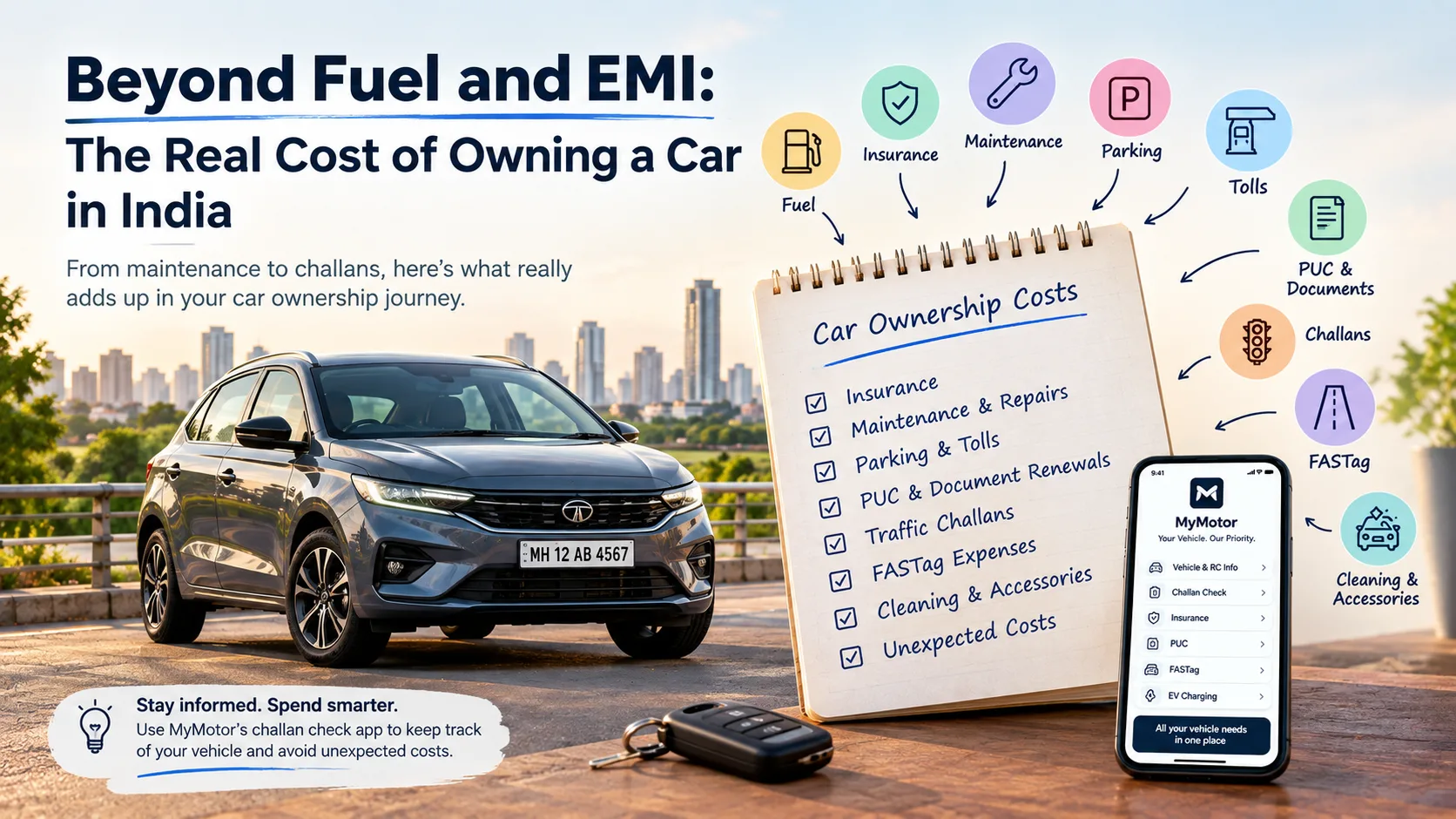
Buying a car is usually budgeted based on the obvious costs the down payment, monthly EMI, fuel and insurance. But the cost of ownership in India can stretch to far beyond those numbers. Paying for parking, tolls, servicing, tyres, battery replacement, document renewals and repairs add up to the yearly bill that a car owner pays for ownership. Traffic challans a cost that is easily overlooked are yet another expense that can catch owners off guard.
This knowledge of the costs that come with car ownership can help people keep track of their annual expenses.
1. Insurance Is an Annual Budget Item
Insurance is one of the costs that should be budgeted for on an annual basis. The premium amount depends on a variety of factors, but missing it due to a forgotten renewal date can lead to more. It is a good idea to keep track of the expiry date of your policy.
2. Maintenance Is Not Just Servicing
Car servicing is not the only aspect of car maintenance.
A number of costs creep up as your car reaches a certain age, such as:
- Tyre replacements
- Battery replacements
- Brake replacements
- Wiper blade replacements
- Air-conditional service
- Unexpected repair costs
While some maintenance costs can be anticipated, some come as a surprise. Keeping an emergency repair budget handy can help you prepare for such costs.
3. Parking Costs Can Be Substantial
Parking costs can pile up especially for people who commute to work regularly. In addition, tolls are an expense that come with regular use of expressways. Keeping track of this expense on a monthly basis can help you understand how much you spend on parking on an annual basis.
4. PUC and Other Vehicle Documents
Vehicles come with a bunch of important documents besides the registration certificate and insurance papers. These usually require renewal every year or so and should be tracked on a yearly basis. The easiest way to keep track is to save a digital copy of the documents and set reminders for their expiry dates.
5. Traffic Challans Are Easily Missed
Traffic challans are not something you generally factor in while preparing your monthly or annual car budget. One unexpected fine, however, can add up to a sizable sum. The best way to stay ahead of this is with a challan checkup. By checking your vehicle’s challan status periodically, you can keep a track of any traffic fine that has been issued against your vehicle (and the reason, if any, for the fine). Checking challans is also a good idea before booking a road trip, selling your vehicle or buying a second-hand car.
6. Tolls: It Is Not All FASTag
If you frequently use expressways, tolls are a part of your car budget. While a FASTag deducts money from your wallet without you having to think about it, it is a good idea to keep a record of toll payments made over a period of several months. This can help you find out how much you spend on tolls every year.
7. Cleanliness: It Is All in the Details
Many car owners overlook a number of small, recurring expenses that go into car ownership. Fuel, servicing, parking and tolls are all big expenses, but the cost of car washes, interior cleaning, stickers, parking subscriptions and minor repairs can add up to a considerable amount. Keeping a note of such expenses on a monthly basis can help you uncover some surprising costs.
A Monthly Budget Works Well
These recurring expenses can be tracked with nothing more than a pen and paper (for a more detailed expense tracker, you can find car budget apps online). You can keep track of monthly expenses such as:
Fuel + parking + tolls + servicing + repairs + insurance + PUC + other expenses
For the management of documents, insurance and other statutory compliances, you can use a vehicle-management app.
MyMotor aggregates a number of car-related services, including information about your vehicle and RC, challan checking, insurance, PUC and FASTag. For car owners who want to go the extra mile, a challan check app can be handy if you want to avoid the hassle of searching for separate websites or apps for car-related tasks.
The point of this budget is not to cut down on expenses, but to understand what you are spending. The most important thing is to know what goes into the cost of car ownership in India and not miss out on any expenses, be they big or small.
The True Cost of Car Ownership
The true cost of car ownership in India isn’t merely EMI and fuel bills – it also includes insurance, service, tyres, battery replacement, parking, tolls, PUC, repair costs and traffic challans. It is a good idea to track recurring expenses and set aside a separate amount for surprise expenses. That way, the EMI that you pay every month only tells you how much it costs to buy the car your total vehicle budget will tell you how much it costs to own the car.