
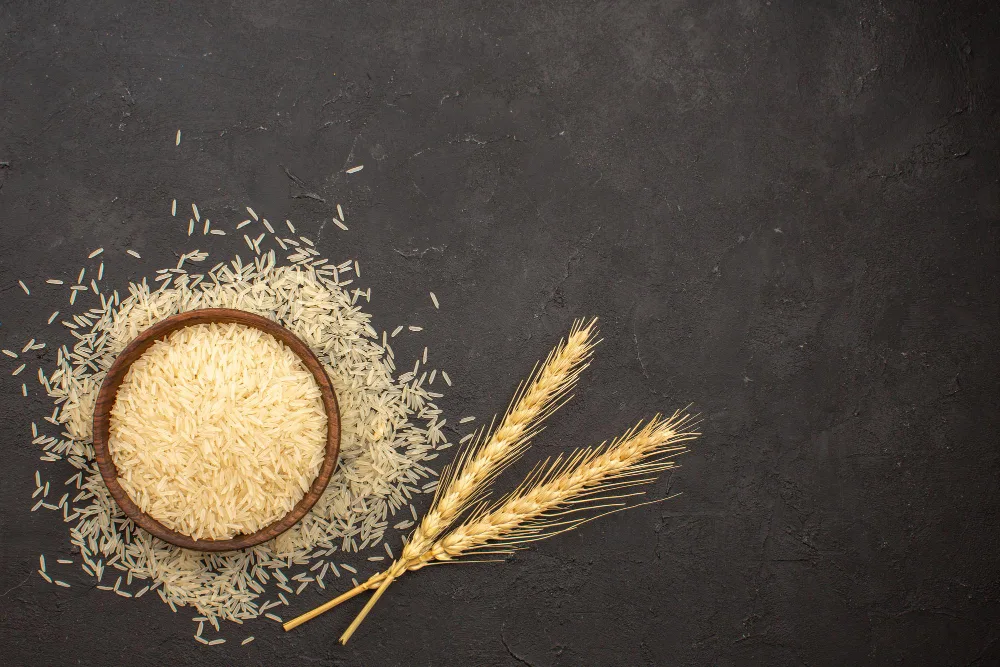
You can tell there's a difference if you've ever cooked two batches of basmati rice side by side, one straight from the mill and the other that has been stored for a year or two. The aged batch smells stronger, cooks up fluffier, and each grain seems to stand on its own instead of clumping together. This isn't some marketing trick. It's actual chemistry happening inside the grain, and it's the reason serious cooks and rice lovers go out of their way to buy aged basmati instead of grabbing whatever's cheapest on the shelf.
What Actually Happens Inside the Grain
Freshly harvested rice is, in a sense, still "green." It carries more moisture, and its starches haven't fully settled. When rice is left to rest — usually anywhere from twelve months to two years, depending on the variety and the supplier's practices — the moisture content drops gradually. As that happens, the starch structure inside the grain tightens up.
This matters a lot when you actually cook the rice. Grains with tighter starch bonds absorb water more evenly during cooking and expand along their length rather than swelling up and breaking apart. That's why properly aged long grain white basmati rice can stretch out dramatically once cooked, sometimes nearly doubling in length, while staying separate and non-sticky. Fresh rice, by comparison, tends to be softer, stickier, and less forgiving if you overcook it even slightly.
The aroma changes too. Basmati is prized for its natural fragrance, largely due to a compound called 2-acetyl-1-pyrroline. During aging, this compound doesn't just survive — it actually becomes more concentrated as moisture evaporates, giving aged basmati that deeper, almost nutty smell that fills the kitchen the moment you lift the lid off the pot.
Why Length and Aging Go Hand in Hand
There's a reason people specifically seek out xxxl basmati rice when they want the aging benefits to really show. The "XXXL" grading refers to the exceptionally long grain length before cooking, and longer grains have more surface area relative to their width, which means the starch realignment during aging has more room to work with. When you cook this kind of rice after it's been aged properly, the elongation is more visible and the texture difference is more noticeable than it would be with shorter or medium-grain varieties. Basically, you're combining two things that both push in the same direction — grain length and aging — to get rice that looks and tastes noticeably premium.
How Aging Is Actually Done
Aging isn't just about leaving sacks of rice in a warehouse and hoping for the best. To avoid mold, pest damage, or uneven drying, it needs a regulated temperature, low humidity, and regular rotation or aeration. Some suppliers age rice in silos with regulated airflow, while smaller producers might use traditional jute sacks stored in cool, dry rooms — a method that's been used for generations in parts of Punjab and Haryana.
The temperature swings between day and night in these storage regions actually help the aging process, slowly drawing moisture out without stressing the grain. Done wrong, though, aging can go the other way — rice can pick up dampness, develop off smells, or attract insects. This is exactly why sourcing from a reliable, premium basmati rice supplier matters more than people often realize. A supplier who understands proper aging techniques and quality control will consistently deliver rice that's dry, fragrant, and free of contamination, whereas rice from an inexperienced source can be inconsistent even if it's technically labeled “aged.”
Tasting the Difference
Cook aged and fresh basmati side by side sometime, if you get the chance. The fresh batch will taste fine — mild, slightly sticky, decent aroma. But the aged batch has more character. The grains separate cleanly with a fork, the smell is richer, and there's a subtle nuttiness in the flavor that fresh rice just doesn't have yet. Chefs in Indian and Middle Eastern kitchens have known this for decades, which is why biryani and pulao recipes almost always call for aged basmati specifically — the dish depends on grains that hold their shape through long cooking times without turning mushy.
There's also a practical side to this. Aged rice tends to cook more predictably. Because the moisture content is lower and more stable, you get a better idea of exactly how much water to add and how long to cook it, without the guesswork that comes with fresher, higher-moisture grains.
What to Look for When Buying
If you're shopping for basmati and want the benefits of aging, a few signs can help. The grains should look uniformly pale, almost translucent, with minimal broken pieces. A faint natural aroma even before cooking is a good sign — overly bland-smelling rice may not have been aged long enough, while anything with a musty or damp smell should be avoided altogether.
Checking where the rice is sourced from also helps. Buying from a supplier who's transparent about aging duration and storage conditions generally means fewer surprises. Good suppliers are usually happy to tell you how long a batch has rested and under what conditions, because that information is part of what justifies the price difference between regular rice and properly aged basmati.
The Bottom Line
Aging isn't just a fancy label slapped onto a bag of rice — it's a real transformation that changes texture, aroma, and cooking behavior for the better. Choosing rice that has had time to develop makes a real difference on the plate, whether you're making a straightforward weekday dish or something more complex like biryani. It's a minor element, but once you see it, it's difficult to return to rice that hasn't had time to fully express its personality.