1. What Is a B2B Loyalty Program?
A B2B loyalty program is a structured rewards and engagement initiative designed specifically for business partners, distributors, wholesalers, dealers, retailers, trade influencers, contractors, gig workers, and other channel participants. Rather than targeting an individual consumer, these programs target corporate entities within a supply chain or sales channel, rewarding them for continued purchases, higher order volumes, sales performance, brand advocacy, and other commercially valuable behaviours.
At its core, a B2B loyalty program converts a purely transactional relationship into a strategic partnership. When partners feel recognised, rewarded, and supported, they prioritise your products over competitors', push harder for sales, open new markets, and refer other high-quality partners into your network.
In plain terms: A B2B loyalty program gives your distributors, dealers, and resellers a compelling, structured reason to choose your brand consistently, backed by data, personalisation, and tangible rewards they actually care about.
Common incentives within B2B loyalty programs include volume discounts, cashback and rebates, points redeemable for merchandise or digital vouchers, tier-based recognition (Silver, Gold, Platinum), early access to new products, exclusive training sessions, dedicated account support, and co-marketing opportunities.
2. How B2B Loyalty Differs from B2C
B2C loyalty programs, airline miles, hotel points, retail stamp cards, are designed for high-volume, low-value, individual consumer transactions. B2B loyalty programs operate in an entirely different dimension: higher stakes, more complex relationships, and decision-making environments involving multiple stakeholders.
DIMENSIONB2B LOYALTYB2C LOYALTYTarget AudienceDistributors, dealers, wholesalersIndividual consumersTransaction ValueHigh, lakhs to croresLow to mediumSales CycleLong, months to yearsShort, hours to daysDecision-MakersMultiple stakeholdersIndividual buyerReward BasisPerformance + volume + advocacyPurchase frequencyPrimary GoalStrategic long-term partnershipRepeat consumer visitsB2B vs B2C loyalty: the structural differences that define program design and partner expectations
4. Seven Types of B2B Loyalty Programs
There is no single template for a B2B loyalty program. The right structure depends on your industry, channel architecture, partner behaviour patterns, and commercial objectives.
1 Points-Based Programs
Partners earn points for every purchase redeemable for merchandise, digital gift vouchers, travel, or cash equivalents. The most universally understood structure, working well as a foundation layer without complex rule sets.
2 Tiered Loyalty Programs
Bronze, Silver, Gold, Platinum tiers offer escalating rewards as partners cross annual spend thresholds. The psychology of progression is powerful, partners can see what the next level unlocks and are motivated to close the gap.
3 Rebate Programs
A percentage of total spend returned as cashback or credit after a defined period. Particularly effective for high-volume, price-sensitive categories where the financial benefit is immediately tangible and easy to calculate.
4 Partner / Coalition Programs
Complementary brands come together so dealers earn and redeem benefits across all partners. Expands perceived value and creates stickier engagement, especially powerful in India's multi-brand dealership landscape.
5 Value-Added Services Programs
Beyond financial rewards, these offer services that help partners run their businesses: dedicated support lines, priority order processing, free technical training, extended warranties, and co-marketing support.
6 Milestone / Target-Based Programs
Partners are rewarded for achieving defined milestones, quarterly sales targets, new customer acquisitions, territory expansion. Creates urgency and channels partner effort towards the outcomes most important to your business.
7 Gamified Loyalty Programs
Leaderboards, challenges, badges, and streak bonuses drive higher engagement, particularly among younger dealers and digital-native channel partners in markets like India where app-based engagement is already high.
5. Why Dealer Loyalty Programs Are Business-Critical
Dealers occupy a uniquely powerful position in most B2B supply chains. They are the commercial bridge between your brand and the end customer. In many categories, pipes and fittings, paints, bath ceramics, electrical components, automotive parts, the dealer's recommendation is the single most influential factor in a customer's purchase decision.
"Dealers are more than just intermediaries in the supply chain, they are essential partners in the success of your brand. When dealers feel appreciated and understood, they are more likely to prioritise your products and actively recommend your brand."
Dealers face a constant choice between competing brands
Most dealers carry products from multiple competing suppliers. Without a compelling reason to prioritise one brand, their recommendations are driven by margin, personal relationships, or stock availability. A loyalty program changes this calculus by giving dealers a persistent financial and emotional incentive to choose your brand consistently.
High dealer churn is commercially devastating
When a dealer switches primary supplier, the revenue impact is immediate and often hard to recover. A loyalty program that builds genuine engagement through milestone recognition, anniversary rewards, and personalised incentives reduces churn materially. Research shows businesses with loyalty programs reduce partner churn by as much as 18%.
Dealers are your best source of market intelligence
Engaged dealers who feel like genuine partners share invaluable on-the-ground intelligence: what customers are asking for, what competitors are offering, which products are being returned, and where the next growth opportunity lies. Loyalty programs that create formal feedback channels unlock this intelligence systematically.
Dealer advocacy is your most credible marketing
A dealer telling a contractor "I recommend this brand, I've been working with them for years and they always support me" is worth more than any advertisement. Loyalty programs cultivate this advocacy deliberately, turning dealers into genuine brand champions rather than neutral intermediaries.
6. How B2B Loyalty Drives Long-Term Partner Retention
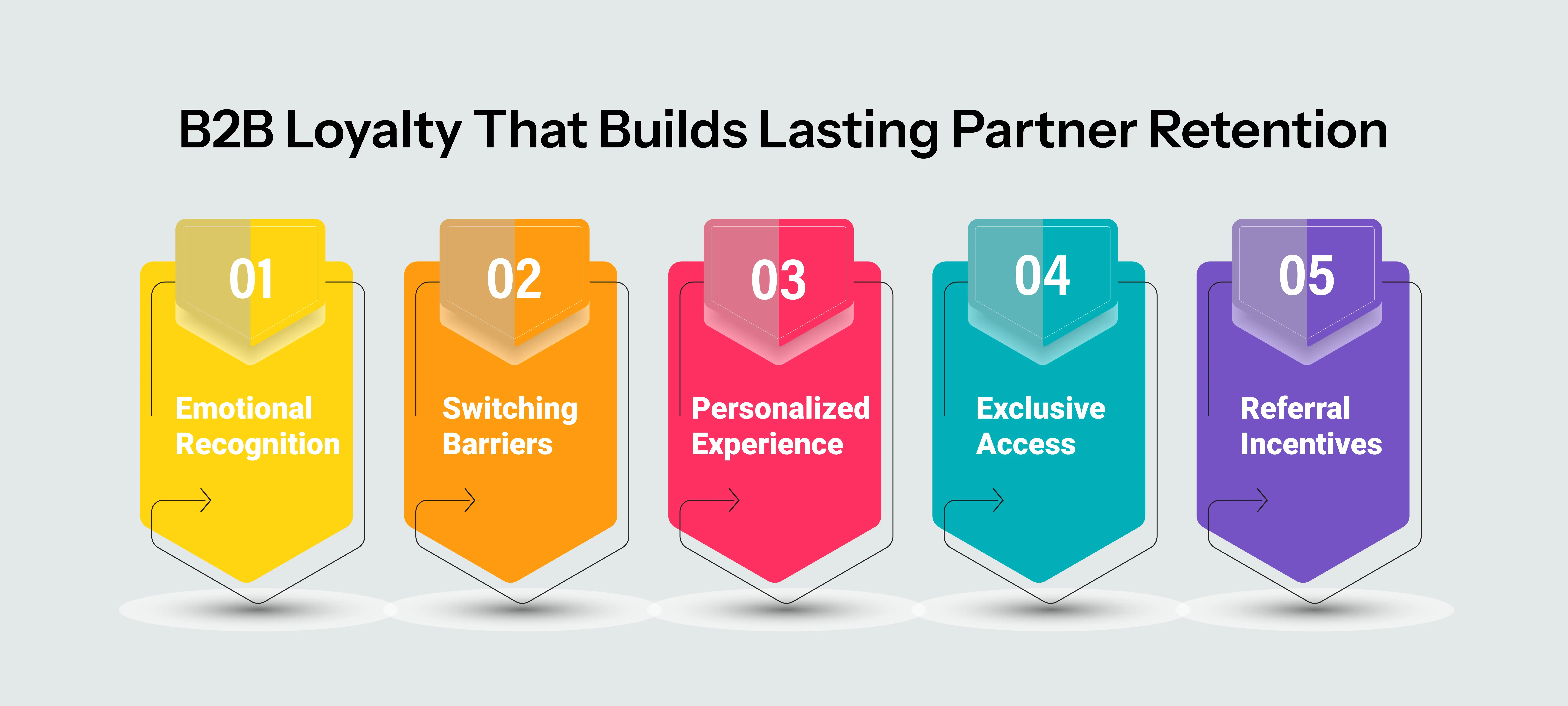
Partner retention is the most direct measure of loyalty program success. Retaining an existing partner is 5 to 10 times more cost-effective than acquiring a new one, and high-retention channel networks deliver more predictable revenue, lower sales overhead, and stronger market coverage.
Emotional investment and recognition
When a business awards a Gold Dealer certificate, celebrates a partner's sales anniversary, or publicly recognises top performers on a leaderboard, it creates an emotional connection that pure financial incentives cannot replicate. Partners who feel genuinely valued do not leave for a slightly better margin elsewhere.
Switching costs created by accumulated benefits
As a partner accumulates points, advances through tiers, and builds a rewards history within your program, the cost of leaving increases. Switching to a competitor means forfeiting unredeemed points, losing tier status, and starting from zero. Well-designed programs build this switching cost deliberately, making loyalty increasingly valuable over time.
Personalisation that makes partners feel understood
Using purchase data to send a dealer a personalised offer on the product category they buy most frequently, timed to coincide with their typical reorder cycle, demonstrates attentiveness and care. The loyalty platform's data engine makes this personalisation scalable across a large dealer network.
Exclusive access that competitors cannot match
Priority access to new product launches, invitation-only dealer conferences, dedicated account manager support, these exclusivities create a sense of belonging to an elite network that partners are reluctant to leave.
Referral incentives that build network loyalty
Rewarding partners for referring other high-quality dealers into your network creates a powerful retention dynamic: a partner who has recruited others has both a financial interest and a reputational stake in your brand's performance.
7. Industry Applications: From Plumbing to FMCG
B2B loyalty programs must reflect the specific dynamics of each industry. Here is how leading sectors apply them to drive growth:
Plumbing & Building Materials
By rewarding contractors for repeat product specifications, offering training certifications, and providing priority technical support, plumbing brands convert dealers from neutral stockists into active brand advocates. Points programs, rebates, and value-added service programs offering technical training and priority support are all highly effective in this sector.
FMCG and Consumer Goods
In FMCG, where distributor networks are large and constantly targeted by competing brands, loyalty programs create structured, sustained engagement. Tier-based programs rewarding consistent monthly offtake, gamified challenges driving new product adoption, and digital-first platforms enabling instant UPI-based reward redemption are all highly effective.
Automotive and Auto Parts
Dealer loyalty in automotive is particularly high-stakes given the lifetime value of a single dealership relationship. Programs combine volume-based rebates with recognition programs, exclusive access to new model launches, and co-branded marketing support. Gamified monthly performance leaderboards drive healthy competition within dealer networks.
Pharmaceutical and Healthcare
Non-monetary rewards, educational resources, CME credits, conference participation, and professional development tools, are particularly effective in pharma and align with industry compliance requirements. Technology-enabled tracking ensures program integrity and provides audit-ready reporting.
8. B2B Loyalty Programs in India: Trends & Opportunities
India's B2B landscape is undergoing a profound transformation. With a rapidly expanding economy, a digitising distribution ecosystem, and increasingly sophisticated channel partners across every tier, the case for structured B2B loyalty programs has never been stronger.
Mobile-First Engagement UPI & Digital Wallet Integration Gamification Sustainability Rewards AI-Powered Personalisation
Mobile-First and WhatsApp-Driven Programs
With over 500 million smartphone users and WhatsApp penetration extending into Tier-3 markets, Indian loyalty programs are increasingly delivered through mobile apps and WhatsApp-based engagement. WhatsApp loyalty engines enable businesses to send targeted campaign messages in regional languages, dramatically increasing engagement rates in non-metro markets.
UPI and Digital Wallet Integration
Instant redemption through UPI, PhonePe, Paytm, and other digital wallets has transformed the loyalty value proposition for Indian dealers. Same-day reward crediting directly into a partner's preferred digital wallet creates an immediate, tangible sense of reward that drives programme participation and repeat engagement.
Gamification Driving Competitive Engagement
Leaderboards, monthly performance contests, product knowledge quizzes with instant rewards, and milestone badges are generating higher participation rates in Indian dealer networks than traditional scheme structures. The competitive instinct is strong among Indian business owners, and well-designed gamification channels that energy productively.
Sustainability-Linked Rewards
A growing segment of Indian businesses is responding positively to sustainability-linked loyalty rewards: tree plantation credits, eco-friendly product incentives, and participation in circular economy schemes. Brands aligning loyalty programs with CSR goals build deeper emotional connections with a new generation of channel partners.
9. How to Design and Launch a B2B Loyalty Program
A loyalty program is only as effective as its design. Here is a proven 7-step framework for building one that works.
1 Define Clear, Measurable Objectives
Start by answering: what specific business outcomes do we want this program to drive? Partner retention? Higher order values? New product adoption? Market expansion? Clear objectives dictate the rewards structure, communication strategy, and success metrics before a single rupee is spent.
2 Segment Your Partner Base
Segment by annual spend tier, geographic region, product category focus, and growth potential. Design reward structures meaningfully relevant to each segment. A large distributor and a small retailer have fundamentally different needs and motivations.
3 Design a Tiered Reward Structure
Build a progression framework, typically three to four tiers, where higher performance unlocks more valuable benefits. Set thresholds that are ambitious but achievable, ensuring a meaningful percentage of your current partner base qualifies for at least Bronze tier from launch.
4 Choose Rewards That Partners Actually Want
Research your dealer network before finalising the reward catalogue. In India, digital vouchers and UPI cashback work universally. Travel rewards motivate higher-tier partners. Product and tool rewards resonate in technical trades. Personalisation directly impacts participation rates.
5 Select the Right Technology Platform
The platform must handle partner onboarding, purchase tracking (including QR code-based field validation), reward calculation, tier management, redemption processing, and real-time analytics, seamlessly, at scale. Mobile-first design is non-negotiable in the Indian context.
6 Build a Communication and Engagement Calendar
Build a structured calendar: welcome communications at enrolment, monthly statements, personalised milestone alerts, campaign notifications. Use the partner's preferred channel, WhatsApp, SMS, email, or app notification, to maximise engagement.
7 Measure, Optimise, and Evolve
Set KPIs before launch: partner enrolment rate, active participation rate, monthly redemption rate, tier progression velocity, incremental revenue, and net promoter score. Review monthly and quarterly. A loyalty program is a living commercial tool, treat it as such.
10. AI, Technology & Future Trends in B2B Loyalty
The next generation of B2B loyalty programs is being shaped by artificial intelligence, blockchain, and omnichannel integration. Businesses investing in these capabilities today are building competitive advantages that will compound over the next decade.
AI-Powered Personalisation at Scale
Machine learning algorithms analyse a dealer's historical purchase patterns, seasonal behaviour, and engagement history to generate hyper-personalised reward recommendations in real time. Predictive analytics can identify partners at risk of churn weeks before they disengage, enabling proactive retention interventions.
Automated Reward Systems Eliminating Administrative Friction
Modern loyalty platforms automate the entire process from QR code scan at point-of-purchase through to reward credit in a partner's digital wallet, often within minutes. This eliminates errors and delivers the immediacy that makes rewards feel genuinely gratifying rather than bureaucratic.
Omnichannel Loyalty Experiences
Future-ready loyalty programs deliver a unified experience across all touchpoints, field sales visits, brand websites, ordering apps, WhatsApp, and dealer events. Points earned in one channel are visible across all others, and redemption is possible through any preferred interface.
Blockchain for Transparency and Trust
Blockchain technology offers a tamper-proof, transparent ledger for loyalty transactions, eliminating disputes about point calculations, ensuring reward fulfilment integrity, and providing audit-ready records. Smart contracts automate complex reward rules without requiring manual verification.
Sustainability Integration
Brands rewarding partners for sustainable purchasing behaviours, eco-friendly product variants, take-back schemes, or green certifications, are building loyalty programs that resonate with values, not just wallets. This strengthens the emotional dimension of the brand-partner relationship in ways purely financial programs cannot.
Conclusion: B2B Loyalty Programs Are a Growth Strategy, Not Just a Marketing Tactic
The evidence is unambiguous: businesses that invest in structured, data-driven B2B loyalty programs consistently outperform those that rely on ad-hoc discounting and transactional channel relationships. By building genuine engagement with distributors, dealers, and trade partners, through personalised rewards, tier-based recognition, exclusive access, and digital convenience, loyalty programs convert channel partners from neutral intermediaries into committed brand champions.
Whether you are a plumbing supplies manufacturer looking to strengthen contractor loyalty, an FMCG company seeking to improve distributor retention across Tier-2 markets, or an automotive brand aiming to deepen dealer engagement nationally, the principles are consistent: understand your partners' needs deeply, design rewards that genuinely resonate, leverage technology to deliver at scale, and treat the program as a long-term strategic investment rather than a short-term promotional tool.
In India's rapidly evolving B2B landscape, where digital adoption is accelerating and channel competition is intensifying, the window to establish loyalty program advantage is wide open. The businesses that act now will compound the returns from engaged, motivated, and growing channel partnerships for years to come.