
Market Overview
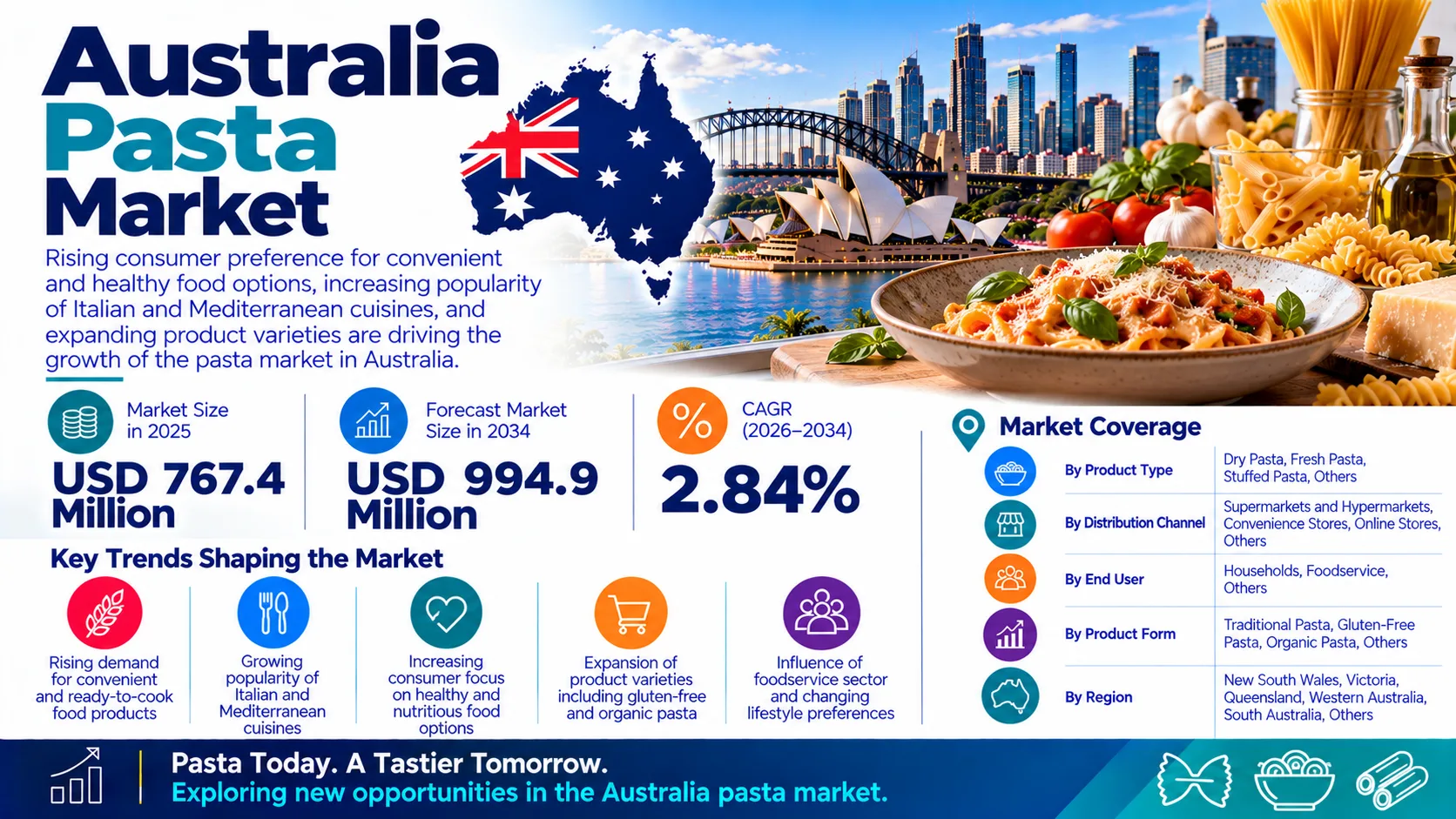
The Australia pasta market is growing steadily, driven by rising demand for diverse noodle types, premium products, convenient meal options, cultural influences, online retail expansion, and interest in specialty and health-focused pasta varieties. The market size reached USD 767.4 Million in 2025 and is projected to reach USD 994.9 Million by 2034, registering a compound annual growth rate (CAGR) of 2.84% during 2026-2034. Enhanced focus on regional noodle varieties, automated fulfilment infrastructure, and health-focused alternatives including whole grain, gluten-free, and high-protein pasta are further shaping the Australia pasta market share and outlook through 2034.
Request a Sample Report for In-Depth Market Insights: https://www.imarcgroup.com/australia-pasta-market/requestsample
Market Summary
- Rising demand for regional varieties, supported by Australia's multicultural demographic makeup and broader acceptance of global food experiences, is increasing demand for rice noodles and specialty offerings and intensifying competition among brands, with the market focused on diverse product types for varying consumer palates.
- A competitive landscape including Barilla, F.lli De Cecco di Filippo, Giovanni Rana, Just Pasta Australia, L'Abruzzese, Pasta Di Porto, Pastificio Lucio Garofalo, Pastificio Sandro, Roma Food Products, San Remo, and Vetta is driving product innovation across dried, chilled/fresh, and canned/preserved categories.
- Tech-driven expansion of premium access is reshaping distribution, with Coles launching its first automated Customer Fulfilment Centre in Truganina, Melbourne in September 2024, featuring artisan products from Lello Pasta in its expanded online range.
- Health-focused pasta options are driving demand, with consumers moving away from conventional refined pasta toward whole grain, gluten-free, and high-protein options made from quinoa, brown rice, and legumes.
- Cultural diversity in food habits, convenience and busy lifestyles, and retail and e-commerce expansion are shaping long-term demand across supermarkets, hypermarkets, discounters, independent small groceries, and online stores.
- The market is segmented by product type, raw material, distribution channel, and region for 2026-2034, with dried pasta, durum wheat semolina, and supermarkets comprising core categories.
Market Growth Drivers
Cultural Diversity in Food Habits
Australia's multicultural landscape has significantly influenced food consumption trends, making pasta a staple in numerous households. The strong footprint of Italian cuisine alongside the integration of global flavors has inspired consumers to try various pasta types and recipes. Beyond classic Italian preparations, pasta is being reimagined within different culinary traditions catering to a broad audience. Both restaurants and home cooks are opting for high-quality and gourmet pasta indicative of shifting taste trends. The cultural acceptance of international foods also fosters a desire for healthier and more innovative pasta options such as organic and plant-based varieties, underscoring how cultural diversity consistently drives Australia pasta market demand.
Convenience and Busy Lifestyles
The rapid pace of life in Australia is significantly increasing the need for convenient meal solutions, with pasta becoming a favored option. Quick-cooking and ready-to-eat pasta products resonate with working professionals, students, and busy families looking for efficient meal options that do not sacrifice flavor. Packaged pasta dishes, instant pasta cups, and frozen varieties provide both convenience and cost-effectiveness, aligning well with contemporary consumer preferences. Innovations in packaging and serving sizes are improving product availability, especially for those consuming on the move. The growing preference for convenience-focused foods is expected to remain a key driver of market growth in the years ahead.
Expansion of Retail and E-Commerce
The extensive distribution of pasta through supermarkets, specialty shops, and online platforms has greatly improved accessibility for Australian consumers. Major retailers are expanding their pasta selections, offering a blend of mainstream, gourmet, and health-oriented products. Simultaneously, e-commerce is becoming more popular, enabling consumers to explore a wide range of pasta brands and types from the comfort of their homes. Subscription services and online-exclusive promotions are further expanding product availability and encouraging repeat purchases. This expansion in distribution supports established brands and opens doors for niche and artisanal pasta makers to reach larger markets, with the synergy of traditional and digital retail channels crucial in shaping the industry landscape.
Porter's Five Forces Analysis
Competitive Rivalry: High
- Barilla, F.lli De Cecco di Filippo, Giovanni Rana, San Remo, Vetta, and other established brands alongside niche and artisanal makers are competing on price, product range, and brand heritage.
- Competition spans dried, chilled/fresh, and canned/preserved pasta across mainstream, gourmet, and health-oriented segments.
- Product innovation in regional varieties, health-focused formulations, and premium positioning are key points of differentiation.
Supplier Power: Moderate to High
- Durum wheat semolina, wheat, barley, rice, and maize suppliers hold influence over input costs and product quality.
- Gluten-free and high-protein raw material suppliers gain importance as health-focused demand expands.
- Packaging and logistics providers influence product availability and shelf-life across distribution channels.
Buyer Power: High
- Consumers can compare and switch products easily across supermarkets, hypermarkets, discounters, independent small groceries, and online stores.
- Price sensitivity is high in staple segments, though willingness to pay premiums grows for gourmet, health-focused, and specialty varieties.
- Demand for convenience formats, dietary-specific options, and authentic regional varieties is raising expectations for product range.
Threat of Substitutes: Moderate
- Rice, noodles, bread, and other carbohydrate staples provide substitutes across meal occasions.
- Alternative grain-based products including quinoa and legume pasta substitute within the health-focused segment.
- Convenience meals and ready-to-eat alternatives compete for time-pressed consumers, though pasta's versatility and cost-effectiveness sustain demand.
Threat of New Entrants: Moderate
- E-commerce platforms and online-exclusive promotions are lowering entry barriers for niche and artisanal pasta makers.
- Brand establishment, retail distribution access, and food safety compliance raise operational barriers.
- Established brands with retail relationships, manufacturing scale, and brand recognition favor incumbents.
Market Segmentation
Product Type Insights
- Dried Pasta
- Chilled/Fresh Pasta
- Canned/Preserved Pasta
- Others
Raw Material Insights
- Durum Wheat Semolina
- Wheat
- Mix
- Barley
- Rice
- Maize
- Others
Distribution Channel Insights
- Supermarkets
- Hypermarkets
- Discounters
- Independent Small Groceries
- Online Stores
- Others
Regional Insights
- Australia Capital Territory & New South Wales
- Victoria & Tasmania
- Queensland
- Northern Territory & Southern Australia
- Western Australia
Regional Analysis
Australia Capital Territory & New South Wales: This region represents the largest pasta market in Australia, anchored by Sydney and Canberra, reflecting dense urban populations, multicultural demographics, and strong demand across supermarkets, hypermarkets, and online channels. The region's diverse consumer base and concentration of retail infrastructure support demand for both mainstream and specialty pasta varieties, including Asian noodle formats.
Victoria & Tasmania: Victoria & Tasmania has a mature pasta market, supported by Melbourne's multicultural food culture and strong specialty retail presence. The region's openness to global culinary trends is evidenced by Tam Jai International launching its first Australian franchised restaurant, "TamJai Mixian," in Melbourne in November 2024, introducing Hong Kong-style mixian rice noodles to the local market.
Queensland: Queensland ranks among the higher-growth regions, supported by population expansion, growing metropolitan retail, and rising disposable incomes across Brisbane and the Gold Coast. Warm-climate demand for lighter pasta and noodle options, alongside expanding supermarket and online channels, supports category growth.
Northern Territory & Southern Australia: Northern Territory & Southern Australia has mid-range demand, with urban centres in Adelaide supporting supermarkets, discounters, and independent small groceries, while regional and remote populations rely increasingly on e-commerce for brand and variety access.
Western Australia: Western Australia has a growing pasta market, with Perth's expanding population and retail infrastructure supporting demand across mainstream, gourmet, and health-oriented segments. Online stores are particularly important for reaching consumers across the state's vast geography.
Competitive Landscape
The Australia pasta market features a competitive landscape of established global brands, domestic manufacturers, and niche artisanal producers competing across product type, raw material, distribution channel, and region. Competition is being shaped by brand heritage, product innovation in regional varieties and health-focused formulations, premium positioning, and distribution reach across traditional and digital retail channels. The report covers market structure, key player positioning, top winning strategies, competitive dashboard, and company evaluation quadrant, along with detailed profiles of all major companies.
Key players include:
- Barilla G. e R. F.lli S.p.A.
- F.lli De Cecco di Filippo S.p.A
- Giovanni Rana
- Just Pasta Australia Pty Ltd
- L'Abruzzese
- Pasta Di Porto
- Pastificio Lucio Garofalo S.p.A
- Pastificio Sandro
- Roma Food Products
- San Remo
- Vetta
Recent Industry Developments
- September 2026: NSW pasta producer Duro Pasta wins the Sydney Royal Champion Dried Pasta award for the second consecutive year. South Nowra-based Duro Pasta received the Champion Dried Pasta title at the 2026 Sydney Royal Fine Food Show for its Gigli product, following the same achievement in 2025. Seven of the company's eight entries received medals, including two gold awards. The producer makes its pasta using semolina from Australian-grown durum wheat sourced in Northern NSW and traditionally extrudes and slowly dries its products. Duro also reported that its products were available through more than 120 retailers across NSW, Victoria and Queensland. The recognition highlights the growing visibility of locally manufactured premium pasta and Australian-grown ingredients.
- June 2026: Industry research highlights the importance of domestic pasta production and imported supply. Euromonitor's Pasta and Noodles in Australia industry report identified imports as accounting for 50.5% of the combined pasta and noodles market in 2025. Household consumption represented 74.4% of total demand, while San Remo Macaroni Co held 26.7% of domestic industry production value. The report also noted that Australia had 549 companies operating in the industry and that the top five producers accounted for 43% of production value. These findings highlight the competitive position of domestic manufacturers and the opportunities associated with local production, product differentiation and supply-chain development.
Key Aspects Required for the Australia Pasta Market
- Market Performance: The market reached USD 767.4 Million in 2025 and is projected to reach USD 994.9 Million by 2034, driven by demand for diverse noodle types, premium products, convenience options, cultural influences, and health-focused varieties.
- Market Outlook: A 2.84% CAGR during 2026-2034 reflects steady expansion supported by regional variety innovation, automated retail infrastructure, health-focused alternatives, and e-commerce growth.
- Growth Drivers: Cultural diversity in food habits; convenience and busy lifestyles; and expansion of retail and e-commerce, together shaping long-term demand.
- Competitive Landscape: Barilla, F.lli De Cecco di Filippo, Giovanni Rana, San Remo, Vetta, and other established brands alongside niche and artisanal makers are competing on price, product range, and brand heritage.
- Value Chain Analysis: The value chain runs from durum wheat semolina, wheat, barley, rice, and maize suppliers through pasta manufacturers and brands to supermarkets, hypermarkets, discounters, independent small groceries, and online stores serving consumers across Australian regions, supported by automated fulfilment infrastructure and digital retail platforms.
- Industry Trends: Rising demand for regional varieties including rice noodles; tech-driven expansion of premium access through automated fulfilment; and health-focused pasta options including whole grain, gluten-free, and high-protein varieties.
- Strategic Recommendations: Invest in regional and specialty noodle varieties reflecting multicultural demand; expand health-focused portfolios across whole grain, gluten-free, and high-protein segments; strengthen online and automated fulfilment partnerships; and develop premium and gourmet offerings to capture shifting consumer preferences.
Note: If you need any specific information that is not covered currently within the scope of the report, we will provide the same as a part of customization.
Speak to an analyst: https://www.imarcgroup.com/request?type=report&id=32922&flag=C
Frequently Asked Questions
1. What is the size of the Australia pasta market?
The market was valued at USD 767.4 Million in 2025 and is projected to reach USD 994.9 Million by 2034.
2. What is the expected growth rate of the Australia pasta market?
The market is projected to grow at a CAGR of 2.84% during 2026-2034.
3. What is driving the growth of the Australia pasta market?
Growth is driven by increasing disposable incomes, rising popularity of premium food experiences, greater exposure to global cuisines through travel and media, expanding foodservice outlets, innovations in frozen and chilled pasta categories, cultural diversity in food habits, convenience needs, and retail and e-commerce expansion.