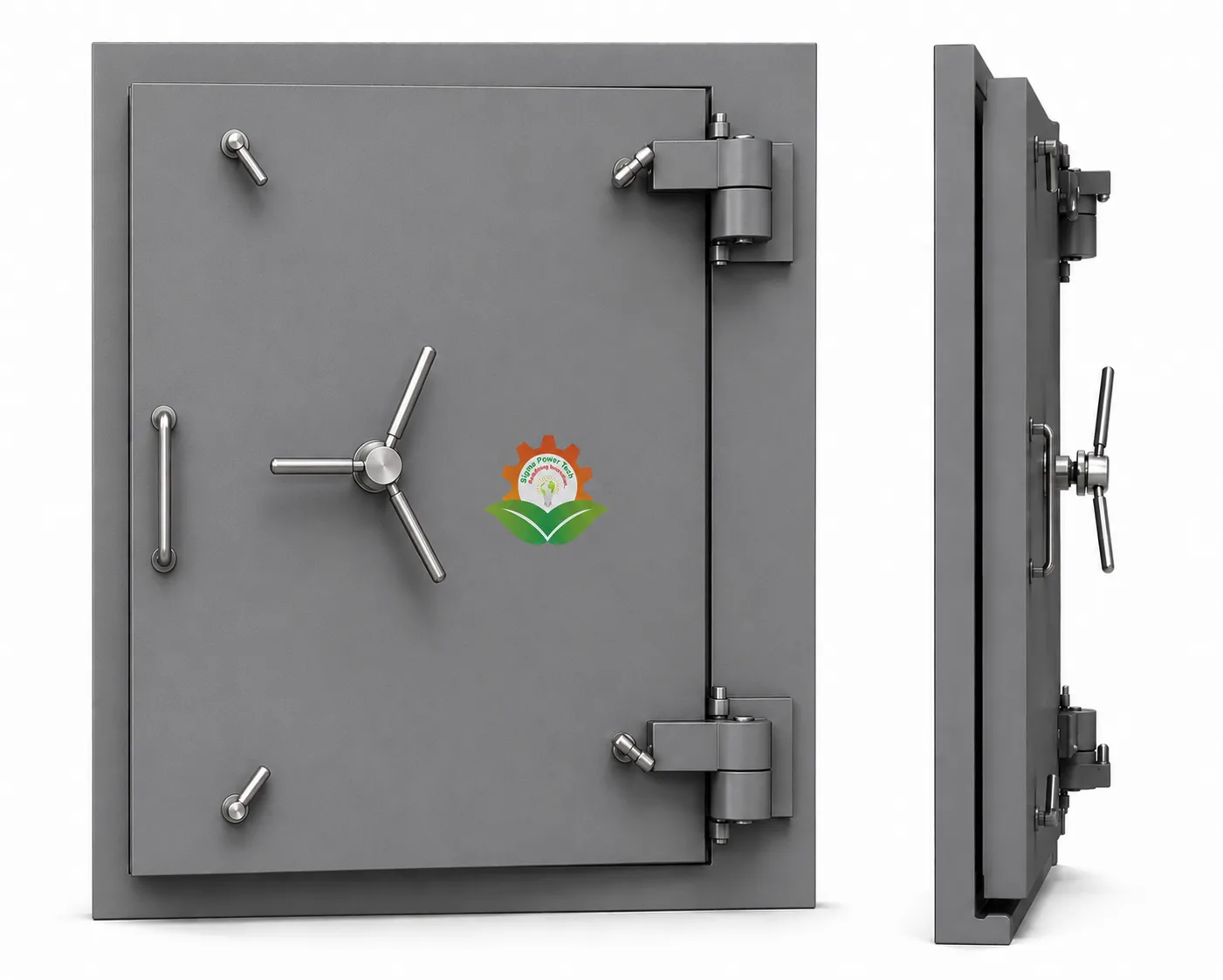
Blast proof door specifications in India's defence, refinery, and critical infrastructure projects often raise this question: do these doors also block noise? The answer is nuanced. A blast proof door engineered for 0.5–26 bar overpressure provides significant sound attenuation (STC 35–50) due to its solid steel construction, but it's not optimized for acoustic isolation like purpose-built soundproof doors (STC 60+). This article explains the engineering overlap, where limitations exist, and how Indian facility managers can specify doors that meet both blast and acoustic requirements.
A blast proof door achieves STC 35–45 naturally from 8–25mm steel plates and hermetic seals, blocking 85–95% of mid-frequency noise. For STC 50+ acoustic performance, add acoustic insulation core, laminated glass viewing ports, and acoustic gaskets—increasing blast door price by 15–25% and requiring 2–3 weeks additional lead time.
Engineering Overlap: Why Blast Doors Block Noise Naturally
Blast proof doors and soundproof doors share fundamental engineering principles: mass, density, and airtight sealing. A blast door's 8–25mm solid homogeneous steel plate with I-beam reinforcement provides the mass needed to block sound waves. Hermetic seals that close within 2–5 milliseconds during blast events also prevent sound leakage around door edges.
The physics works like this:
Mass law — Sound attenuation increases with surface density. A 12mm steel plate (94 kg/m²) blocks significantly more sound than a 2mm commercial door (15 kg/m²). This is why blast proof doors naturally achieve STC 35–45
Sealing performance — Blast door hermetic seals (EPDM or silicone) create an airtight barrier when closed. Air gaps are the primary path for sound leakage; eliminating them improves STC rating by 10–15 points
Damping — Internal I-beam stiffeners in blast doors add structural damping, reducing vibration transmission that carries sound. However, steel resonates at certain frequencies, limiting high-frequency attenuation
Core construction — Standard blast doors use solid steel cores (no hollow chambers), eliminating sound transmission paths through air cavities. Some manufacturers offer acoustic-insulated cores with mineral wool or foam for STC 50+
Sigma Power Tech Blast Door systems achieve STC 40–45 in standard configuration. For projects requiring higher acoustic performance (recording studios, hospital ICUs, conference rooms near generators), double-leaf blast doors with acoustic gaskets and laminated glass viewing ports can reach STC 50–55.
Technical Reality: A blast proof door blocks construction noise (80–90 dB), traffic noise (70–80 dB), and machinery noise (85–95 dB) effectively. However, it won't match dedicated soundproof doors for studio-grade isolation (STC 60+, blocking 99% of sound).
Where Sound Requirements Matter in Indian Projects
Different Indian facilities have varying acoustic needs alongside blast protection. Defence installations (DRDO, military bases) and PSU refineries (Indian Oil, BPCL, NTPC) prioritize blast rating over acoustics—noise control is secondary. However, hospitals (AIIMS Jammu), commercial towers (DLF, Lulu Mall), and VIP residences require both security and quiet environments.
High-security government offices in Delhi and Mumbai need blast protection but also require speech privacy for classified discussions. Recording studios near airports, hospital ICUs near Generator rooms, and conference rooms in corporate towers need STC 50+ isolation. A 2.5m × 2.5m blast proof door at 10 bar rating can be upgraded with acoustic insulation without compromising STANAG 2280 certification, provided the core steel thickness (12–25mm) remains unchanged.
Blast proof door manufacturers in India like Sigma Power Tech offer hybrid solutions: acoustic gaskets (adding ₹5,000–₹10,000 per door), mineral wool insulation core (adding ₹8,000–₹15,000/sqm), and laminated acoustic glass viewing ports (adding ₹12,000–₹20,000 per m²). These upgrades extend lead time from 6–10 weeks to 8–12 weeks.
For blast resistant doors with acoustic requirements, specify STC rating alongside blast rating. A door rated 5 bar + STC 45 costs ₹1.8–2.4 lakh (2m × 2.2m), while 5 bar + STC 55 costs ₹2.4–3.1 lakh. The 10-point STC increase reduces transmitted noise by 50%.
Common Mistakes When Specifying Blast + Acoustic Doors
Facility managers and consultants frequently make specification errors that compromise either blast performance or acoustic isolation:
Mistake 1: Assuming blast rating equals acoustic rating
A 26 bar blast door doesn't automatically provide STC 60. Steel resonates at 500–2000 Hz frequencies, limiting high-frequency attenuation. Without acoustic insulation core and specialized gaskets, blast doors max out at STC 45. For STC 55+, explicitly specify acoustic upgrades in procurement documents.
Mistake 2: Ignoring viewing port acoustic weak points
Standard blast door viewing ports use 10–15mm polycarbonate (STC 25–30), creating acoustic flanking paths. A 0.3m × 0.6m window in an STC 45 door reduces overall performance to STC 35. For acoustic requirements, specify laminated acoustic glass (12.7mm PVB interlayer, STC 45 per m²) or eliminate viewing ports entirely.
Mistake 3: Overlooking threshold and frame sealing
Blast door thresholds are designed for pressure sealing, not acoustic isolation. Standard rubber thresholds leak 10–15% of sound at floor level. Acoustic upgrades require adjustable aluminum thresholds with silicone gaskets (adding ₹8,000–₹12,000 per door). Frame-to-wall gaps must be filled with acoustic sealant (ASTM C920) to prevent flanking.
For a deeper technical overview of blast proof door, including relevant engineering specifications and standards, review the Blast proof door resource from Sigma Power Tech.
Q: Are blast proof doors soundproof, and what STC rating do they achieve?
A: A blast proof door is a reinforced steel barrier engineered to withstand explosive pressure waves from 0.5–26 bar overpressure using solid homogeneous steel plates (8–25mm). Standard blast proof doors achieve STC 35–45 naturally, blocking 85–95% of mid-frequency noise. With acoustic insulation core and gaskets, they reach STC 50–55, but dedicated soundproof doors achieve STC 60+.
Q: What standards apply to acoustic blast doors in India?
A: Acoustic blast doors must meet STANAG 2280 (NATO) for blast certification, ISO 140-3 for sound transmission class testing, and NBC 2016 Part 4 for fire safety. STC ratings are measured per ISO 140-3. For acoustic upgrades, specify STC 50+ with ASTM C920 acoustic sealant at frame-to-wall joints.
Q: How much do acoustic upgrades add to blast door price and lead time?
A: Acoustic upgrades add 15–25% to blast door price and 2–3 weeks to lead time. Acoustic gaskets add ₹5,000–₹10,000 per door, mineral wool insulation adds ₹8,000–₹15,000/sqm, and laminated acoustic glass adds ₹12,000–₹20,000 per m². Total delivery is 8–12 weeks for acoustic blast doors vs. 6–10 weeks for standard.