Sunscreen is one of the most studied skincare products in existence, and somehow also one of the most misunderstood. Bad information spreads fast — a scary headline about chemicals, a half-remembered fact about vitamin D — and the result is people skipping protection they actually need.
Why These Myths Stick Around
Most sunscreen myths survive because they contain a grain of truth wrapped in a wrong conclusion. SPF numbers really do measure something real — just not what people assume. Vitamin D really does come from sun exposure — but that doesn't mean sunscreen causes deficiency. And "waterproof" was printed on actual bottles for years before regulators banned the term. Add in marketing that overpromises and social media that rewards scary claims over boring facts, and you get a product everyone has heard of and almost nobody uses correctly. Here are seven myths worth retiring for good.
Myth 1: SPF 100 Means You're Protected All Day
SPF measures how long it takes UVB rays to burn your skin compared to unprotected skin — not a timer for the day. SPF 30 blocks about 97% of UVB, SPF 50 about 98%, and SPF 100 about 99%. Notice how small those gaps are. The bigger problem: high SPF gives people false confidence. Research consistently shows that people using SPF 100 stay out longer and reapply less, ending up with more sun exposure, not less. Whatever number you choose, the two-hour reapplication rule still applies.
Myth 2: Dark Skin Doesn't Need Sunscreen
Higher melanin does provide some natural protection — roughly equivalent to SPF 13 — but that's nowhere near enough. Skin cancer in darker skin tones is often diagnosed later, at more advanced stages, partly because of this exact myth. Everyone also benefits from protection against photoaging, hyperpigmentation, and melasma, which sunscreen helps prevent regardless of skin tone. The only real difference is practical: mineral sunscreens can leave a white cast on deeper skin tones, so tinted formulas or chemical filters are often the more comfortable choice.
Myth 3: Makeup With SPF Is Enough
SPF in foundation or moisturizer is real protection — but only if you apply the full tested amount, which for makeup would be far more than anyone actually wears. Most people apply a fraction of what's needed, so the effective protection drops sharply. Think of SPF makeup as a bonus layer, not your primary defense. Apply proper sunscreen first, let it set for a minute or two, then do your makeup on top. If you want midday touch-ups, SPF powders exist, but they're a supplement, not a replacement.
Myth 4: You Can't Burn on a Cloudy Day
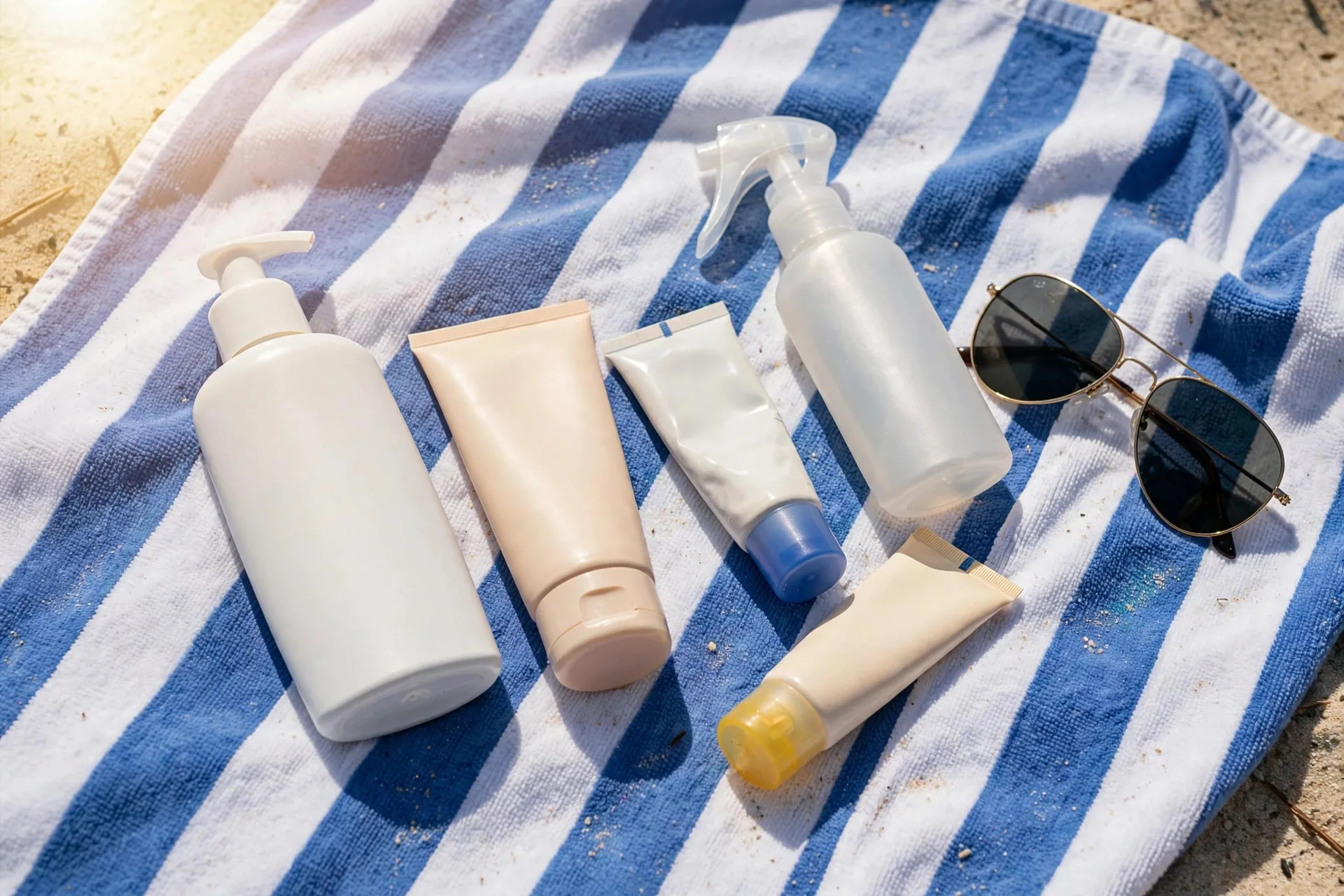
Up to 80% of UV radiation passes through cloud cover. Overcast skies scatter the light, which actually makes it harder to notice you're burning — there's no bright glare warning you to seek shade. Some of the worst burns happen on cloudy beach days for exactly this reason. If you're outside for more than a few minutes, apply sunscreen regardless of what the sky looks like. Snow, sand, and water reflect UV too, multiplying exposure on supposedly gloomy days.
Myth 5: Sunscreen Causes Vitamin D Deficiency
This one sounds plausible, which is why it persists. In theory, blocking UVB reduces vitamin D synthesis. In practice, studies of real-world sunscreen users — including outdoor workers who apply it daily — don't show lower vitamin D levels than non-users. Nobody applies or reapplies perfectly, so enough UV gets through for normal synthesis. And if you're concerned, vitamin D is easily managed through diet and supplements, which don't come with a skin cancer risk attached. It's a solvable problem either way.
For a deeper look at how different formulas and ingredients actually work, there are thorough
that walk through the science without the hype — worth a read if you want to separate evidence from marketin marketing.
Myth 6: "Waterproof" Sunscreen Exists
It doesn't, and regulators know it. In the US, the FDA banned the term "waterproof" on sunscreen labels years ago; what you'll see instead is "water-resistant (40 minutes)" or "water-resistant (80 minutes)." That number is how long the protection holds during swimming or sweating — after that, or after toweling off, you need to reapply. Anyone selling "all-day waterproof" protection is selling fiction.
Myth 7: One Morning Application Lasts All Day
Sunscreen degrades with UV exposure and wears off through touching your face, sweating, and general movement. A single morning layer is mostly gone by lunch. The standard guidance — reapply every two hours outdoors, and immediately after swimming, heavy sweating, or toweling — exists because that's how long the protection actually lasts. If reapplying over makeup feels impossible, that's what SPF setting sprays and powders are for.
The Bottom Line
Every one of these myths has the same effect: less protection than you think you have. Sunscreen works, but only the way it's actually meant to be used — enough of it, reapplied on schedule, on every exposed area. Get those basics right and you can ignore the noise.