Business signage is often judged in seconds.
A customer may walk past a shop, enter a reception area, visit a clinic, or attend an exhibition stand without thinking too deeply about the materials used in the signage. Still, the sign leaves an impression. It can make the business look clear and established, or it can make the place feel unfinished.
That is why 3D acrylic letters are widely used in Dubai for storefronts, reception walls, office branding, showroom displays, mall signs, and event backdrops. They give a business name more depth than flat printing, while still keeping the look clean and modern.
For many businesses, the goal is simple: make the brand easy to notice, easy to read, and easy to remember.
Why 3D acrylic letters are popular
Acrylic works well for signage because it has a clean surface, sharp edges, and strong visual clarity. It can be cut into letters, logos, symbols, and custom shapes. It can also be finished in different colors, thicknesses, and lighting styles.
Compared with a flat printed board, raised acrylic letters often feel more permanent. They add shadow, depth, and structure to the wall or signboard. This can make a shopfront, reception desk, or brand wall look more professional without making the design too heavy.
Acrylic letters are commonly used for:
- retail shopfronts
- office reception walls
- clinic and salon branding
- restaurant and café signs
- showroom name boards
- mall fascia signage
- exhibition and event branding
- indoor directional signs
The material is also suitable for both simple and premium-looking designs, depending on the thickness, finish, lighting, and installation method.
Choosing the right thickness
Thickness is one of the most important choices when ordering 3D acrylic letters. Many buyers focus first on color and size, but thickness has a major effect on the final result.
For small indoor letters, thinner acrylic may be enough. For larger letters, feature walls, or signage that needs more visual strength, thicker acrylic usually gives a better result.
Common thickness choices include:
- 3 mm: suitable for small indoor letters and light-use branding
- 5 mm: a practical option for many reception walls and indoor logo signs
- 8 mm to 10 mm: stronger choice for larger letters and premium brand walls
- 12 mm and above: often used when depth is part of the design
Thicker letters usually feel more solid and noticeable. However, thicker does not always mean better. The correct choice depends on the size of the letters, viewing distance, wall condition, lighting plan, and installation location.
A small indoor name sign may not need heavy material. A large shopfront sign, on the other hand, should not feel weak or flat.
Frontlit, halo-lit, and edge-lit options
Lighting changes how signage performs, especially in Dubai where many businesses operate in malls, streets, hotels, and commercial areas with strong visual competition.
There are three common lighting styles for 3D acrylic letters.
Frontlit letters allow light to pass through the face of the letters. This style is good for visibility and is often used for shopfronts and mall signs. It can help the sign stand out from a distance, especially at night.
Halo-lit letters create a glow from behind the letters. The light reflects on the wall, giving a softer and more premium effect. This style works well for reception walls, office branding, clinics, salons, and interior feature signs.
Edge-lit letters use light around or through the acrylic edges. This can look elegant when the acrylic quality and edge finishing are handled well.
The best lighting option depends on where the sign will be placed. A storefront may need strong visibility. A reception wall may need a calmer, more refined look. An exhibition stand may need a sign that photographs well under event lighting.
Fixing methods matter
A good sign can look poor if the installation is not planned properly.
The fixing method affects alignment, safety, appearance, and long-term performance. For 3D acrylic letters, common fixing methods include stud mounting, spacer mounting, tape with silicone for smaller indoor letters, and back panel mounting.
Stud mounting gives a cleaner result because the fixings are hidden behind the letters. It is often preferred for larger signs and professional wall branding. A proper template helps keep the letters aligned.
Spacer mounting lifts the letters slightly from the wall. This creates shadow and depth. It is commonly used for reception walls and premium indoor signage.
Back panel mounting can be useful when the wall surface is uneven or when the signage needs to be installed as one prepared unit.
For small indoor letters, tape and silicone may work in selected cases. However, for outdoor signs, larger letters, or long-term installations, a stronger fixing method is usually safer.
Finish quality changes the final look
The finish is where many signs either look professional or ordinary.
Clean edges, proper polishing, accurate paintwork, and neat alignment all affect the final appearance. Even if the logo design is good, rough edges or uneven finishing can reduce the quality of the whole sign.
Common finish options include:
- gloss acrylic
- matte acrylic
- painted acrylic
- frosted acrylic
- clear acrylic with polished edges
- layered acrylic letters
- acrylic with LED lighting
Gloss finishes can look bright and sharp, but they may show fingerprints more easily. Matte or satin finishes often look softer under indoor lighting. Clear acrylic needs very good edge finishing because any roughness becomes visible.
A professional result depends on both material choice and fabrication quality.
Laser cutting and CNC routing
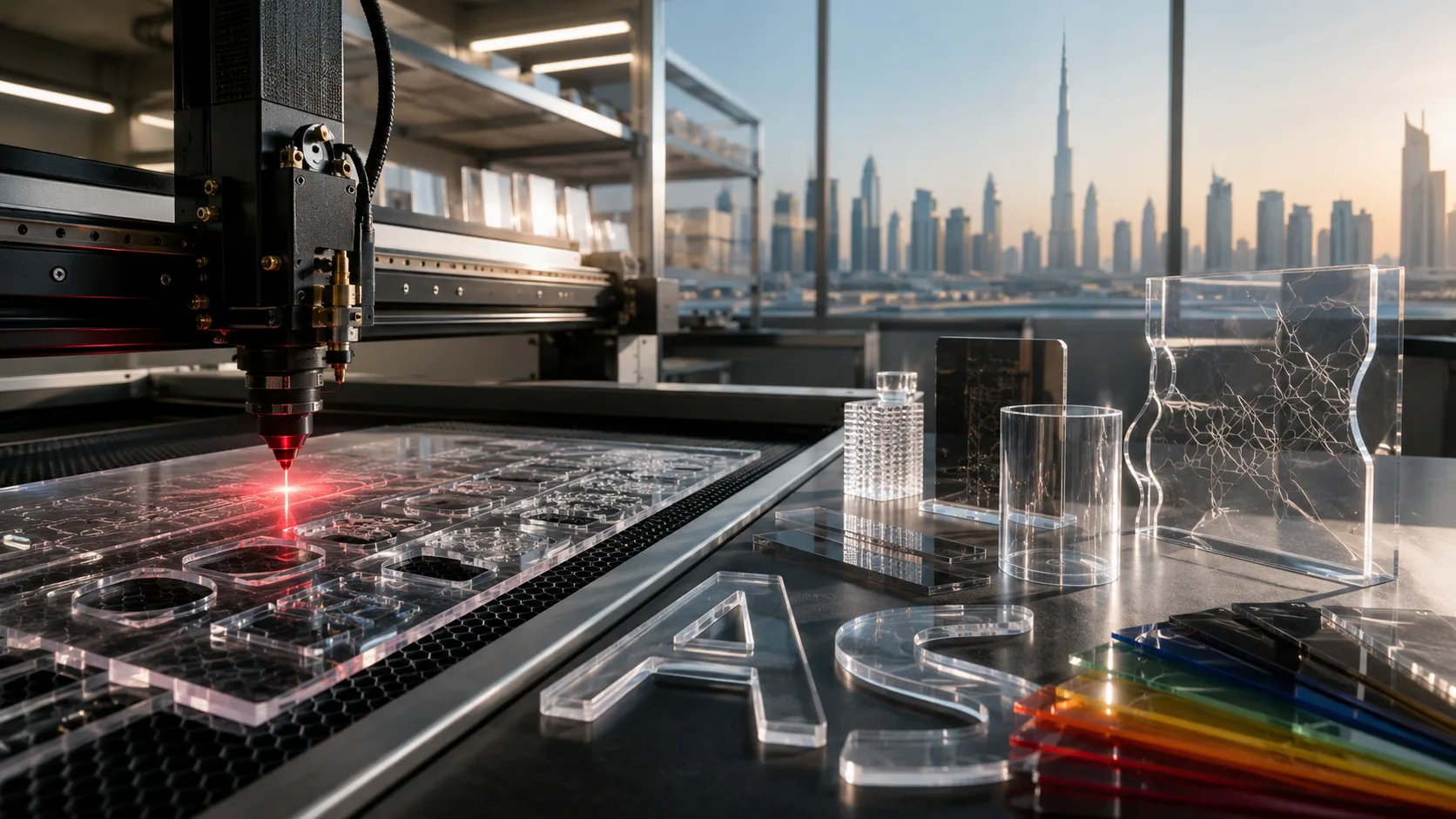
Acrylic letters can be produced using different cutting methods. Laser cutting is often used for clean acrylic shapes and fine details. CNC routing is useful for thicker materials, larger letters, and certain types of edge finishing.
The best method depends on the letter thickness, size, design detail, and finish required.
For example, a small indoor logo with fine shapes may be suitable for laser cutting. A thicker sign with larger letters may require CNC routing for better control. A good fabrication team should recommend the right method based on the project, not use one process for every order.
Where 3D acrylic letters work best
3D acrylic letters are not only for outdoor shop signs. They can be used in many areas where a business needs a stronger physical identity.
In reception areas, they help the brand look established as soon as a visitor enters. In retail stores, they make the brand name easier to notice and remember. In clinics and salons, they help the interior feel more organized. In exhibitions, they make the booth look more complete and professional.
They are also useful for:
- lobby logo walls
- counter branding
- directional signs
- wall-mounted business names
- product display zones
- brand feature walls
- photo-friendly backdrops
A well-made sign does not need to be loud. It only needs to look clear, balanced, and properly finished.
Questions to ask before ordering
Before placing an order, a business should be clear about the practical details. This helps avoid delays, wrong sizing, weak fixing, and poor visibility.
Useful questions include:
- What thickness is suitable for the letter size?
- Will the sign be used indoors or outdoors?
- Does the wall need drilling, spacers, or a back panel?
- Is lighting required?
- If lighting is used, where will the power source be?
- Will the letters be gloss, matte, painted, or clear?
- Is a template provided for installation?
- Are site photos required before production?
- How will the edges be finished?
- What maintenance is needed after installation?
These questions help the buyer compare suppliers properly instead of choosing only based on price.
Maintenance and long-term use
Acrylic signage is not difficult to maintain, but it should be cleaned carefully. A soft microfiber cloth and mild soap solution are usually safer than harsh chemicals. Strong solvents can damage the surface or affect the finish.
For LED letters, service access is important. Power supplies, wiring, and LED modules should be planned in a way that makes future maintenance possible. A sign may look good on the first day, but poor access can become a problem later.
Outdoor signs also need proper fixing, sealing, and material planning because they face heat, dust, humidity, and daily exposure.
Why supplier experience matters
Acrylic signage looks simple when finished, but many decisions happen before installation. Material thickness, cutting method, finish, lighting, wall condition, and fixing method all affect the result.
That is why supplier experience matters.
A good acrylic fabrication company should be able to explain practical choices clearly. They should advise on thickness, suggest suitable fixing methods, check the artwork, and guide the buyer on what will work best for the location.
Businesses comparing options for 3D acrylic letters in Dubai should look beyond the basic quote and review the full specification before approving the job.
Final thought
3D acrylic letters can make a business look more visible, more organized, and more reliable. The final result depends on more than the logo design. Thickness, lighting, finish, cutting quality, and installation all play a role.
For Dubai businesses, signage is often the first physical point of trust. A clear and well-made sign helps customers recognize the brand quickly and feel more confident before the first conversation even starts.
That is why 3D acrylic lettering remains a practical choice for shops, offices, clinics, restaurants, showrooms, and commercial interiors that need branding with depth, clarity, and a professional finish.